
2 languages
Big band
From HitStory, the pop encyclopedia of School of Rock · Genre
Big band · A big band usually numbers twelve to eighteen musicians in fixed sections: trumpets, trombones, saxophones and a rhythm section of piano, guitar, bass and drums. The sections play against one another, often in question-and-answer form, and between them soloists are given room. The arranger writes out who plays what and is therefore almost as important as the bandleader. Fletcher Henderson and Don Redman laid the foundation in New York in the 1920s; Duke Ellington wrote for the personal sound of his own musicians. After the Second World War large orchestras became too expensive, but the form survived: Woody Herman, Stan Kenton, Count Basie, the Thad Jones/Mel Lewis Orchestra, which played every Monday at the Village Vanguard from 1966, and today Maria Schneider. In Europe there are radio orchestras such as the Metropole Orkest from Hilversum.
Listening
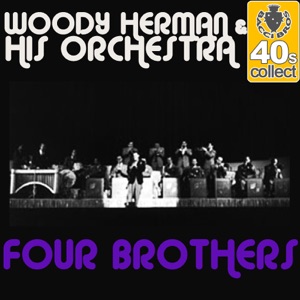 Four Brothers · Woody Herman, 1947
 A Child Is Born · Thad Jones, 1970
 Cerulean Skies · Maria Schneider, 2007
In School of Rock
The chapters, maps and magazine stories of School of Rock are currently available in Dutch only.
- Jazz MapNL Map
- Mixtape 5: Jazz FestivalNL Reader
- Mixtape 9: The InstrumentNL Reader
- The Dream Factory: Film Reel 4NL Reader
- The Dream Factory: Film Reel 6NL Reader
- After Hours: Session 1NL Reader
- After Hours: Session 2NL Reader
- After Hours: Session 3NL Reader
- After Hours: Session 4NL Reader
- Magazine: Jazz as a Secret WeaponNL Magazine
See also
- James Reese Europe
- Earl Hines
- Billy Strayhorn
- Benny Goodman
- Lionel Hampton
- Gene Krupa
- Glenn Miller
- Roy Eldridge
- Dizzy Gillespie
- Gil Evans
- Sun Ra
- Carla Bley
- Chris McGregor
- Toshiko Akiyoshi
- Quincy Jones
- Clark Terry
- New Orleans jazz
- Harlem Renaissance
- Third stream
- Japanese jazz