
2 languages
Louis Armstrong
From HitStory, the pop encyclopedia of School of Rock · Artist
Louis Armstrong grew up poor in New Orleans and learned to play the cornet in a home for boys. King Oliver became his mentor and brought him to Chicago in 1922. After a period in New York with Fletcher Henderson, Armstrong made the recordings of his Hot Five and Hot Seven between 1925 and 1928. On them the solo became the heart of jazz: long, logical lines with a big tone and a free treatment of the beat. On West End Blues (1928) he opens with a cadenza that musicians still study. With his raw voice and his scat singing he was also a hugely influential singer. Later he became a worldwide star.
Listening
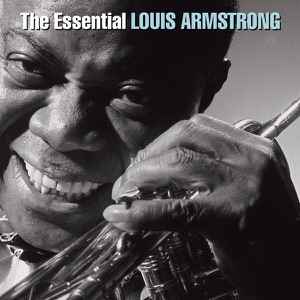 West End Blues · Louis Armstrong, 1928
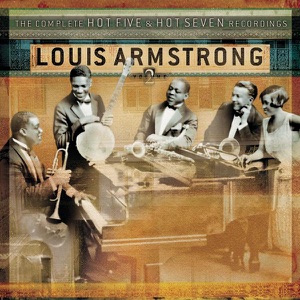 Potato Head Blues · Louis Armstrong, 1927
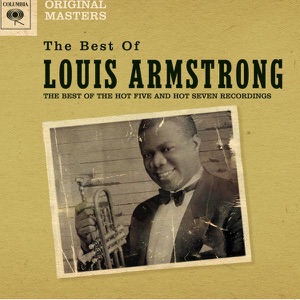 Struttin' with Some Barbecue · Louis Armstrong, 1927
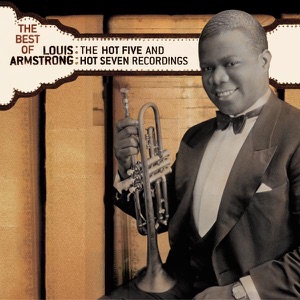 Heebie Jeebies · Louis Armstrong, 1926
 Black and Blue · Louis Armstrong, 1929
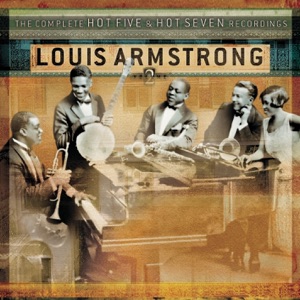 My Heart · Louis Armstrong, 1925
- Muskrat Ramble · Louis Armstrong, 1926
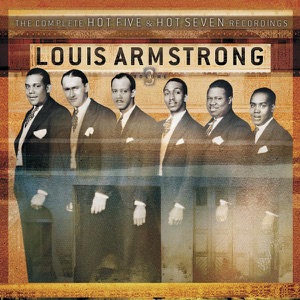 Weather Bird · Louis Armstrong, 1928
Discography
Studio albums
- 1941Louis and Earl
- 1947Paris 1934
- 1954Louis Armstrong Plays W.C. Handy
- 1955Satch Plays Fats: A Tribute to the Immortal Fats Waller
- 1956Ella and Louis
- 1957A Day With Satchmo
- 1957Ella and Louis Again
- 1957Ella and Louis Again, Volume Two
- 1957Louis and the Angels
- 1957Louis Armstrong Meets Oscar Peterson
- 1957Porgy & Bess
- 1958Louis and the Good Book
- 1958Louis Under the Stars
- 1958Satchmo in Style
- 1960Bing & Satchmo
- 1960I’ve Got the World on a String
- 1960Louie and the Dukes of Dixieland
- 1961Recording Together for the First Time
- 1963The Great Reunion
- 1964Hello, Dolly!
- 1966Satchmo Sings Evergreens
- 1968Disney Songs the Satchmo Way
- 1968I Will Wait for You
- 1968What a Wonderful World
- 1970Louis ‘Country & Western’ Armstrong
- 1970Louis Armstrong and His Friends
- 1970The Definitive Album by Louis Armstrong
- 1988Satchmo and the Dukes of Dixieland
- 1990Satchmo
- 1999Louis Armstrong na Disney
- 2001Armstrong Alumni Allstars
- 2002Bunk & Louis
- 2004American Music Legends
- 2004Bourbon St. Parade
- 2004Limehouse Blues
- 2004Ultimate Jazz & Blues
- 2005Louis Armstrong - Great Moments 8
- 2008Ella & Louis (and Oscar Too)
- 2018Pops Is Tops: The Verve Studio Albums
- ?Ella Et Louis
- ?Louis Armstrong Meets Oscar Peterson
Other work
- 1925–1928Hot Five & Hot Seven
- 1928West End Blues
In School of Rock
The chapters, maps and magazine stories of School of Rock are currently available in Dutch only.
- Jazz MapNL Map
- Mixtape 1: The Origins of Pop MusicNL Reader
- Mixtape 10: Women in Pop MusicNL Reader
- Mixtape 12: The Hit FactoryNL Reader
- The Dream Factory: Film Reel 4NL Reader
- After Hours: Session 1NL Reader
- After Hours: Session 2NL Reader
- After Hours: Session 4NL Reader
- Magazine: Van Bessie tot EllaNL Magazine
- Magazine: Rent parties en strideNL Magazine
- Magazine: Jazz as a Secret WeaponNL Magazine
- Magazine: We Didn't Start the FireNL Magazine
Mentioned in other articles
- Chicago jazz Genre
King Oliver played with his Creole Jazz Band at the Lincoln Gardens and in 1923 recorded for the label Gennett the first series of important records by Black New Orleans musicians, with the young Louis Armstrong on second cornet.
- Vocal jazz Genre
Jazz singing begins with the blues singers and with Louis Armstrong, who in 1926 scatted on Heebie Jeebies: improvising with sounds without words.
See also
- Louis Armstrong Plays W.C. Handy
- Louis and the Angels
- Hello, Dolly!
- Louis ‘Country & Western’ Armstrong
- Louis Armstrong and His Friends
- Chicago jazz
- New Orleans jazz
- Vocal jazz
- Swing and big band
- Harlem Renaissance
- Bix Beiderbecke
- Earl Hines
- Coleman Hawkins
- Billie Holiday
- Ella Fitzgerald
- Django Reinhardt
- Roy Eldridge
- Lester Bowie
- Hugh Masekela
- Wynton Marsalis