
2 languages
Tadd Dameron
From HitStory, the pop encyclopedia of School of Rock · Artist
Tadd Dameron, born in 1917 in Cleveland, Ohio, was a jazz pianist, composer and arranger. He had piano lessons from the age of four and taught himself orchestration. He wrote his first arrangements in 1938 for a big band from his home town. In 1940 and 1941 he played piano and arranged for Harlan Leonard and his Rockets in Kansas City. In New York he met Charlie Parker and the young bop musicians.
Music and breakthrough
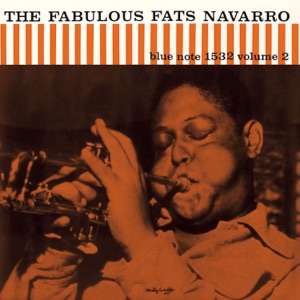
Dameron is regarded as the most influential arranger of the bop era. He wrote for, among others, Count Basie, Artie Shaw, Dizzy Gillespie, Billy Eckstine and Sarah Vaughan. For Vaughan he wrote If You Could See Me Now together with the lyricist Carl Sigman. In 1948 Gillespie played his large orchestral work Soulphony in Three Hearts at Carnegie Hall, and in 1949 Dameron appeared at the Paris jazz festival with Miles Davis. His own groups of the late 1940s and early 1950s included musicians such as Fats Navarro, Dexter Gordon, Sonny Rollins and Clifford Brown. In 1956 he recorded Fontainebleau and Mating Call, the latter with John Coltrane.
Influence
His best-known pieces are Hot House, Our Delight, Good Bait and Lady Bird. Those melodies became standard repertoire. Hot House is written over the chords of What Is This Thing Called Love, a habit in bop: a new melody over an existing chord sequence. Dameron was no great virtuoso, but he wrote melodies and ballads full of atmosphere. Drug problems and illness limited his later work, and he died in 1965.
Listening
 Lady Bird · Tadd Dameron, 1948
Discography
Studio albums
- 1957Mating Call
- 1987Fontainebleau
In School of Rock
The chapters, maps and magazine stories of School of Rock are currently available in Dutch only.
- Mixtape 5: Jazz FestivalNL Reader
- After Hours: Session 2NL Reader