
2 languages
Fleetwood Mac
From HitStory, the pop encyclopedia of School of Rock · Artist
Fleetwood Mac was formed in London in July 1967 by the guitarist Peter Green, shortly after he had left John Mayall & the Bluesbreakers. The drummer Mick Fleetwood and the guitarist Jeremy Spencer played with him from the start, and the bassist John McVie joined within a few weeks. In ten years the band went from British blues to American soft rock.
Music and breakthrough
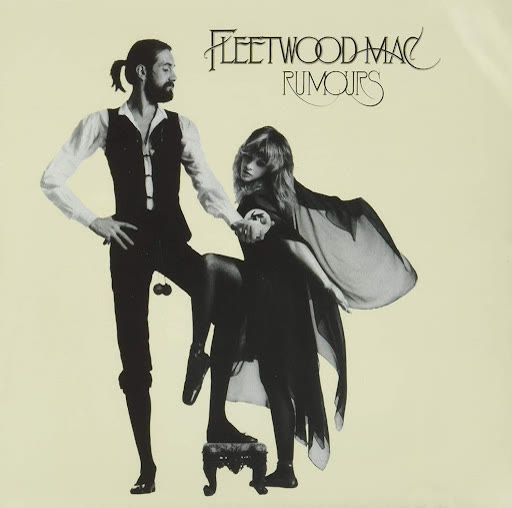
In the early years Fleetwood Mac was mainly a blues band. The instrumental Albatross, released at the end of 1968, reached number 1 in England in January 1969. In 1970 Green left, and that same year the singer and keyboard player Christine McVie became a member. On New Year's Eve 1974 the guitarist Lindsey Buckingham and the singer Stevie Nicks joined. With them the sound became more melodic and lighter. The album Fleetwood Mac (1975) reached number 1 in America. Rumours (1977) was recorded while the relationships within the band were falling apart. The first single, Go Your Own Way, was written by Buckingham about his break-up with Nicks. It became the band's first American top-ten hit. Rumours won a Grammy for album of the year. By 2003 it had sold forty million copies worldwide.
Influence
After that, with the double album Tusk (1979), the band chose a stranger, rawer sound. Tango in the Night (1987) was another great success. In 1998 Fleetwood Mac was inducted into the Rock and Roll Hall of Fame. Christine McVie died in 2022. Rumours is a textbook example of soft rock: smooth production, strong vocal melodies and lyrics about the band members' own lives.
Line-up
Core members only; touring and session musicians are not listed.
Period 1 1967–1970
- Peter Green guitar and vocals
- Jeremy Spencer guitar and vocals
- Danny Kirwan guitar and vocals, from 1968
- John McVie bass
- Mick Fleetwood drums
Period 2 1970–1971
- Jeremy Spencer guitar and vocals
- Danny Kirwan guitar and vocals
- Christine McVie keyboards and vocals
- John McVie bass
- Mick Fleetwood drums
Period 3 1971–1974
- Bob Welch guitar and vocals
- Christine McVie keyboards and vocals
- John McVie bass
- Mick Fleetwood drums
Rumours line-up 1975–1987
- Stevie Nicks vocals
- Lindsey Buckingham guitar and vocals
- Christine McVie keyboards and vocals
- John McVie bass
- Mick Fleetwood drums
Period 5 1987–1991
- Stevie Nicks vocals
- Billy Burnette guitar and vocals
- Rick Vito guitar and vocals
- Christine McVie keyboards and vocals
- John McVie bass
- Mick Fleetwood drums
reunion 1997–2018
- Stevie Nicks vocals
- Lindsey Buckingham guitar and vocals
- Christine McVie keyboards and vocals
- John McVie bass
- Mick Fleetwood drums
Period 7 2018–2022
- Stevie Nicks vocals
- Neil Finn guitar and vocals
- Mike Campbell guitar
- Christine McVie keyboards and vocals, until 2022
- John McVie bass
- Mick Fleetwood drums
Listening
 Go Your Own Way · Fleetwood Mac, 1977Apple Music ↗
Discography
Studio albums
- 1968Mr. Wonderful
- 1968Peter Green’s Fleetwood Mac
- 1969The Biggest Thing Since Colossus
- 1969Then Play On
- 1970Kiln House
- 1971Future Games
- 1972Bare Trees
- 1973Mystery to Me
- 1973Penguin
- 1974Heroes Are Hard to Find
- 1975Fleetwood Mac
- 1977Rumours
- 1979Tusk
- 1982Mirage
- 1987Tango in the Night
- 1990Behind the Mask
- 1995Time
- 2003Say You Will
In School of Rock
The chapters, maps and magazine stories of School of Rock are currently available in Dutch only.
- Mixtape 4: When Rock Was Still PopNL Reader
Mentioned in other articles
- Soft rock and AOR Genre
Soft rock, with its polished production and strong vocal melodies, lay close to pop and was heard from the early 1970s with the Carpenters, Bread and James Taylor; Rumours (1977) by Fleetwood Mac became one of the best-selling albums ever.
- Rumours Album
After the great success of the 1975 album Fleetwood Mac, the band wanted to make a pop album that built on it.
See also
- Mr. Wonderful
- Then Play On
- Kiln House
- Future Games
- Mystery to Me
- Penguin
- Heroes Are Hard to Find
- Soft rock and AOR
Sources
- Wikipedia (en): Fleetwood Mac
- Wikipedia (en): Albatross (instrumental
- Wikipedia (en): Go Your Own Way
- Wikipedia (en): Tusk (album