
2 languages
Richard Strauss
From HitStory, the pop encyclopedia of School of Rock · Artist
Richard Strauss, from Munich, made his name with symphonic poems in the wake of Liszt and Wagner and then wrote mainly operas. He was a virtuoso of the orchestra and could depict almost anything with instruments, from a flock of sheep to a hero. Also sprach Zarathustra from 1896, after Nietzsche, opens with a sunrise that was made world-famous by the film 2001: A Space Odyssey. With Salome and Elektra he stretched tonality to the limit.
Listening
Listening tip. Listen to the sunrise and hear how three trumpet notes rise from a deep, low tone, followed by the whole orchestra and the timpani.
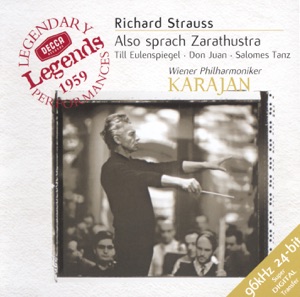 Also sprach Zarathustra: Sonnenaufgang (Wiener Philharmoniker, Herbert von Karajan) · Richard Strauss, 1896
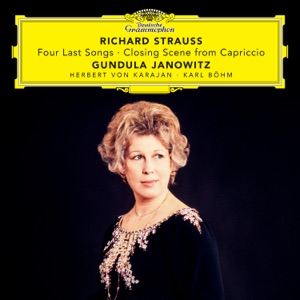 Vier letzte Lieder: Im Abendrot (Gundula Janowitz, Herbert von Karajan) · Richard Strauss, 1948
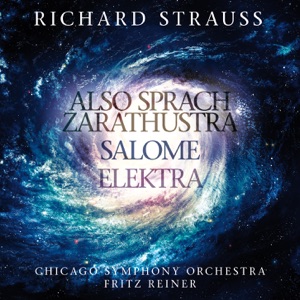 Salome: Tanz der sieben Schleier (Chicago Symphony Orchestra, Fritz Reiner) · Richard Strauss, 1905
In School of Rock
The chapters, maps and magazine stories of School of Rock are currently available in Dutch only.
- The Dream Factory: Film Reel 1NL Reader
- The Dream Factory: Film Reel 2NL Reader
Mentioned in other articles
- Late Romanticism Genre
In symphonic poems such as Also sprach Zarathustra (1896), Richard Strauss told an entire story with the orchestra alone.
- Golden Age: symphonic Hollywood and leitmotif Genre
European composers such as Steiner and Erich Wolfgang Korngold from Vienna and Franz Waxman from Germany brought with them the language of Wagner, Richard Strauss and operetta.