
2 languages
The Moody Blues
From HitStory, the pop encyclopedia of School of Rock · Artist
The Moody Blues were an English rock band, formed in Birmingham in May 1964 by Ray Thomas, Mike Pinder, Graeme Edge, Denny Laine and Clint Warwick. The name referred to the brewery Mitchells & Butlers, which the band hoped would sponsor it, to the jazz piece Mood Indigo by Duke Ellington and to the rhythm and blues the group was playing at the time. At the end of 1964 the band reached number 1 in England with Go Now. After that the success stopped, and in 1966 Warwick and Laine left. Justin Hayward and John Lodge took their places.
Music and breakthrough
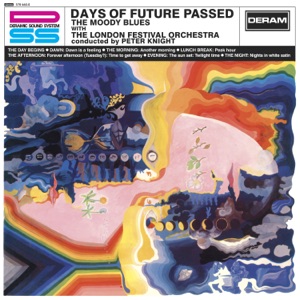
With the new line-up the music changed. Pinder switched from piano to Mellotron. In 1967 Days of Future Passed was released, an album that combined rock with classical music, recorded with the London Festival Orchestra. It produced Nights in White Satin and Tuesday Afternoon and is regarded as one of the first successful concept albums. On the following records, from In Search of the Lost Chord (1968) to Seventh Sojourn (1972), the Mellotron replaced the orchestra. The songs often flowed into one another. In the 1980s the band acquired a synth-pop sound, with hits such as Your Wildest Dreams.
Influence
The Moody Blues began as a beat group, but grew into one of the pioneers of art rock and progressive rock. The Mellotron gave the band a sound of its own: a keyboard instrument with tapes of real strings and flutes, with which a small rock band could sound like an orchestra.
Listening
 Nights in White Satin · The Moody Blues, 1967Apple Music ↗
Discography
Studio albums
- 1965The Magnificent Moodies
- 1967Days of Future Passed
- 1968In Search of the Lost Chord
- 1969On the Threshold of a Dream
- 1969To Our Children’s Children’s Children
- 1970A Question of Balance
- 1971Every Good Boy Deserves Favour
- 1972Seventh Sojourn
- 1978Octave
- 1981Long Distance Voyager
- 1983The Present
- 1986The Other Side of Life
- 1988Sur la mer
- 1991Keys of the Kingdom
- 1999Strange Times
- 2003December
In School of Rock
The chapters, maps and magazine stories of School of Rock are currently available in Dutch only.
- Mixtape 9: The InstrumentNL Reader
Mentioned in other articles
- Symphonic rock Genre
The organ part of Procol Harum's A Whiter Shade of Pale (1967) is inspired by Bach, and The Moody Blues recorded Days of Future Passed (1967) with an orchestra.
See also
- The Magnificent Moodies
- On the Threshold of a Dream
- To Our Children’s Children’s Children
- A Question of Balance
- Octave
- Symphonic rock