
2 languages
Mongo Santamaría
From HitStory, the pop encyclopedia of School of Rock · Artist
Ramón Mongo Santamaría was born in Havana in 1917. As a child he learned to play the conga in the streets of the Jesús María neighbourhood, where rumba could be heard. He was coached on bongo and conga by Clemente Chicho Piquero and toured with bands such as the Lecuona Cuban Boys and Sonora Matancera. In 1950 he moved to New York, where he became Tito Puente's conguero and, in 1957, a member of Cal Tjader's band. He then started his own charanga and made one of the first albums of folkloric rumba and Santería music, such as Drums and Chants (1957), Mongo (1959) and Sabroso! (1959).
Music and breakthrough
In the late 1950s he had his first pachanga hit, Para ti. His greatest success was his version of Herbie Hancock's Watermelon Man, which entered the Grammy Hall of Fame in 1998 and made him a pioneer of boogaloo. He signed with Columbia, Atlantic and Fania and played in the Fania All-Stars. From the 1970s he recorded mainly salsa and Latin jazz, later for Concord Jazz and Chesky Records. He died in 2003.
Influence
Santamaría brought Afro-Cuban percussion to jazz and to the dance floor. Because he recorded for major jazz labels, his folkloric music reached many listeners. He himself said that he did not know what he was playing, he just played.
Listening
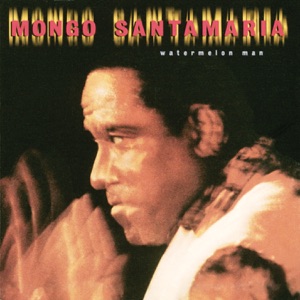 Watermelon Man · Mongo Santamaria, 1963
- Yeh-Yeh · Mongo Santamaria, 1963
- Cut That Cane · Mongo Santamaria, 1963
 Afro Blue · Mongo Santamaría, 1959Apple Music ↗
Discography
Studio albums
- 1957Drums and Chants
- 1959Mongo
- 1959Sabroso!
- 1961Arriba - La Pachanga
- 1962Go, Mongo!
- 1962Mighty Mongo
- 1963Mongo
- 1963Watermelon Man!
- 1965El Pussy Cat
- 1965La Bamba
- 1966Mongo
- 1967Hey! Let’s Party
- 1967Mongo
- 1967Mongo
- 1968Soul Bag
- 1969Stone Soul
- 1969Workin’ on a Groovy Thing
- 1970Feelin' Alright
- 1970Mongo
- 1971Mongo
- 1972Up From the Roots
- 1973Fuego
- 1975Afro-Indio
- 1976Sofrito
- 1976Ubane
- 1977Dawn (Amanecer)
- 1978A La Carte
- 1979Red Hot
- 1981Summertime
- 1988Soca Me Nice
- 1992Mambo Mongo
- 1993Mongo
- 1993Our Man in Havana
- 1994At the Black Hawk
- 1995Brazilian Sunset
- 1995Mongo
- 1995Watermelon Man!
- 1996Mongo
- 1998Watermelon Man!
- 1999Mongo
- 2000Afro American Latin
- 2003And His Afro-Cuban Drum Beaters
- 2015El Bravo!
- 2019CHANGO!
- 2019Mongo
- ?Afro-Indio
- ?Mongo
- ?Mongo
- ?Olé Ola
- ?Soy Yo
Other work
- 1959Afro Roots
- 1963Mongo at the Village Gate
In School of Rock
The chapters, maps and magazine stories of School of Rock are currently available in Dutch only.
- Jazz MapNL Map
- After Hours: Session 4NL Reader