
2 languages
Mohammad-Reza Lotfi & Mohammad-Reza Shajarian
From HitStory, the pop encyclopedia of School of Rock · Artist
Mohammad-Reza Lotfi & Mohammad-Reza Shajarian · Mohammad-Reza Shajarian was born in 1940 in Mashhad, Iran. His father was a Quran reciter and taught him singing technique at the age of five, at first through Quran recitation. At twelve, without his father knowing, he began studying Persian classical music, the radif. His teachers included Ahmad Ebadi, Esmaeil Mehrtash, Abdollah Davami and Nour-Ali Boroumand. In 1959 he began singing at Radio Khorasan, and in the 1960s he grew into a well-known name.
Music and breakthrough
He was regarded as a master of the difficult dastgah style and worked with many musicians, among them Parviz Meshkatian, Mohammad Reza Lotfi, Hossein Alizadeh, Kayhan Kalhor and his son Homayoun Shajarian. He taught at the University of Tehran, worked for national radio and television and carried out research into Persian music. After the revolution of 1979 he was one of the few singers who were allowed to continue singing in public. After he supported the Green Movement and criticised the government, he was banned from concerts and releases. He received the Picasso Award in 1999 and the UNESCO Mozart Medal in 2006. He died in 2020.
Influence
In the Persian classical tradition the singer determines much of what is played. The music is built on melodic models, the dastgahs, within which the musicians improvise. A daramad is the opening section of such a dastgah, in which the tone is set.
Listening
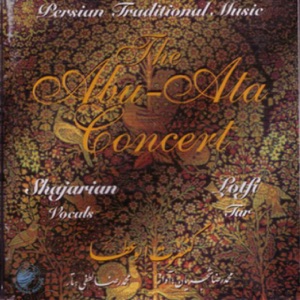 Daramad (Abu-Ata) · Mohammad-Reza Lotfi & Mohammad-Reza Shajarian