
2 languages
Louis Armstrong and His Orchestra
From HitStory, the pop encyclopedia of School of Rock · Artist
Louis Armstrong and His Orchestra was the name under which the trumpeter and singer Louis Armstrong made records from the 1930s with a big orchestra behind him. Armstrong was born in New Orleans in 1901 and was given the nicknames Satchmo and Pops. In the 1920s he became known as an inventive trumpeter and cornettist. He changed jazz for good: where musicians had previously mostly improvised together, with him the soloist became central.
Music and breakthrough
With his orchestra Armstrong aimed at a large audience. He played not only jazz but also popular songs, such as Irving Berlin's Alexander's Ragtime Band, which he recorded in 1937. His voice was just as important as his trumpet. It sounded raw and hoarse, and he treated words and melody freely, as if he were playing a solo with his voice. He was also a master of scat, singing with sounds without words. The orchestra provided a solid, swinging backdrop, above which Armstrong sang and let his trumpet blare.
Influence
Armstrong was one of the first Black entertainers to reach a broad white audience in the divided America of his time. He said little about politics, but during the crisis over school segregation in Little Rock he took a public stand. His career ran from the 1920s to the 1960s, and he kept playing songs such as When the Saints Go Marching In. He died in 1971. His influence reaches far beyond jazz, into the whole of American popular music.
Listening
 When the Saints Go Marching In · Louis Armstrong and His Orchestra, 1955Apple Music ↗
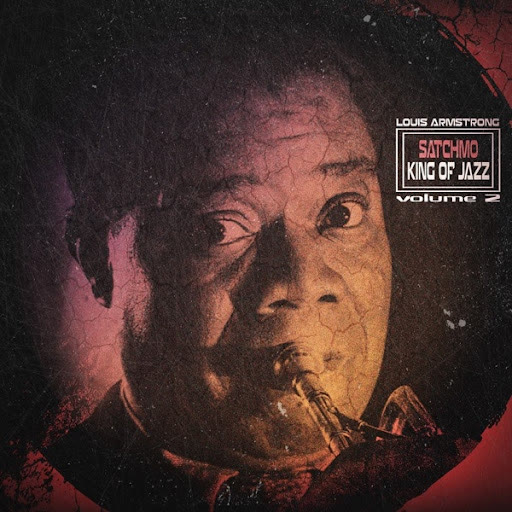 Alexander’s Ragtime Band · Louis Armstrong and His Orchestra, 1937Apple Music ↗
Discography
Studio albums
- 1939Louis Armstrong Classics
- 1955Satchmo Sings
- 1990Just Louis
- 2018New Orleans Original Film Soundtrack (soundtrack)
In School of Rock
The chapters, maps and magazine stories of School of Rock are currently available in Dutch only.
- Mixtape 12: The Hit FactoryNL Reader