
2 languages
Babatunde Olatunji
From HitStory, the pop encyclopedia of School of Rock · Artist
Babatunde Olatunji was born in 1927 in the village of Ajido near Badagry in the Nigerian state of Lagos, a member of the Ogu people. His name means father has returned, because he was born two months after the death of his father. He was being groomed to become a chief, but at the age of twelve decided that he did not want that. Through a scholarship from the Rotary Foundation he came to the United States, to Morehouse College. There he worked with Wendell Whalum on Betelehemu, a Nigerian Christmas song that is still sung by choirs today. At New York University he started a small percussion ensemble to earn some extra money.
Music and breakthrough
Columbia Records signed him in 1958. A year later his first record appeared, Drums of Passion, which was a great success and is still available. Many Americans first encountered world music through it. Later albums included Zungo!, Flaming Drums! and High Life!. He linked Nigerian rhythms with Ghanaian and Afro-Caribbean influences and found an audience among jazz musicians. With the support of John Coltrane he founded the Olatunji Center for African Culture in Harlem, where Coltrane performed for the last time in 1967. Coltrane dedicated the piece Tunji to him. In 1969 Carlos Santana had a hit with Jin-go-lo-ba, under the title Jingo.
Influence
Olatunji played with many jazz musicians, including Cannonball Adderley and Max Roach. His music consists of drums, choral singing and call and response, and showed that African rhythms could enrich American popular music. He died in 2003.
Listening
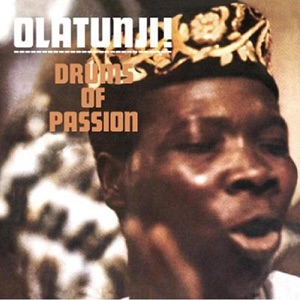 Jin-Go-Lo-Ba (Drums of Passion) · Babatunde Olatunji, 1959Apple Music ↗
Discography
Studio albums
- 1959Drums of Passion
- 1961Zungo!
- 1962Flaming Drums!
- 1963High Life!
- 1966More Drums of Passion
- 1973Soul Makossa
- 1986Drums of Passion: The Beat
- 1988Drums of Passion: The Invocation
- 1997Love Drum Talk
- 2003Healing Rhythms, Songs And Chants / Healing Session
- 2005Circle of Drums
- 2009More Drums of Passion
In School of Rock
The chapters, maps and magazine stories of School of Rock are currently available in Dutch only.
- After Hours: Session 3NL Reader