 School of RockSchool of Rock
School of Rock · Mixtape 10
From Bessie Smith and Sister Rosetta Tharpe to Björk and Billie Eilish: singer, guitarist, songwriter and producer.
The first blues hits were sung by women. One of the first electric guitar solos that sounds like rock 'n' roll was played by a woman. The song that sold Elvis Presley millions of records in 1956 had been a number 1 hit for a Black singer three years earlier. Even so, most history books about pop music are mainly about men.
That is partly down to who wrote the history. Music journalists, record executives, producers and the people who compile lists of the best records of all time were for a long time almost all men. Whoever produced a record was often not credited. Whoever sang a song first sometimes disappeared behind the star who recorded it afterwards. That is why this question is central: why do we know the names of the men who recorded the songs better than the women who sang them first?
The answer is not a single story but a pattern that keeps coming back: in the blues of the 1920s, in soul and among the singer-songwriters of the 1960s and 1970s, and in the studio, where to this day few women sit at the controls.
Side A · 1923-1956
From Bessie Smith and Sister Rosetta Tharpe to Big Mama Thornton.
Track 01 · 1923 · New York
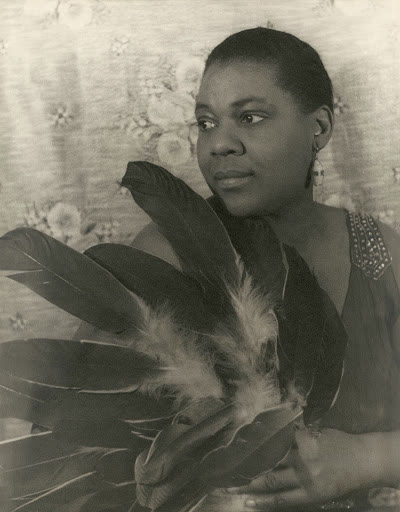
Anyone who thinks of the blues often pictures a man with an acoustic guitar on a porch in the Mississippi Delta. In Mixtape 1 those Delta blues musicians were discussed at length. That image was largely formed later, by the folk revival of the 1960s. Young white record collectors went looking for 'authentic' blues and found it in the recordings of men like Robert Johnson and Son House. In the 1920s themselves, the blues looked different. The blues records that sold best then were by women.
That style is called classic blues: urban blues, sung by a woman with a band of piano, horns and sometimes a banjo. The singers came from the theatre and the tent shows that toured the southern United States. In 1920 Mamie Smith recorded Crazy Blues, the first blues record by a Black singer. The record sold so well that record companies realised there was a Black audience that wanted to buy records. They started separate series for that audience, the so-called race records. Ma Rainey, the 'Mother of the Blues', had been singing in tent shows for years before she made her first record in 1923.
Bessie Smith was the greatest of them all. She was born in Chattanooga, Tennessee, and as a teenager already performed in a travelling show in which Ma Rainey also sang. In 1923 she recorded Downhearted Blues in New York for Columbia. The record sold hundreds of thousands of copies and helped the record company, which was in financial trouble, get back on its feet. Smith became the best-paid Black performer of the 1920s and was nicknamed 'Empress of the Blues'.
Listen to Downhearted Blues and you hear how records were made then. There was no electric microphone yet. The musicians stood in front of a large horn that sent the sound straight to a needle, which cut the groove into the wax. A singer therefore had to sing loudly and clearly, as she was used to doing in a tent without amplification. Smith had the voice for it: powerful, low and with precise timing.
Her lyrics were not respectable repertoire. She sang about money, drink, sex, unfaithful men and women who managed fine on their own. In 1925 she recorded St. Louis Blues with the young trumpeter Louis Armstrong. Bessie Smith died in 1937 in a car accident in Mississippi. Her grave stayed without a headstone for more than thirty years. In 1970 Janis Joplin helped pay for a headstone; we meet her on side B.
Track 02 · 1938-1964 · New York, Manchester
Rosetta Tharpe grew up in the church. Her mother was an evangelist in the Church of God in Christ, a Pentecostal church where people sang, clapped and played instruments. As a little girl Rosetta was already on stage with a guitar. She did not play like most guitarists of the time, with chords as accompaniment, but with melody lines and fast runs, like a horn player or a blues guitarist.
In 1938 she made her first records for Decca: gospel songs, but with the rhythm and swing of the jazz of the time. She performed at the Cotton Club in New York, a nightclub for a white audience, and at the same time in churches. For many believers that was a problem: religious music did not belong in a nightclub. Tharpe did it anyway. In the 1940s she switched to the electric guitar. She played solos with a distorted, sharp sound, years before Chuck Berry did the same.
She recorded Strange Things Happening Every Day in 1944 with the pianist Sammy Price. It is a gospel song, but if you ignore the lyrics you hear a rhythm and blues record: a driving piano, a voice full of energy and a guitar solo in the middle. The song made the chart for Black music, which was unusual for a gospel record. It is often named as one of the first rock 'n' roll records, ten years before that term became common.
The men who made rock 'n' roll big in the 1950s knew her well. Elvis Presley, Little Richard, Johnny Cash and Chuck Berry later named her as an influence. Little Richard said that Tharpe pulled him up on stage as a boy and paid him for his performance.
In May 1964 Tharpe played in England, on a tour with American blues and gospel musicians. For television the performance was filmed at a deserted railway station in a suburb of Manchester. Tharpe stepped onto the platform and played Didn't It Rain on an electric guitar, while it was raining. In the audience were young Britons who a few years later would make blues rock themselves. The recording is now one of the best-known films of her.
After her death in 1973 she was largely forgotten. The Rock & Roll Hall of Fame, which has inducted the most important names in rock history since 1986, did not induct her until 2018. On that occasion she was called the 'Godmother of Rock and Roll'. The men who had named her as their example had by then been members for decades.
Track 03 · 1952-1956 · Los Angeles
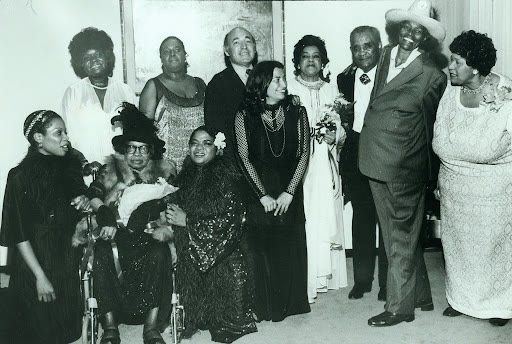
In 1952 Jerry Leiber and Mike Stoller were not yet twenty. The two young songwriters from Los Angeles wrote rhythm and blues for Black artists. They wrote a song for Willie Mae Thornton, who called herself Big Mama Thornton. Thornton was a powerful singer who also played drums and harmonica, and she sang in the revue of bandleader Johnny Otis. The song was called Hound Dog: a raw blues in which a woman shows a man the door. He is a 'hound dog', a man who hangs around, takes advantage and contributes nothing.
Thornton's version came out on Peacock Records, a label from Houston, and became a big hit: Hound Dog spent seven weeks at number 1 in the R&B chart. You hear a heavy, dragging rhythm, a guitar that answers the vocals, and a voice that mocks, growls and lashes out. The musicians bark and whoop in the background. It is a song about power in a relationship, and the woman has the power.
In 1956 Elvis Presley recorded the song. He did not know it from Thornton, but from a white showband that played it in Las Vegas, with altered lyrics. The 'hound dog' was now simply a dog that had never caught a rabbit. Elvis turned it into a fast rock song, with hard drums and a guitar solo. His version sold millions of copies. In Mixtape 2 we saw how Elvis set a youth culture in motion with songs like this.
For Thornton little was left. For her own version she received about 500 dollars. The royalties of a song go to the songwriters and the publisher, not to the singer who recorded it first. Leiber and Stoller earned well from Elvis's success and went on to write many more hits for him; in Mixtape 12 (The hit factory) they return. Thornton kept performing in clubs and at blues festivals. She also wrote songs herself, including Ball and Chain. That song became well known in 1967 in the version by Janis Joplin.
The story of Hound Dog shows a pattern that occurs more often in pop music. A Black artist records a song for a Black audience. A white artist records it again, for a much bigger audience, and that becomes the version everyone knows. With Thornton there is something extra: the song about a woman sending a man away became a song about a dog.
Side B · 1967-1985
Songwriters, soul singers and rockers: in the 1960s and 1970s women take the floor, and their own songs.
Track 01 · 1967-1971 · Los Angeles
In the 1950s and early 1960s pop music was a trade with a strict division of labour. Songwriters wrote songs, publishers sold them, producers recorded them and singers sang them. In New York many of those songwriters worked in and around the Brill Building, an office building on Broadway full of music publishers. In Mixtape 12 (The hit factory) you can read more about that way of working.
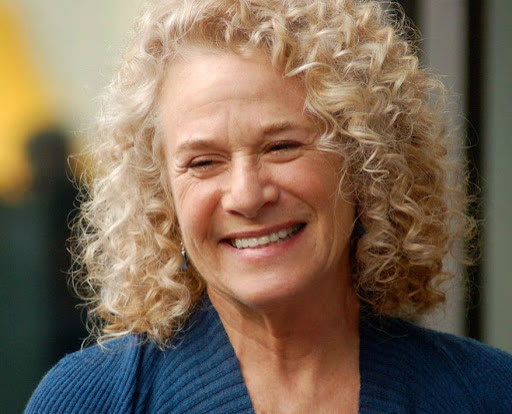
Carole King was one of the most successful writers from that world. Together with her then husband, lyricist Gerry Goffin, she wrote hits for others from 1960, such as Will You Love Me Tomorrow for The Shirelles and (You Make Me Feel Like) A Natural Woman for Aretha Franklin. In the late 1960s she moved to Los Angeles and began to sing her songs herself.
Her album Tapestry (1971) became one of the best-selling albums of the 1970s and stayed in the American album chart for years. The record contains new songs and a few earlier hits that she now sings herself, with her own piano as the base. It's Too Late, about a relationship that is over, shows how King composed; the lyrics were written by Toni Stern. The chords are major seventh chords, with a soft, slightly wistful sound that comes more from soul and jazz than from rock. There is no big chorus with lots of drum rolls, but a quiet groove with piano, bass and a saxophone solo.
King belonged to a new group of musicians: the singer-songwriters. They wrote their own songs, sang them themselves and told of their own lives in the first person. We call such lyrics confessional: personal and autobiographical, as if you were reading a diary. That a woman's life was the subject of a pop album, and that she wrote about it herself, was new.
The Canadian Joni Mitchell went furthest in this. She wrote Both Sides Now in 1967, about how you see clouds, love and life first as a young person and later differently. The song first became a hit in the version by folk singer Judy Collins. Mitchell recorded it herself for her second album, and again in 2000, with an orchestra and a voice that had become darker and lower in more than thirty years. A song about looking back on your life then sounds very different.
What makes Mitchell special, you hear above all in her guitar playing. She tuned her guitar in dozens of different open tunings: the strings are tuned so that they already form a chord when strummed open. As a result her fingers land in different places than in standard tuning, and chords arise that other guitarists do not easily play. Her songs therefore have a sound of their own, open and airy. Her album Blue (1971) is often named as the example of the confessional album.
Later in the 1970s Mitchell moved towards jazz. Bassist Jaco Pastorius played on her albums, and she made a record with music by jazz bassist Charles Mingus. Pianist Herbie Hancock recorded a whole album of her songs in 2007. Jazz musicians liked playing with her, because her harmonies were as unusual as their own.
Track 02 · 1967-1968 · New York
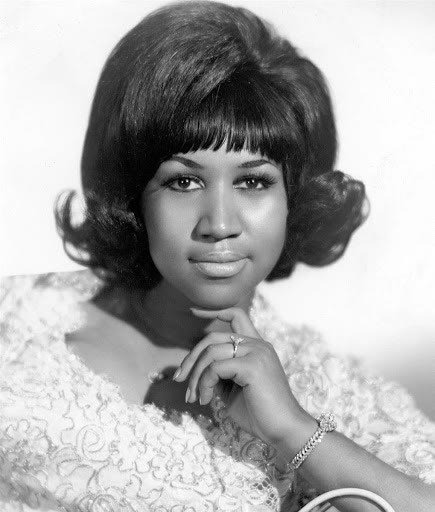
Aretha Franklin grew up in Detroit as the daughter of C.L. Franklin, a well-known minister. She sang in his church as a child, and gospel remained the basis of her voice. In the early 1960s she made records for Columbia that fell somewhere between jazz and pop, without great success. At the end of 1966 she moved to Atlantic Records. Producer Jerry Wexler let her do what she was good at: soul, with her own piano playing as the foundation.
Respect was originally a song by Otis Redding from 1965. In his version a man comes home after a day's work and demands respect from his wife: he brings in the money, so he wants to be appreciated. Franklin turned the song around. In her version it is a woman demanding respect, and she leaves no doubt about it by spelling out the word: R-E-S-P-E-C-T.
Put the two versions side by side and you hear how much has changed. Franklin's version has a tighter tempo. Her sisters Carolyn and Erma sing the backing vocals, with the addition 'sock it to me', which keeps returning as an answer to the lead vocal. Halfway through there is a saxophone solo, and in a few places the band drops out so that the voice is left alone: stop-time. A large part of what makes the song recognisable, the spelling, the backing vocals and the build-up, came from Franklin and her sisters. Here Aretha was singer and arranger at the same time.
Otis Redding saw it that way himself: according to him, a girl had taken his song away from him. Respect became a number 1 hit in the United States in 1967 and won two Grammys. The song soon took on a meaning beyond music. For the civil rights movement it was a song about Black people demanding respect, for the women's movement a song about women doing the same. That it could be both made it so strong.
Franklin became the 'Queen of Soul'. That same year she recorded (You Make Me Feel Like) A Natural Woman, written by Carole King, Gerry Goffin and Jerry Wexler. In 1987 she became the first woman inducted into the Rock & Roll Hall of Fame.
Track 03 · 1968-1985 · San Francisco, New Jersey, London
In the late 1960s San Francisco was the centre of hippie culture and psychedelic rock (see Mixtape 2). Janis Joplin came from Port Arthur, an oil town in Texas, where as a teenager she played blues records by, among others, Bessie Smith. In San Francisco she became the singer of Big Brother & the Holding Company. At the Monterey Pop Festival of 1967 she sang Thornton's Ball and Chain, and with that she became famous overnight.
Piece of My Heart was first recorded in 1967 by Erma Franklin, Aretha's sister. In 1968 Joplin turned it into a rock song, with hard, tearing guitars. She did not sing beautifully in the traditional sense. She screamed, cracked and lashed out, like Big Mama Thornton, her great example. For a white singer in a rock band that was unusual: singers in pop were expected to sound sweet and controlled. Joplin died in 1970, at the age of 27. That same year she helped pay for Bessie Smith's headstone. So a line runs from the blues of the 1920s via Thornton to the rock of the 1960s.
Sylvia Robinson began in the 1950s as a singer and guitarist in the duo Mickey & Sylvia, who had a hit in 1957 with Love Is Strange. In 1973 she scored as Sylvia with Pillow Talk, a sultry soul song with whispered and sighed vocals. Her most important work she did behind the scenes. With her husband Joe Robinson she had her own record label and studio in New Jersey. In 1979 they founded Sugar Hill Records. Sylvia Robinson put together a group herself, the Sugarhill Gang, and produced Rapper's Delight: the first hip hop record to become a hit. In 1982 Sugar Hill released The Message by Grandmaster Flash and the Furious Five. She is sometimes called the 'Mother of Hip-Hop', but in most stories about the beginning of hip hop (see Mixtape 6) she is on the margins.
The English Kate Bush was nineteen when her first single Wuthering Heights (1978) reached number 1 in the UK. She had written the song herself, after the novel by Emily Brontë. That made her the first woman in the UK with a number 1 hit that she had written herself. From the start Bush wanted to decide herself how her music sounded. From The Dreaming (1982) she produced her albums herself.
For Hounds of Love (1985) she worked in a studio of her own near her house, so that she could work without a record company looking over her shoulder. She used the Fairlight CMI, one of the first digital samplers: a computer that lets you play any recorded sound on a keyboard. In Mixtape 9 (The instrument) such devices return. Running Up That Hill is built from few parts: a drum pattern from a LinnDrum drum machine, a sustained synthesizer part from the Fairlight and her voice, which in some places is layered over itself. The song is about the wish to swap places with a lover, to understand what it is like for the other.
In 2022 the song was used in the Netflix series Stranger Things. A new generation of listeners discovered it, and more than 35 years after its first release Running Up That Hill reached number 1 after all, in the British chart too. The song did not sound like something from 1985, perhaps precisely because Bush had made it herself and had not followed the production fashion of that year.
Side C · 1963-2019
From Delia Derbyshire to Björk and Missy Elliott: who makes the sound? On producers, engineers and control.
A singer is visible. She is on the sleeve, in the video and on stage. But who decides how a record sounds? That is the producer: the person who leads the recording, chooses which instruments and sounds are used, and decides when a song is finished. Precisely in that role, and in that of engineer, women are rare to this day.
The USC Annenberg Inclusion Initiative, a research group at the University of Southern California, counts every year who is behind the most popular American hits in the Billboard Hot 100. Of the producers behind those hits between 2012 and 2024, only a few per cent were women. Among the artists in recent years about one in three was a woman, among the songwriters about one in five. The percentages shift a little from year to year, but the proportion remains similar. The further from the stage, the fewer women. The women on this side broke through that pattern, and often did not get the recognition for it for a long time.
Track 01 · 1963-1968 · London, New York
The story of Delia Derbyshire is told at length in Mixtape 8 (Electronic music). In short: in 1963 she made the theme tune of Doctor Who at the BBC Radiophonic Workshop. Composer Ron Grainer had written the melody, but Derbyshire came up with how it should sound and built it note by note from oscillators, noise and pieces of tape. Grainer wanted her to be credited as co-composer. The BBC refused, because the staff of the Workshop remained anonymous. Only after her death in 2001 did she receive wide recognition.
In the United States Wendy Carlos worked closely in the late 1960s with Robert Moog, the builder of the Moog synthesizer. She advised him on the design and was one of the first to really play the device as a musical instrument. For Switched-On Bach (1968) she played pieces by Johann Sebastian Bach on the Moog. That was a lot of work. The Moog was monophonic: it could play only one note at a time. Carlos therefore recorded each voice separately on a multitrack recorder and then layered the recordings on top of each other. The album was a great success, won three Grammys and showed a wide audience that a synthesizer was more than a sound effect.

Carlos went on to make, among other things, the music for the films A Clockwork Orange (1971) and The Shining (1980) by Stanley Kubrick. The first releases of her albums still carried her old, male name. In 1979 she said in an interview that she is a trans woman.
Derbyshire and Carlos have something in common. They made electronic music at a time when that profession did not yet have a name. A word like 'electronic producer' did not exist; what they did was called engineering, and engineering was not regarded as art. For years their work was attributed to others or dismissed as tinkering with machines. Only later did it become clear how much of the electronic music that followed (see Mixtape 8) built on their work.
Track 02 · 1991-2001 · Olympia, Reykjavík, New York
In the early 1990s a feminist punk movement arose in Olympia, a small town in the state of Washington: riot grrrl. Bands like Bikini Kill, with singer Kathleen Hanna, and Bratmobile felt that the punk scene had become just as much a man's world as the rest of the music industry. At the front by the stage stood boys dancing roughly, and girls were pushed to the back. During performances Hanna shouted 'girls to the front'.
Riot grrrl was more than music. The bands and their fans made their own fanzines, photocopied little magazines, and released their records on small, independent labels. They made their own rules, in the tradition of punk's do-it-yourself culture. In Rebel Girl by Bikini Kill, Kathleen Hanna sings about a girl she admires for her nerve. Musically it is simple: a few chords, a hard drum and a lyric you can shout along to. Kathleen Hanna was friends with Kurt Cobain of Nirvana. She wrote the sentence 'Kurt smells like Teen Spirit' on his wall, which he later used for a song title.
The Icelandic Björk sang in the band The Sugarcubes in the 1980s and went solo in 1993. She writes, arranges and produces her albums herself, together with a changing cast of producers and electronic musicians. Hyperballad (1995), from the album Post, combines strings with a beat from rave and techno. The song is about someone who gets up early every morning and throws things off a cliff, so that she can then calmly go back to her lover.
Yet journalists often attributed her music to the men she worked with. In 2015 Björk said in an interview with the music site Pitchfork that she had made about 80 per cent of the beats for her album Vespertine (2001) herself, but that the electronic duo Matmos, who had contributed to the album, often got all the credit for it. A woman who sings is seen as a singer. That she is also at the computer is easily overlooked.
The same thing played out in hip hop. Lauryn Hill became known as a singer and rapper with The Fugees. In 1998 she released her only studio album as a solo artist: The Miseducation of Lauryn Hill. She wrote, sang, rapped and produced it. Doo Wop (That Thing) combines backing vocals in the style of 1950s doo-wop with horns, a soul groove and a rap. In the lyrics she warns women and men alike about relationships in which it is only about 'that thing'. The album won five Grammys in 1999, including album of the year; it was the first hip hop album to win that prize. A dispute did arise over the credits: a group of musicians who had worked on the album went to court because they felt they were credited too little. The case was settled out of court.
Missy Elliott from Portsmouth, Virginia, first wrote songs for others, among them the singer Aaliyah. Together with her childhood friend, producer Timbaland, she made her own albums from 1997. She co-wrote and co-produced, and her video clips too, with strange costumes and visual effects, were unlike anything else in hip hop. Get Ur Freak On (2001) is built on a short, constantly repeated motif on the tumbi, a one-stringed lute from the Punjab, with tablas and a Japanese exclamation at the beginning. That is what the futuristic hip hop of the 2000s sounded like. In 2019 Elliott became the first female rapper inducted into the Songwriters Hall of Fame.
Track 03 · 1997-2019 · the Netherlands, United States
In the Netherlands in 1997 a young singer from The Hague broke through with a rock song in English: Anouk, with Nobody's Wife. The song became a big hit and is still played on the radio. Anouk sang raw and self-assured, and she had an attitude of her own: she said what she thought, in interviews and on stage. In 2013 she represented the Netherlands at the Eurovision Song Contest with Birds. You can read more about Dutch pop history in Mixtape 11 (Nederpop).
Beyoncé began in the late 1990s in the girl group Destiny's Child and then became one of the biggest pop stars in the world. With Lemonade (2016) she did more than sing. The album came out together with a film of about an hour, a 'visual album', in which every song was given images. Beyoncé worked on the direction, the visuals and the concept. The music ranges from blues and country to rock and hip hop. The album is about infidelity, but also about Black women, their mothers and grandmothers, and the history of the southern United States.
Formation, the closing track of the album, came out in February 2016, a day before Beyoncé performed it live during the Super Bowl halftime show. The beat is trap, a hip hop style from the southern United States with fast hi-hats and a heavy 808 bass. In the video you see images of New Orleans after Hurricane Katrina. In the lyrics she sings proudly about her family from Alabama and Louisiana. That is how the song became a political statement, released at a moment when a large part of America was watching.
Billie Eilish and her brother Finneas O'Connell recorded her debut album When We All Fall Asleep, Where Do We Go? (2019) in Finneas's bedroom in their parents' house in Los Angeles. No big studio was involved. bad guy became a number 1 hit in the United States. The song sounds different from most hits: Eilish sings softly, almost whispering, close to the microphone. Underneath lie a deep synthesizer bass, a dry beat and a finger snap. A big chorus to sing along to is missing, and at the end the song switches to a completely different, slow section. In 2020 Eilish won the four most important Grammys in one go: album, record and song of the year and best new artist.
The story of Eilish shows a change that applies to everyone. With a laptop, a good microphone and software, someone can make a complete record at home: such a person is called a bedroom producer. That lowers the threshold to production, also for women who had few opportunities in the traditional studios. Whether that is enough, the Annenberg figures show: behind the biggest hits there are still almost only male producers.
Look back at Bessie Smith and the pattern is clear. Women were at the front of pop music from the beginning, as singers and as innovators. But the credits, the money and the place in the history books often went to others: to the songwriters of Hound Dog, to the men who named Tharpe as their example, to Matmos instead of Björk. Anyone who wants to know the history of pop music therefore listens not only to who is singing, but also asks who wrote the song, who arranged it and who was at the controls.
All the tracks in this chapter, in the order of the text. Scan the code with your phone.
open.spotify.com/playlist/3Lge4JJm335gYjOL8bQtDu