 School of RockSchool of Rock
School of Rock · Mixtape 11
From indorock and Nederbeat via Golden Earring, Normaal and Doe Maar to Nederhop and today's Dutch-language hits.
The first Dutch rock 'n' roll was played by a group of brothers who had just arrived from Indonesia. One of them played guitar with the instrument behind his head, another climbed onto his bass while playing. Sixty years later, a Dutch-language duet about a beach in Zeeland is one of the most streamed songs in the Netherlands. Between those two moments lies the history of Dutch pop music.
The Netherlands is a small country, and its pop music almost always came from outside. Rock 'n' roll from America, beat from England, chansons from Paris, ska and reggae from Jamaica, hip hop from New York. Dutch musicians adopted those styles, adapted them and sometimes sent them back abroad. Again and again they had to choose which language to sing in: English for the world, Dutch or dialect for the audience close to home. That choice has never been made for good. It shifts back and forth with every generation, and so does the question at the heart of this chapter: when does pop music sound Dutch: because of the language, because of the musicians or because of something else?
Side A · 1957-1971
Indo guitarists, beat bands from The Hague and a singer who conquered America: the Netherlands joins in.
Track 01 · 1957-1964 · The Hague
In December 1949 the Netherlands recognised the independence of Indonesia. In the years that followed, hundreds of thousands of Indo-Dutch people, people with both Dutch and Indonesian roots, left for a country that many of them had never seen. They ended up in boarding houses and simple rented homes, often in The Hague, where a large Indo community grew up. The newcomers were expected to adapt quickly. Little was said about what they had left behind.
They did take their music with them. In the Dutch East Indies they had listened to krontjong, Indonesian folk music with Portuguese roots, played on small stringed instruments. The Hawaiian guitar was popular there too: a guitar that lies flat on the lap and is played with a steel bar, so that the notes glide into each other. Through the radio and records, American country and rock 'n' roll were added. In the Netherlands it all fused into indorock: fast, often instrumental guitar music with tight rhythms, plenty of echo and a technical skill that Dutch teenagers had never seen before.
The best-known indorock band was the Tielman Brothers. The brothers Andy, Reggy, Ponthon and Loulou Tielman came to the Netherlands with their family in 1957 and settled in Breda. They were one of the first bands to play rock 'n' roll in the Netherlands, and they did it with a show. Andy played guitar with the instrument behind his head, and the bass was played as if it were a piece of gymnastic equipment. At the world fair in Brussels in 1958 they already drew a large audience. In Rock Little Baby of Mine (1958) you can hear what it is all about: short, fast guitar lines doubled by an echo device, so that every note resounds. That echo became the trademark of indorock.
In the Netherlands many adults found it noise. In Germany the Tielman Brothers became stars. They played in clubs there from 1959, before British bands like the Beatles came to Germany (see Mixtape 3). Many other Indo bands followed the same route along German clubs and Dutch halls. Andy Tielman (1936-2011) went on performing well into old age.
For a long time indorock was seen as something separate, as 'Indo' music that stood outside Dutch history. Today it is regarded as the beginning of Nederpop. That says something about the question of this chapter. The first Dutch rock 'n' roll was made by migrants, in English, on the basis of American and Asian music. Even so, this is the story with which Dutch pop music begins.
Track 02 · 1965-1974
Anyone who sang in Dutch in the 1950s mostly did not do so in pop music. There was the levenslied (a sentimental popular song), there was the schlager, and there was kleinkunst: the Dutch-language song from cabaret and theatre. In kleinkunst the lyrics come first. The accompaniment is small, often just a piano or a guitar, and the audience sits quietly in a theatre. Wim Sonneveld, Toon Hermans and Jules de Corte were the big names. Singing in your own language belonged in the theatre hall, not on the dance floor.
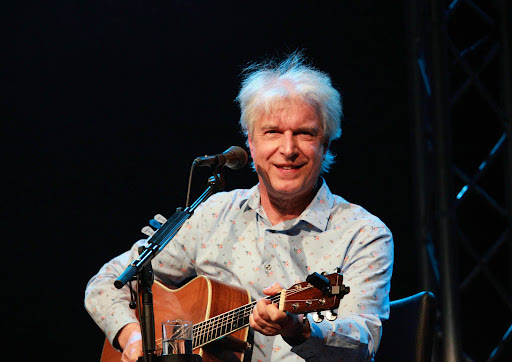
Around 1965 that tradition moved towards pop. Boudewijn de Groot began singing songs to lyrics by his friend Lennaert Nijgh. They drew inspiration from American folk and the protest songs of Bob Dylan, but wrote in Dutch. Welterusten mijnheer de president (1966, 'Good night, Mr President') is a lullaby for the American president Lyndon Johnson, who in those years was sending more and more soldiers to Vietnam. The tone is friendly and the melody gentle, but the content is sharp: the president sleeps peacefully while people die elsewhere. The song appeared on the album Voor de overlevenden (1966). A year later De Groot had a big hit with Het land van Maas en Waal.
A second example came from France, with chansonniers such as Jacques Brel, Georges Brassens and Jean Ferrat. Their songs told a story, had strong lyrics and worked as well in a hall as on the radio. In 1965 Wim Sonneveld sang Het dorp ('The village'), an adaptation of La montagne (1964) by Jean Ferrat. The Dutch lyrics are by Friso Wiegersma. The song is about a village that disappears: the meadows are built over, the young people move away, the old life is over. It is nostalgia, but also a description of what modernisation did to the Dutch countryside.
The Dutch-language pop songs of the 1960s therefore come more from Paris than from Liverpool. Anyone who sang in Dutch joined the chanson and kleinkunst tradition: songs to listen to, with lyrics that mattered. That line runs on to the present day. Klein Orkest in the 1980s and Acda en de Munnik in the 1990s come directly out of it. In those same years, danceable pop music with guitars and drums was made in the Netherlands mostly in English.
Track 03 · 1964-1971 · The Hague, Grolloo
In June 1964 the Beatles came to the Netherlands. They took a boat trip through the Amsterdam canals and played in an auction hall in Blokker. For thousands of Dutch teenagers it was proof that something new was happening. Everywhere bands sprang up with two guitars, a bass and a drum kit. The centre was The Hague. Thanks to indorock the city already had a lively scene, and now a generation of beat bands grew up there: the Golden Earrings, Q65, the Motions and later Shocking Blue. In Amsterdam The Outsiders played. This music later got the name Nederbeat.
Almost all of these bands sang in English. That was the language of pop music, and Dutch lyrics in those years quickly sounded like schlager or cabaret. The bands differed greatly from one another. Q65 was raw and rough, the Motions were more melodic. The Golden Earrings, founded in 1961 by George Kooymans and Rinus Gerritsen, had their first hit in 1965 with Please Go. It was the beginning of a career that would last sixty years.
Not all Nederbeat came from the Randstad (the western conurbation around Amsterdam, Rotterdam and The Hague). Cuby + Blizzards worked from Grolloo, a small village in Drenthe. Singer Harry Muskee and guitarist Eelco Gelling played blues: not the cheerful beat of the Beatles, but the heavy, raw music from the American South, which English bands such as the Rolling Stones also played. On Appleknockers Flophouse (1969) you hear a Hammond organ, a dark voice and a guitar that takes its time. That such a sound could come from a village in Drenthe shows how far American and British influence had penetrated in a few years.
The greatest success came from The Hague. Shocking Blue was a band built around guitarist and songwriter Robbie van Leeuwen, with singer Mariska Veres. Van Leeuwen wrote Venus, a short song with a simple guitar riff and a chorus you can sing along to after hearing it once. Veres sang with a low, powerful voice and, with her black hair and intense gaze, became the face of the band. In February 1970 Venus was number 1 on the American Billboard Hot 100. It was the first time a Dutch band had topped it. In 1986 the British group Bananarama made the song a number 1 hit again with a version of their own.
With Nederbeat, confidence grew. Dutch bands turned out to be able to compete internationally, and a group from The Hague could top the American chart. At the same time that success raises the question of this chapter. What is Dutch about Venus? Not the language, and not the style either. Only the musicians and the city they came from. For an American listener it was simply a pop song.
Side B · 1971-1999
Golden Earring, Focus and Normaal put the Netherlands on the map, and then suddenly everyone is singing in Dutch.
Track 01 · 1971-1978
In the early 1970s rock became more serious and longer. Bands made albums instead of singles, and musicians showed what they could do technically. In England progressive rock emerged, with long songs, classical influences and complicated time signatures. In the Netherlands, too, there were bands that went in that direction, and two of them broke through internationally.
Focus was led by Thijs van Leer, who played organ and flute, and guitarist Jan Akkerman. Both were technically very strong musicians. Yet their best-known song was not a serious prog rock piece but a joke. Hocus Pocus (1971), from the album Moving Waves, alternates a hard guitar riff with a drum break, yodelling, whistling and a flute solo. The song has hardly any lyrics and sounds as if the band itself has to laugh at what it is doing. In 1973 it became a hit in England and America too. Prog rock with humour: English bands rarely dared.
Golden Earring had by now dropped the s from its name and had grown into a hard rock band. In 1973 Radar Love appeared, from the album Moontan. The song is about a man driving along the motorway at night to his lover. The bass of Rinus Gerritsen and the drums of Cesar Zuiderwijk lay down a groove that never lets up, and the guitar of George Kooymans and the voice of Barry Hay ride over it. The song became a hit in Europe and America and can still be heard on car radios.
Golden Earring existed from 1961 to 2021. That makes it one of the longest-running rock bands in the world. The band stopped only when it became known in 2021 that guitarist George Kooymans had ALS. The photo at the start of this side shows him in 1974, at the peak of the band's international success.
While Focus and Golden Earring were conquering the world in English, something very different was happening in the Achterhoek (a rural region in the east of the Netherlands). Normaal, founded in 1975 around singer Bennie Jolink, sang in the Achterhoek dialect. Oerend hard (1977, 'Flat out') is about two drunk motorcyclists, Bertus and Tinus, who after a motocross race ride home far too fast, with an accident as the result. The band performed in farmers' smocks and wooden clogs, and the concerts in festival tents and halls were loud and wild. Critics in the Randstad looked on with some mockery. The audience in the countryside recognised themselves in it. This music got the name boerenrock ('farmers' rock').
So in the 1970s language became a conscious choice. English was the language for the world and for the radio. Dialect was the language of one's own identity, of a region that would not be represented by Amsterdam or Hilversum (the centre of Dutch radio and television). What makes Oerend hard Dutch is therefore more than the language. It is the subject, the humour, the attitude and the audience. Put the song next to Radar Love and you hear two rock songs about the road that nobody would confuse with each other. Herman Brood, who in 1978 had a hit with his band Wild Romance with Saturday Night, chose English, like Golden Earring. At the end of the decade the division seemed to be fixed: rock in English, kleinkunst in Dutch, boerenrock in dialect. A few years later that division had disappeared.
Track 02 · 1981-1984
Around 1980 new energy came into Dutch pop music. Punk and new wave had shown that you did not have to be a virtuoso to start a band. In England bands such as The Specials and Madness had breathed new life into ska from Jamaica: fast music with the emphasis on the offbeat, the beat between the beats. Reggae, too, was by now known worldwide. Doe Maar played that music, but with Dutch lyrics.
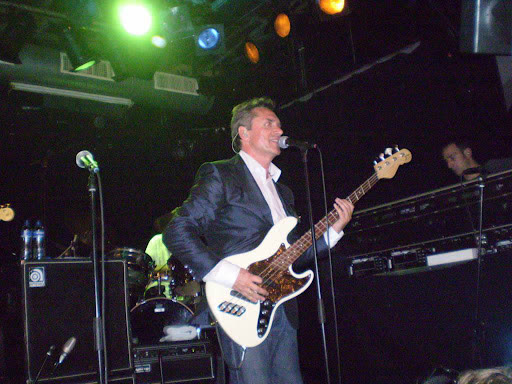
The band had existed since the late 1970s, but broke through massively in 1982. Most of the songs were written by Henny Vrienten (1948-2022) and Ernst Jansz. Their lyrics were about ordinary things: falling in love, puberty, parents, boredom, but also the threat of the atom bomb. They wrote in the language in which young people talked to each other, without the solemn tone of cabaret or the sentiment of the schlager. Sinds 1 dag of 2 (32 jaar) (1981, 'For a day or two (32 years old)') is about a man of 32 who, to his own surprise, is in love again. Under that text lies a ska rhythm, with the guitar on the offbeat.
What happened next was called the Doe Maar craze. Teenagers followed the band the way their parents had followed the Beatles. There were screaming fans at every performance, posters on bedroom walls and records high in the charts. For the first time a Dutch-language pop group stood at the centre of a real youth culture (see also Mixtape 2). In 1984 Doe Maar stopped. The farewell concerts in the Brabanthallen in Den Bosch became a national event.
The most important consequence of Doe Maar was not the craze itself, but what it did to the language. Suddenly singing in Dutch, even in the charts, was no longer schlager or cabaret, but pop. Record companies went looking for Dutch-language bands, and there were plenty. Het Goede Doel, the Utrecht duo of Henk Westbroek and Henk Temming, made synthpop in Dutch. België (1982, 'Belgium') has the cool, electronic sound of the early 1980s (see Mixtape 7), with a lyric full of absurd questions. Toontje Lager scored with Stiekem gedanst ('Secretly danced'), and the Frank Boeijen Groep from Nijmegen made new wave in their own language.
That is how Nederpop came into being, in a few years, in the sense the word mostly has now: Dutch pop music in its own language. A generation that had grown up with English-language rock heard pop music for the first time in the language in which they themselves thought and talked. Doe Maar proved that this did not have to sound old-fashioned or twee.
Track 03 · 1982-1986 · Amsterdam
Not everyone switched to Dutch. Some Dutch rock musicians kept aiming at the international market, and had success there in the 1980s. With Twilight Zone (1982) Golden Earring again scored a big hit in America, helped by a video clip that was shown on the new music channel MTV.
Guitarist Adrian Vandenberg went a step further. With his band Vandenberg he made hard rock that sounded exactly as American rock radio wanted it. Burning Heart (1982) is a power ballad: a quiet start, a big chorus and a guitar solo that lifts the song to a climax. It became a hit in the United States. Later in the 1980s Vandenberg became guitarist of the British band Whitesnake. For an American listener there was nothing Dutch to be heard in Burning Heart, and that was exactly the intention.
Meanwhile something was changing in the Netherlands itself that was less noticeable, but in the long run perhaps more important. An infrastructure for pop music came into being. Paradiso in Amsterdam, a pop venue since 1968 in a former church, grew into one of the best-known concert halls in Europe. A little further on, the Melkweg opened in 1970, in an old dairy factory. In the same year Pinkpop was held for the first time in Geleen, the festival that still exists. In the 1980s more and more cities got their own poppodium (pop venue), often with support from the local council. The Netherlands began to see pop music as culture worth supporting, like theatre and classical music.
Pop music also became a profession. From the 1980s there were conservatoire programmes for jazz, and at the end of the 1990s for pop as well, such as the Rockacademie in Tilburg and the Popacademie in Enschede, which now belongs to ArtEZ. Bands could play in their own country, build an audience and develop, and musicians could be trained for their trade. That network of venues, festivals, subsidies and programmes is one of the reasons why Dutch pop music became so broad from the 1980s onwards. The programme for which this book was written also belongs to that history.
Track 04 · 1984-1999
After Doe Maar, Dutch also became the language of rock. In the second half of the 1980s bands appeared that sang in their own language about politics, about the city and about love, with guitars and a full band. They filled the new pop venues and had a loyal audience that knew their lyrics word for word.
Klein Orkest, the group of singer and lyricist Harrie Jekkers, came from the world of cabaret. You can hear that in Over de muur ('Over the wall', 1983). It is a storytelling song about East and West Berlin, written six years before the Wall fell. It compares life on both sides and asks whether life in the West is really so much freer than in the East. In 1984 that was not an obvious question. The chorus was sung along to all over the Netherlands. Here two lines come together: kleinkunst with its strong lyrics, and pop music with a band and a singalong chorus.
The Frank Boeijen Groep from Nijmegen made new wave in Dutch. Zwart wit (1984, 'Black white') has cool, clear guitars and a lyric about racism: it is about the murder of fifteen-year-old Kerwin Duinmeijer, who in 1983 was stabbed to death on the Dam in Amsterdam by a skinhead. Where Doe Maar was cheerful and recognisable, Boeijen sounded darker and more serious, like much English new wave of those years.
De Dijk from Amsterdam chose a different source: American soul and rhythm and blues, with horns and a tight rhythm section. Singer Huub van der Lubbe wrote lyrics about Amsterdam and the people who live there. Mag het licht uit (1987, 'May the light go out') is a love song with the warmth of a soul ballad. De Dijk became one of the most popular live acts in the country and kept playing for decades. In 2010 the band even recorded an album with the American soul singer Solomon Burke.
The Scene, the band of Thé Lau, made solid guitar rock. In 1990 Iedereen is van de wereld ('Everyone belongs to the world') appeared. Lau wrote it as a song about equality, and the chorus has the simplicity of an anthem. The song did not become a big hit, but grew into a regular singalong at festivals and in the Top 2000. Thé Lau died in 2015.
In the 1990s a younger, faster generation arrived. The Heideroosjes from Horst, in Limburg, played punk: short, hard and fast, and often in Dutch. Iedereen is gek (behalve jij)! (1999, 'Everyone is crazy (except you)!') does not last long and does not take itself too seriously. So within fifteen years almost every rock genre had got a Dutch-language variant: from the storytelling song of Klein Orkest to the soul of De Dijk and the punk of the Heideroosjes.
Side C · 1990-2020
Nederhop, ballads and a new generation: in the 2010s Dutch becomes the language of the charts again.
Track 01 · 1990-2014 · Amsterdam, Oosterhout, Zwolle
Hip hop emerged in the 1970s in New York (see Mixtape 6) and reached the Netherlands in the 1980s. The first Dutch rappers did what the Nederbeat bands had done twenty years earlier: they took over the American style and rapped in English. Around 1990 that changed.
Osdorp Posse, from the Amsterdam district of Osdorp, began rapping in Dutch from 1990. Rapper Def P and his group did not choose polite, standard Dutch but broad Amsterdam dialect: raw, angry and coarse. It was hardcore rap, with heavy beats and lyrics about the street and the city. That is how Nederhop, Dutch-language hip hop, came into being. Osdorp Posse did in hip hop what Normaal had done in rock: the music came from America, but the language and the attitude were local.
The breakthrough to a large audience came from Brabant. Extince from Oosterhout scored the first Dutch-language hip hop hit in 1995 with Spraakwater ('Gift of the gab'). The song rests on a relaxed funk beat, and Extince raps smoothly and with pleasure in the language. He showed that Dutch, with its many consonants and long words, can rhyme and swing perfectly well. What had happened with ska through Doe Maar now happened with hip hop: a foreign style became a hit in the home language.
After 2000 Nederhop grew into one of the most important genres in the country. De Jeugd van Tegenwoordig from Amsterdam turned the language into a playground, with invented words, absurd jokes and electronic beats; their first hit Watskeburt?! came out in 2005. In Zwolle a scene of its own grew up around the group Opgezwolle. Typhoon came from there too, the artist name of Glenn de Randamie. On Hemel valt (2014, 'Heaven falls') he combines hip hop with soul and a horn section. In Nederhop the sound, the rhyme and the street slang weigh as heavily as the meaning. In that street slang you hear words from Sranantongo, Papiamento and other languages spoken in Dutch cities.
In the same years the Netherlands developed a very different export product: electronic dance music. In Rotterdam gabber emerged in the early 1990s, and around 2000 Dutch trance DJs were playing all over the world. That story is told in Mixtape 8. It is striking that the greatest international success of Dutch pop music in those years was music without Dutch lyrics, and often without any lyrics at all.
Track 02 · 1998-2020
Alongside hip hop and rock, the Dutch-language song grew for a large audience in the 1990s. From 1994 Marco Borsato had one big hit after another with Dutch-language ballads, and Guus Meeuwis later filled stadiums with singalongs. They were songs about love and longing, with a big chorus and a clear production.
Acda en de Munnik, the duo of Thomas Acda and Paul de Munnik, came from the theatre. They played in theatres, with guitars and piano, and wrote personal songs with lyrics you had to be able to follow. Het regent zonnestralen (1998, 'It is raining sunbeams') is an example. Here the line continues that began with kleinkunst and Boudewijn de Groot: singable, personal songs, with a guitar, in their own language.
BLØF, founded in 1992 in Vlissingen, made pop songs from Zeeland. In 2017 the band recorded Zoutelande together with the Flemish singer Geike Arnaert, formerly the singer of Hooverphonic. It is a quiet duet about a beach in Zeeland. It became one of the biggest hits ever in the Netherlands and for years one of the most streamed Dutch-language songs. BLØF also organises its own festival in Zeeland, Concert at SEA.
Around 2020 a new generation emerged that found its audience in a different way. Snelle and Froukje became known through TikTok and YouTube. They first built up their audience themselves through social media; only afterwards came the record company and the radio. Anyone who used to want to get on the radio had to get past record bosses and DJs; now a song could reach a large audience directly through social media and streaming. Snelle began as a rapper and became a pop singer. Smoorverliefd (2020, 'Head over heels') seems like a simple love song, but belonged to a campaign against texting while cycling: the video ends with an accident. The song was number 1 in the Top 40 for weeks.
Froukje makes electropop. Groter dan ik (2020, 'Bigger than me') is about climate anxiety: about the feeling that the world's problems are too big for one person. It is a protest song for a new generation. Put it next to Welterusten mijnheer de president, and you hear how Dutch-language pop music has come full circle in fifty years. Boudewijn de Groot sang in 1966 about the war in Vietnam, Froukje sings about the future of the planet. Both do so in their own language, for an audience of their own age.
In the 2010s Dutch once again became the language of the charts, as in the early 1980s. There are several explanations for this. Streaming showed what people really listened to, and that often turned out to be Dutch-language. Nederhop had let a generation hear that their own language could sound modern. Social media made it easy to find an audience without radio or a record company. Festivals such as Concert at SEA showed how large that audience was. And perhaps the need for music that comes close also played a part: songs about your own beach, your own city, your own fear.
There is much more Dutch pop music than fits here: the levenslied and the smartlap (tearjerker), Dutch metal by bands such as Within Temptation and Epica, Surinamese and Antillean music, songs in Frisian and Limburgish. All that music shows that 'Dutch' means more than one language. The Tielman Brothers sang in English and made the first Dutch rock 'n' roll. Shocking Blue topped the chart in America without a single Dutch word. Normaal sang in dialect, Osdorp Posse in broad Amsterdam. Pop music sounds Dutch through the language, through the musicians, and through something harder to put a name to: the subject, the humour, the attitude and the audience that recognises itself in it.
All the songs from this chapter, in the order of the text. Scan the code with your phone.
open.spotify.com/playlist/2suVQVE1BGstOL2qCrvkmH