
2 languages
Hongaarse en Transsylvaanse volksmusici
From HitStory, the pop encyclopedia of School of Rock · Artist
Hongaarse en Transsylvaanse volksmusici · This name refers to Hungarian and Transylvanian folk musicians who were recorded in the twentieth century, among others by researchers who wanted to capture village music. They are not famous names, but players and singers from regions where Hungarian was spoken, from the Hungarian lowlands to Romanian Transylvania. Their music was handed down from generation to generation, often without sheet music.
Music and breakthrough
The recording Verbunkos from 1964 belongs to a well-known Hungarian musical form. Verbunkos was originally the music of army recruitment in the eighteenth century. A typical verbunkos alternates slow, proud passages with fast, fiery ones. Often violins are the leaders, frequently with an accompaniment of a cimbalom and bass. Later these melodies became part of Hungarian classical music, including in the work of Franz Liszt and Johannes Brahms.
Influence
For pop history this kind of folk music is important as a source. Composers such as Béla Bartók and Zoltán Kodály travelled through Hungary and Transylvania in the early twentieth century to write down and record songs and dances, and drew inspiration from them. In this way this music shows that much of what we call modern music grew out of the rhythms, the scales and the sense of improvisation of rural players.
Listening
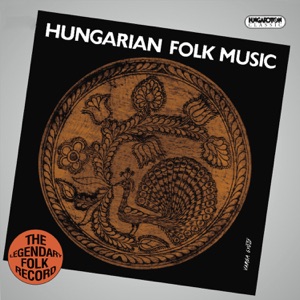 Verbunkos (wervingsdans) · Hongaarse en Transsylvaanse volksmusici, 1964