
2 languages
Verbunkos and Roma orchestras
From HitStory, the pop encyclopedia of School of Rock · Genre
Verbunkos and Roma orchestras · After 1715, the imperial army lured young men into service in Hungarian inns with drink, dance and music. From that recruitment, in German Werbung, grew the verbunkos, a name that appears in the 1770s. A slow section with dotted rhythms, the lassú, is followed by a fast and virtuosic section, the friss. Roma violinists such as János Bihari made the style famous. Liszt, Brahms and later Bartók incorporated it into their own work.
Listening
Listening tip. Here Bartók himself plays piano, with the violinist Joseph Szigeti and the clarinettist Benny Goodman, in the first movement of his Contrasts, which he called Verbunkos. Can you hear the dotted rhythms and the proud, stately gait of the old recruiting dance?
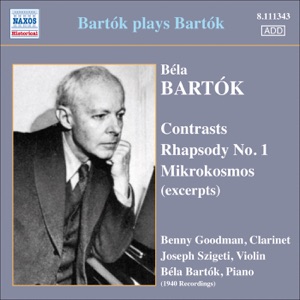 Contrasts: I. Verbunkos · Béla Bartók, Joseph Szigeti en Benny Goodman, 1940
 Verbunkos · Gyula Kóczé en zijn orkest, 1957
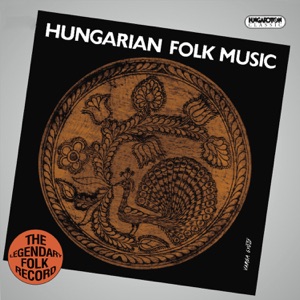 Verbunkos (wervingsdans) · Hongaarse en Transsylvaanse volksmusici, 1964
See also
- Béla Bartók, Joseph Szigeti en Benny Goodman
- Gyula Kóczé en zijn orkest
- Hongaarse en Transsylvaanse volksmusici
- Ottoman classical music
- Viennese Classicism
Categories: Genres