
2 languages
Ben Webster
From HitStory, the pop encyclopedia of School of Rock · Artist
Ben Webster was an American tenor saxophonist, born in 1909 in Kansas City, Missouri. He studied the violin, learned blues on the piano from Pete Johnson and received saxophone lessons from Budd Johnson. He played in the Young Family Band with Lester Young and became a member of the orchestra of Bennie Moten, with, among others, Count Basie and Hot Lips Page. In 1940 he joined the orchestra of Duke Ellington as a soloist, where he can be heard on Cotton Tail. Johnny Hodges was a great influence on his playing there. Because of his difficult character, things often went wrong with the rest of the band, and in 1943 he left.
Music and breakthrough
Afterwards he worked on 52nd Street in New York. In 1953 he recorded with the pianist Oscar Peterson The Consummate Artistry of Ben Webster, now known as King of the Tenors. Peterson remained an important partner on records for Norman Granz. He also played with Jazz at the Philharmonic and in 1956 recorded an album with the pianist Art Tatum. In 1959 appeared, among others, Ben Webster Meets Oscar Peterson, Coleman Hawkins encounters Ben Webster and Gerry Mulligan Meets Ben Webster. At the end of 1964 he moved to Europe, lived for three years in Amsterdam and from 1969 in Copenhagen. He died in 1973 in Amsterdam.
Influence
Webster is known for a broad, warm tenor sound, with a soft, breathy tone on ballads and a rougher punch on the fast numbers. He is regarded as one of the great swing tenors, alongside Coleman Hawkins and Lester Young. A street in Copenhagen is named after him, and the Ben Webster Foundation presents an annual prize to a young talent.
Listening
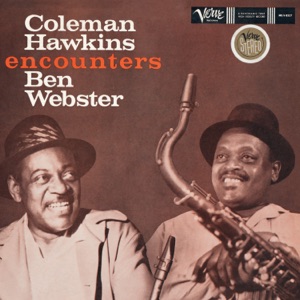 Blues for Yolande · Coleman Hawkins & Ben Webster, 1959
- It Never Entered My Mind · Coleman Hawkins & Ben Webster, 1959
- Prisoner of Love · Coleman Hawkins & Ben Webster, 1959
Discography
Studio albums
- 1953King of the Tenors
- 1955Music For Loving
- 1956Sophisticated Lady
- 1959Ben Webster and Associates
- 1959Ben Webster Meets Oscar Peterson
- 1959Coleman Hawkins encounters Ben Webster
- 1959Gerry Mulligan Meets Ben Webster
- 1959The Soul of Ben Webster
- 1962BBB & Co.
- 1962Roots
- 1963More (Theme From Mondo Cane)
- 1963Soulmates
- 1964See You at the Fair
- 1968Ben Webster Meets Don Byas
- 1969At Ease
- 1969For the Guv'nor
- 1971Atmosphere for Lovers and Thieves
- 1972Autumn Leaves
- 1972Ben at His Best
- 1972Swingin’ in London
- 1973Previously Unreleased Recordings
- 197452nd Street; Volume 2
- 1975The Tatum Group Masterpieces
- 1977Carol & Ben
- 1978Did You Call?
- 1978No Fool, No Fun
- 1983Big Ben Time
- 1983Jazz At The Philharmonic - The Challenges 1954
- 1985Ballads and Blues
- 1985Days of Wine and Roses
- 1987Ben and “Sweets”
- 1988Stormy Weather
- 1989Ben Webster Meets Bill Coleman
- 1989My Romance
- 1989Plays Duke Ellington
- 1989Three Great Swing Saxophones
- 1990The Jeep Is Jumping
- 1991There Is No Greater Love
- 1992The Verve Years
- 1994The Horn
- 1996Jazz & Blues
- 1996Sax, vol 1
- 1997Tenor Titans
- 1997The Warm Moods
- 1998The Soul of Ben Webster
- 2000Cadillac Slim
- 2001Cotton Tail
- 2001Here Swings The Judge
- 2002Super Session
- 2005Confirmation
- 2006The Album
- 2008Soho Nights Vol. 1
- 2009Dwn Beat (The Ben Webster-Art Tatum quartet)
- 2009The Brute and The Beautiful
- 2011Gentle Ben
- 2011The Complete 1960 Jazz Cellar Session
- 2012Ben/Buck
- 2012Soho Nights Vol. 2
- 2014Groove the Complete Legendary 1961 Session
- 2017Plays Ballads
- 2023Hannover 1972
Other work
- 1957Soulville
In School of Rock
The chapters, maps and magazine stories of School of Rock are currently available in Dutch only.
- Jazz MapNL Map
- After Hours: Session 2NL Reader