
2 languages
Arthur Bliss
From HitStory, the pop encyclopedia of School of Rock · Artist
Sir Arthur Bliss was born in 1891 in Barnes, then still in Surrey, the eldest of three sons of a businessman from Massachusetts. His mother died when he was four and his father passed on to him a love of the arts. He studied classics and music at Cambridge and then spent a year at the Royal College of Music, where Ralph Vaughan Williams and Gustav Holst inspired him more than his teacher Charles Stanford. His studies were cut short by the First World War, in which he served with distinction.
Music and breakthrough
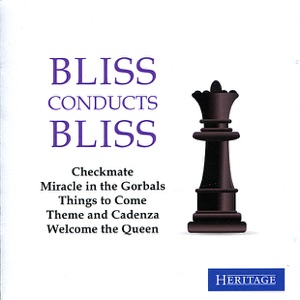
After the war he was known as a headstrong, modernist composer. His works include A Colour Symphony, the cello concerto, the ballets Checkmate and Miracle in the Gorbals and the clarinet quintet. He wrote the music for the 1936 film Things to Come, including a march. In the Second World War he returned from the United States to England to work for the BBC, where he became director of music. After the war he became Master of the Queen's Music. He died in 1975.
Influence
In his later years his music was valued but also found old-fashioned, and it faded into the shadow of younger colleagues such as William Walton and Benjamin Britten. After his death many recordings have appeared, and part of his work has remained in the British repertoire. Bliss shows how a composer from the classical tradition also wrote for the cinema, with a solid, rhythmic orchestral sound.
Listening
 Things to Come: March · Arthur Bliss, 1936
Discography
Studio albums
- 1977Cello Concerto / Miracle In The Gorbals (Suite From The Ballet)
- 1987A Colour Symphony / Checkmate Suite
- 1988Bax: Clarinet Sonata / Bliss: Clarinet Quintet / Vaughan Williams: 6 Studies in English Folksong
- 1989Music for Clarinet and Piano, Volume 2
- 1989Music for Oboe & Strings
- 1990Christopher Columbus / Seven Waves Away / Baraza / Men of Two Worlds
- 1991Cello Concerto / Hymn to Apollo / The Enchantress
- 1991Choral Works
- 1991Morning Heroes
- 1991Pastoral "Lie strewn the white flocks" / Music for Strings
- 1991Piano Works
- 1991Viola Sonata / Masks / Triptych / Two Interludes / Toccata
- 1992Bliss
- 1993Cello Concerto / Meditations on a Theme of John Blow / Introduction and Allegro
- 1994The Olympians
- 1996A Colour Symphony / Adam Zero
- 1996Cello Concerto / Music for Strings / Two Studies
- 1996Moeran: Sinfonietta / Rawsthorne: Concerto for String Orchestra / Bliss: Music for Strings
- 1996Violin Concerto / The Lady of Shalott
- 1997Morning Heroes
- 1999BBC Music, Volume 7, Number 8: Elgar: Froissart / Bliss: Checkmate / Vaughan Williams: Symphony no. 4
- 1999Bliss: Miracle in the Gorbals / Discourse for Orchestra
- 2000A Knot of Riddles / Angels of the Mind and other songs
- 2001The Holst Singers and Orchestra: Britten, Bliss, and Holst
- 2002String Quartet No. 1 / Conversations / String Quartet in A Major
- 2003Oboe Quintet / Piano Quartet / Viola Sonata
- 2004Clarinet Quintet / String Quartet No. 2
- 2004Colour Symphony / The Enchantress / Cello Concerto
- 2004Piano Concerto / Piano Sonata / Concerto for Two Pianos
- 2005Checkmate / Mêlée Fantasque
- 2006Britten & Bliss
- 2008String Quartet no. 1 in B-flat / String Quartet no. 2 in F minor
- 2010Meditations on a Theme by John Blow / Metamorphic Variations
- 2010Walton: Facade / Siesta / Scapino / Portsmouth Point / Orb and Sceptre / Bax: Coronation March 1953 / Bliss: Welcome the Queen
- 2012British Clarinet Sonatas, Volume 1
- 2014Hymns to Saint Cecilia
- 2015Morning Heroes / Hymn to Apollo
- 2015The Beatitudes
- 2016British Violin Sonatas, Volume Two
- 2018The Beatitudes / Introduction and Allegro / God Save the Queen
- 2018The Bel Canto Violin, Volume 5
- 2019British Tone Poems, Vol. 2
- 2019Mary Of Magdala / The Enchantress / The Meditations On A Theme By John Blow
- 2020The Decca Originals
- 2020The Romantic Piano Concerto, Volume 81: Rubbra: Piano Concerto in G, op. 85 / Bliss: Piano Concerto in B-flat major
- 2021British Oboe Quintets
- 2021English Music for Strings
- 2023Chamber Music
- 2024Works for Brass Band
- 2025Miracle in the Gorbals / Metamorphic Variations
In School of Rock
The chapters, maps and magazine stories of School of Rock are currently available in Dutch only.
- The Dream Factory: Film Reel 3NL Reader
Mentioned in other articles
- British concert composers (Denham and Ealing) Genre
Arthur Bliss made the music for Things to Come (1936); the march from it became a favourite concert piece.