
2 languages
Archie Shepp
From HitStory, the pop encyclopedia of School of Rock · Artist
Archie Shepp, born on 24 May 1937 in Fort Lauderdale, Florida, and raised in Philadelphia, is an American saxophonist, teacher and playwright. He played banjo with his father and studied piano and saxophone. From 1955 to 1959 he studied drama at Goddard College. He then played in the band of the pianist Cecil Taylor. In 1963 his first record under his own name appeared, with the trumpeter Bill Dixon. At the end of 1964 he took part in the sessions for John Coltrane's A Love Supreme and in 1965 he recorded Ascension with him.
Music and breakthrough
In 1965 he made Fire Music, on which his political awareness and his Afrocentric outlook became visible, with a recitation of an elegy for Malcolm X. The Magic of Ju-Ju from 1967 was deeply rooted in African music and used an African percussion ensemble. In 1969 he played at the Pan-African Cultural Festival in Algiers. In 1972 Attica Blues appeared, a response to the uprising at Attica prison, along with The Cry of My People. Shepp also wrote plays, including The Communist and Lady Day: A Musical Tragedy. Later he also recorded blues, ballads and spirituals, such as Goin' Home with Horace Parlan in 1977.
Influence
Shepp became a professor at the University at Buffalo and then, for thirty years, at the University of Massachusetts Amherst. He shows how the avant-garde jazz of the 1960s linked music and the struggle for civil rights.
Listening
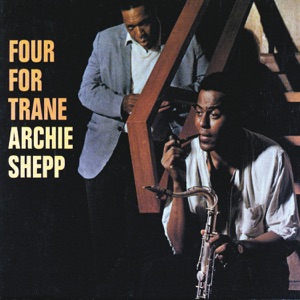 Rufus · Archie Shepp, 1964
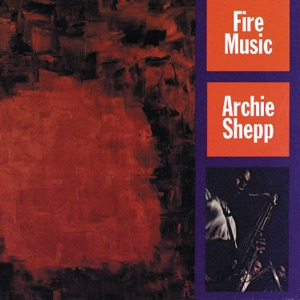 Malcolm, Malcolm, Semper Malcolm · Archie Shepp, 1965
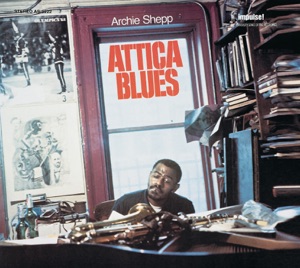 Attica Blues · Archie Shepp, 1972
Discography
Studio albums
- 1964Bill Dixon 7-Tette
- 1964Four for Trane
- 1965Fire Music
- 1966On This Night
- 1966Rufus
- 1967Mama Too Tight
- 1967The Magic of Ju-Ju
- 1968The Way Ahead
- 1969Blasé
- 1969Poem for Malcolm
- 1969Yasmina, a Black Woman
- 1970Black Gipsy
- 1970Coral Rock
- 1970For Losers
- 1970Pitchin Can
- 1971Things Have Got to Change
- 1972Attica Blues
- 1973The Cry of My People
- 1974Kwanza
- 1975A Sea of Faces
- 1975Jazz a confronto 27
- 1975There's a Trumpet in My Soul
- 1976Bijou
- 1976Doodlin’
- 1976Force - Sweet Mao - Suid Afrika 76
- 1976Hi-Fly
- 1976Mariamar
- 1977A Touch of the Blues
- 1977Ballads for Trane
- 1977Day Dream
- 1977Goin’ Home
- 1978Body and Soul
- 1978Further Fire Music
- 1978Maple Leaf Rag
- 1978The Tradition
- 1979Invitation
- 1979Lady Bird
- 1979Tray of Silver
- 1980The Long March
- 1980Trouble in Mind
- 1981Duet
- 1981Here Comes the Family
- 1981I Know About the Life
- 1982Soul Song
- 1984Down Home New York
- 1984On Green Dolphin Street
- 1984The Good Life
- 1985Duo - Eagle's Flight
- 1986Devil Blues (The Essential Archie Shepp)
- 1986Little Red Moon
- 1986Looking at Bird
- 1986You're My Thrill
- 1987Reunion
- 1987The Fifth of May
- 1987Three for Freedom
- 1989Stream
- 1990Archie Shepp & Jeanne Lee
- 1990Passion
- 1990The Long March Part 1
- 1991Octiminus
- 1991Tenor Legacy
- 1992Black Ballads
- 1992Perfect Passions
- 1992Ténor
- 1993Just Friends (soundtrack)
- 1995Song of the Forest Boogaraboo
- 1997Sinon Oui (soundtrack)
- 1999Conversations
- 1999St. Louis Blues
- 1999True Blue
- 2000Boom Bop
- 2002Bird Fire
- 2002Hungarian Bebop
- 2002Left Alone Revisited
- 2003Yasmina, a Black Woman / Poem for Malcolm
- 2005First Take
- 2007Gemini
- 2007Lover man (soundtrack)
- 2008Passport to Paradise
- 2011For Losers / Kwanza
- 2011Red Eyes
- 2011Wo!man
- 2013Voodoo Sense
- 2020Consequences Revisited
- 2020Ocean Bridges
- 2021Blasé And Yasmina Revisited
- 2021Let My People Go
- 2022The Way Ahead / Kwanza / The Magic of Ju‐Ju Revisited
- 2023Derailleur
- 2023Just at the Turn of the Tide
In School of Rock
The chapters, maps and magazine stories of School of Rock are currently available in Dutch only.
- Jazz MapNL Map
- After Hours: Session 3NL Reader