
2 languages
Quintette du Hot Club de France
From HitStory, the pop encyclopedia of School of Rock · Artist
The Quintette du Hot Club de France was a jazz group founded in France in 1934 by the guitarist Django Reinhardt and the violinist Stéphane Grappelli. The group existed in one form or another until 1948. Its origins lay in informal jam sessions backstage at the Hôtel Claridge on the Champs-Élysées in Paris, where the two played in the summer of 1934 in a band led by the bass player Louis Vola. The concert promoters Pierre Nourry and Charles Delaunay, leaders of the Hot Club de France, an association that sought to promote appreciation of jazz, urged them to form a permanent group. When Reinhardt's brother Joseph joined as a second rhythm guitarist, the quintet was complete.
Music and breakthrough
What was special was the line-up. Unlike the New Orleans groups of Louis Armstrong, this quintet had what was then a new, all-string line-up: acoustic guitar and violin carried the melody, a double bass replaced the tuba, and the rhythm guitars provided chords and rhythm. There was no drummer. The group popularised Gypsy jazz, and began recording in November 1934. At first the earliest records appeared under the name Delaunay's Jazz. Later the quintet was called Django Reinhardt et le Quintette du Hot Club de France, avec Stéphane Grappelly. Later versions sometimes had a clarinettist in place of Grappelli, or a drummer.
Influence
The critic Thom Jurek called the quintet one of the most original bands in the history of recorded jazz. It was one of the first and most important jazz groups in Europe. Minor Swing from 1937, the track featured in School of Rock, shows how European jazz found a sound of its own.
Listening
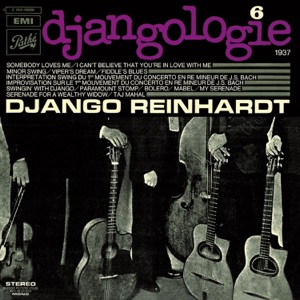 Minor Swing · Quintette du Hot Club de France, 1937
In School of Rock
The chapters, maps and magazine stories of School of Rock are currently available in Dutch only.
- After Hours: Session 1NL Reader
Mentioned in other articles
- Gypsy jazz (jazz manouche) Genre
In 1934 the guitarist Django Reinhardt and the violinist Stéphane Grappelli founded the Quintette du Hot Club de France in Paris.