 School of RockSchool of Rock
School of Rock · Mixtape 5
From bebop to trip hop: how jazz turned from dance music into art music after 1945, and then turned up everywhere in pop.
In the 1930s jazz was America's pop music. The big bands of Count Basie, Duke Ellington and Benny Goodman played in ballrooms to thousands of dancers, and their records were on the radio. Ten years later jazz musicians were playing in small clubs in New York at tempos nobody could dance to any more, with chords that even other musicians could not always follow.
What happened to jazz after 1945 looks like a series of answers. Bebop reacted to the swing of the big bands. Cool jazz reacted to bebop, hard bop to cool jazz, and free jazz threw out all the agreements at once. After that, musicians looked for a way back to a large audience, with electric instruments, funk rhythms and later samples and beats. With every step, tempo, harmony, rhythm and line-up changed. The question this chapter keeps asking: why did jazz become 'difficult' after the war, and how did it still find its way back to a large audience?
If you play yourself, this is also the story of the material you still work with. The standards, the form of a jazz performance, the way a rhythm section keeps time: much of it was settled in these twenty years.
Side A · 1940-1958
Jam sessions in Harlem and a conga in the big band.
Track 01 · from 1940 · New York
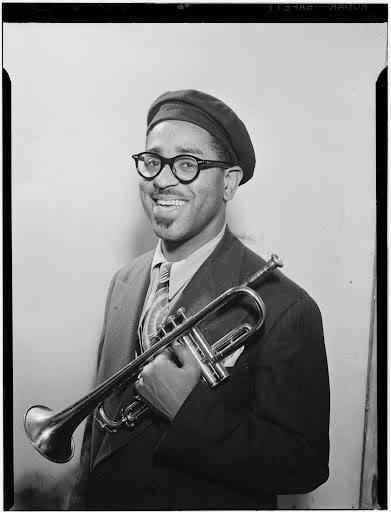
In the early 1940s many young jazz musicians played in a big band in the evenings. The work was tightly organised: the arranger wrote out the parts, the soloist got a few bars, and the tempo had to stay suitable for dancers. After work they went somewhere else to play the way they wanted. One of those places was Minton's Playhouse in Harlem, a club where jam sessions were held after the big venues had closed. Pianist Thelonious Monk and drummer Kenny Clarke often played there.
Bebop came out of those sessions. It was music for musicians, not for dancing. The tempos were fast, often above 250 beats per minute, and the chords changed quickly, sometimes twice per bar. Anyone who wanted to join in had to know the chord progressions and be able to follow them at that speed. That was also the point: the difficulty kept out musicians who could not keep up.
The two names most closely linked with bebop are alto saxophonist Charlie Parker and trumpeter Dizzy Gillespie. They played lightning-fast lines of eighth notes that ran through the chords, and they used notes that still sounded wrong in swing. On top of an ordinary chord they put the ninth, the raised eleventh, the thirteenth or the flat ninth. A well-known technique is the tritone substitution: you replace a dominant seventh chord with the dominant a tritone (three whole tones) away. Instead of G7 to C you play D♭7 to C. The bass then descends chromatically, and the melody gets a sharper colour.
Many bebop pieces are contrafacts: new melodies on the chords of an existing song. Musicians took a well-known standard, kept the chords and wrote their own, much busier melody over them. That way they did not have to pay royalties for the original melody, and they already knew the chords. Anthropology is built on I Got Rhythm by George Gershwin. That chord sequence was used so often that it got a name of its own: rhythm changes. Underneath Donna Lee lies the standard Indiana, and Tadd Dameron's Hot House is written on What Is This Thing Called Love.
The form became fixed too. A bebop performance begins with the head, the theme, often played by saxophone and trumpet together. Then come the solos, in which each musician improvises over the chords of the theme. At the end the head returns. That form, head, solos, head, is still the standard in jazz. The line-up shrank from a big band of sixteen to a combo of four or five musicians: one or two horns, piano, double bass and drums. Kenny Clarke moved the timekeeping from the bass drum to the ride cymbal. That left the drummer's bass drum and snare drum free for accents, the so-called bombs, which push the soloist on.
Bebop is mainly instrumental music. There is a vocal branch, scat singing, in which singers like Ella Fitzgerald and Gillespie himself improvise with meaningless syllables the way a saxophone does. But the core lies with the horn players.
The price of all that innovation was the audience. Anyone who wanted to dance went to rhythm and blues, the music that stands at the beginning of rock 'n' roll in Mixtape 1 (The birth of pop music). Jazz became music for listening to, in small clubs, to an audience made up mostly of connoisseurs. That began the split between jazz and pop that shapes the rest of this chapter.
Track 02 · from 1947 · New York, Havana, Rio de Janeiro
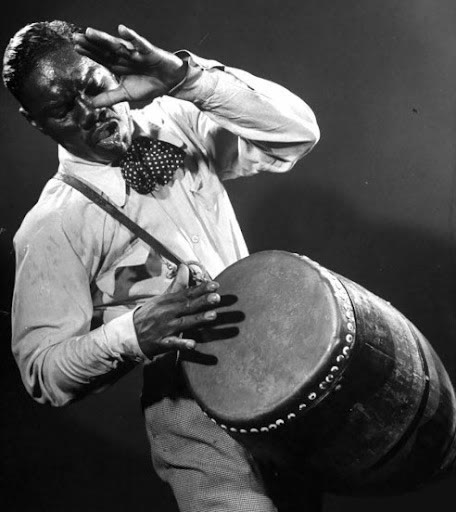
Dizzy Gillespie was not only interested in harmony. He also wanted to know what was possible rhythmically. In the 1940s many Cubans and Puerto Ricans lived in New York, and Afro-Cuban music was heard in the dance clubs. In 1947 Gillespie brought the Cuban conga player Chano Pozo into his big band. Pozo was born in Havana and had come to New York shortly before; trumpeter Mario Bauzá had introduced him to Gillespie. He played conga and sang, and he knew the rhythms of Afro-Cuban religious music.
A conga as a solo instrument in a jazz orchestra was new in 1947. Jazz drummers played a swing rhythm: the eighth notes are divided unevenly, long-short. Afro-Cuban music is built on evenly divided notes and on a pattern that holds everything together: the clave. That is a rhythm of five beats spread over two bars, three in one half and two in the other. All the other parts play in relation to that clave. Beneath it lie repeated accompaniment figures, the montunos, and the rhythm of the habanera, which could already be heard in the early jazz of New Orleans.
In Manteca (1947) you hear those two worlds side by side. The piece begins with Pozo's conga and a repeated figure in the bass, with the horns joining in layer by layer. In the bridge the band switches to swing and bebop, and then back to the Cuban rhythm. The track became one of the first big successes of what would later be called Latin jazz.
In the same year Gillespie's orchestra played Cubana Be, Cubana Bop, written by George Russell together with Gillespie and Pozo. Russell was a composer who thought about whether you could improvise on a scale instead of on a rapidly changing chord progression. Cubana Be, Cubana Bop is considered one of the first modal jazz pieces. That idea returns on side B with Miles Davis.
The collaboration was short. Chano Pozo was shot dead in a bar in Harlem in December 1948, aged 33. But the link between jazz and Afro-Cuban music remained. From it grew Afro-Cuban jazz, which drew on Cuban dance forms such as the son, the mambo and the cha-cha-chá.
In the late 1950s a second Latin American current arrived, from Brazil. In Rio de Janeiro guitarist and singer João Gilberto and composer Antônio Carlos Jobim created bossa nova from 1958: a soft, restrained version of samba, with jazz chords and a singing voice that is almost a whisper. Bossa nova is Brazilian and therefore not Afro-Cuban; the rhythm is different and so is the mood. Through the American saxophonist Stan Getz, bossa nova became popular in the United States. The album Getz/Gilberto (1964), with The Girl from Ipanema sung by Astrud Gilberto, became a hit far beyond the jazz audience. Genres such as salsa and merengue are sometimes also mentioned under Latin jazz, but those are later and partly different styles.
Side B · 1949-1965
After bebop jazz goes in three directions: calmer, rawer or completely free.
Track 01 · from 1949 · New York
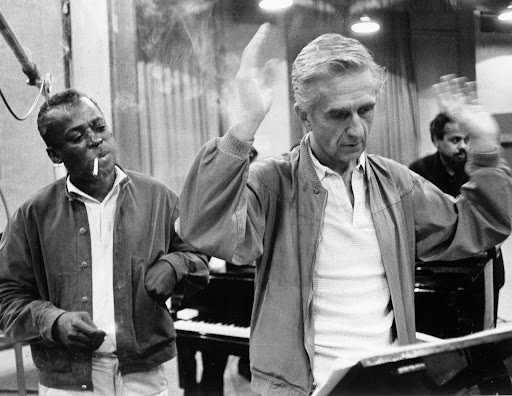
Miles Davis began as a young trumpeter in Charlie Parker's band. He could play the fast bebop, but his own tone was different: soft, with little vibrato, and with a lot of space between the notes. In 1949 and 1950 he recorded a series of tracks with a nonet, a group of nine musicians, which were later collected as Birth of the Cool (the album appeared under that name in 1957).
The line-up was unusual. Besides trumpet, trombone, alto saxophone and baritone saxophone, the band had a French horn and a tuba, instruments you were more likely to meet in a symphony orchestra than in a jazz club. One of the arrangers was Gil Evans. He thought in terms of tone colour: he had the horns play so close together that they melted into one soft cloud of sound. The band included Gerry Mulligan on baritone sax and Lee Konitz on alto.
Cool jazz was a reaction to bebop. The tempo went down, the tone became softer and there was more room for arrangement: written-out parts alongside the improvisation. Musicians took ideas from classical music, such as counterpoint, in which two or more melodies run at the same time, and a deliberate use of tone colour. Davis and Evans kept working together. On albums like Miles Ahead (1957) and Sketches of Spain (1960) Davis plays solo in front of a large orchestra arranged by Evans.
Davis took the next step in 1959 with Kind of Blue. He had a sextet with John Coltrane on tenor sax, Cannonball Adderley on alto sax, pianist Bill Evans, bassist Paul Chambers and drummer Jimmy Cobb. For the recording sessions Davis brought sketches instead of fully worked-out pieces. The idea: improvise on a scale, a mode, instead of on a rapidly changing chord progression. In So What the music stays on one chord for sixteen bars, then eight bars a semitone higher, and then back again. A soloist is no longer in a hurry to reach the next chord change and can build a melody slowly. That is modal jazz, and it is the counterpart of bebop.
Blue in Green is the shortest and quietest piece on the album. The form is a cycle of ten bars, which is odd in a world of pieces of eight, twelve and thirty-two bars. There is also no clear tonic: the piece never seems to come home anywhere. Bill Evans's chords are just as important as the trumpet. Evans often played voicings without the root note in his left hand, which makes the chords sound open and floating. Bill Evans later said that he had written a large part of the piece, although it is credited to Davis.
Kind of Blue became the best-selling jazz album ever. It is also the album you most often hear today as background: in restaurants, in shops and on 'coffee table jazz' playlists. That is a strange fate for a record that was a radical step in 1959. The calm that was a choice then is now used as atmosphere.
Track 02 · from 1952 · California
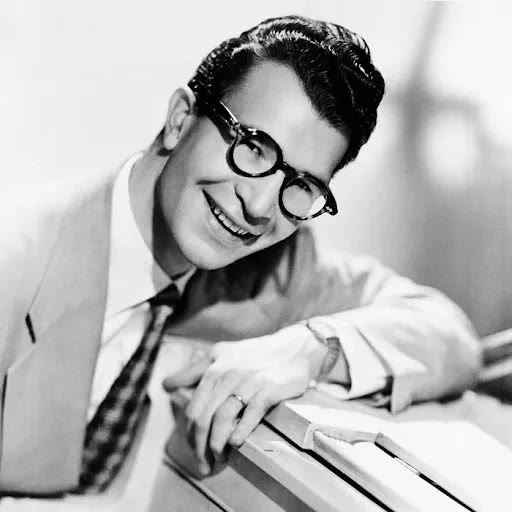
In the 1950s cool jazz got a variant of its own in California: West Coast jazz. Many musicians there also worked in the film and television studios of Los Angeles. They were good sight-readers, used to arrangements, and interested in classical music. The result was jazz that sounded light and clear, with a lot of attention to the way the instruments fitted together.
Gerry Mulligan, the baritone saxophonist from the Birth of the Cool band, moved to Los Angeles and in 1952 started a quartet there with trumpeter Chet Baker. The striking thing: there was no piano. Without piano or guitar there is no chord under the horns, only the double bass and the drums. That makes room for counterpoint: baritone and trumpet weave two melodies through each other, and together they suggest the harmony a pianist would otherwise play.
My Funny Valentine, a song by Rodgers and Hart from 1937, became one of Chet Baker's best-known recordings in this quartet's version. He plays the melody almost without ornament, softly and close to the microphone. Baker later became known as a singer too, with the same restrained style.
Instruments that did not belong in jazz, such as the French horn and the tuba, also ended up in West Coast bands. And there was experimenting with time signatures. Jazz was almost always in four beats to the bar, sometimes in three. Pianist Dave Brubeck, who had started in San Francisco, recorded the album Time Out with his quartet in 1959, on which almost every piece explores an unusual time signature.
The best-known track on that album is Take Five, written by alto saxophonist Paul Desmond. It is in five-four time. The piano vamp on E♭m and B♭m repeats throughout and divides the five beats into three plus two. Drummer Joe Morello plays a solo within that time signature while the piano carries on. Desmond's tone on the alto sax is light and dry, the opposite of the fierce bebop saxophone. Take Five was released as a single and reached the charts, which was remarkable for a jazz track in five-four. The same album contains Blue Rondo à la Turk, in nine eighths.
Track 03 · from 1954 · New York
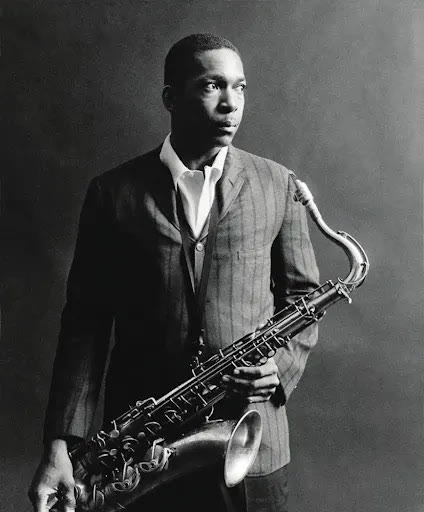
On the East Coast many Black musicians found cool jazz too restrained, too white and too little connected to where jazz came from. Their answer is called hard bop: back to the African American roots. Hard bop uses the harmony and the solo technique of bebop, but mixes them with rhythm and blues, gospel and blues. The tempo is often slower than in bebop, the groove heavier and 'funkier'. Melodies sometimes resemble gospel choruses, with call and response between the horns.
A large part of this music appeared on the New York label Blue Note, founded in 1939 by the German immigrant Alfred Lion. The recordings were not made in New York itself, but in the studio of sound engineer Rudy Van Gelder in New Jersey. Van Gelder recorded the instruments close up and clear, with a warm, full sound. The sleeves became recognisable too: photos by Francis Wolff, designed by Reid Miles, with big lettering and lots of blocks of colour. The 'Blue Note sound' is therefore about music, recording technique and design all at once.
John Coltrane, whom you already met on Kind of Blue, made the album Blue Train for Blue Note in 1957, the only album he recorded as a leader for that label. The title track is a minor blues: twelve bars, with a theme the horns play together. Then come long solos by Coltrane, trumpeter Lee Morgan and trombonist Curtis Fuller. Coltrane plays fast streams of notes that approach the chord from all sides; a critic later called this 'sheets of sound'. Coltrane then developed rapidly, via Giant Steps (1960) to A Love Supreme (1965), and in his last years touched on free jazz.
The most important school of hard bop was a band: Art Blakey's Jazz Messengers. Drummer Art Blakey founded the group in the mid-1950s, at first together with pianist Horace Silver. Blakey remained the leader until his death in 1990, but the rest of the line-up changed constantly. Young musicians joined, learned the trade and then started a band of their own. Among them were Lee Morgan, Wayne Shorter, Freddie Hubbard and later Wynton Marsalis. Blakey's drumming, with hard rolls and the crack on the hi-hat on beats two and four, pushed the soloists forward.
Freddie Hubbard was a trumpeter with the Jazz Messengers and recorded albums of his own for Blue Note in the early 1960s. In Arietis (1962) you hear what hard bop sounded like then: a tight arrangement for the horns, a rhythm section that drives firmly on, and a trumpet with a fierce, clear tone. Hard bop became the basis of what many people still call 'ordinary' jazz. Anyone who studies jazz at a conservatoire plays a lot of repertoire from these years.
Track 04 · from 1959 · New York
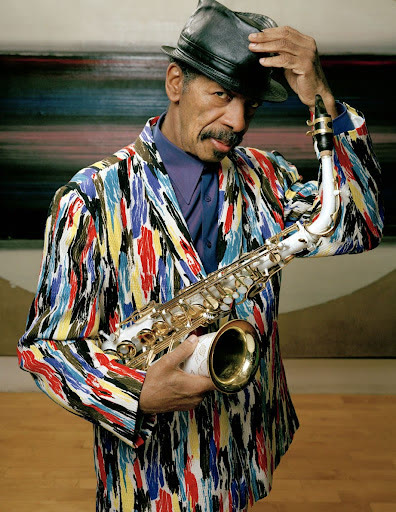
Bebop, cool jazz and hard bop differed from each other, but they shared agreements. There was a theme, a chord progression, a fixed time signature and a tempo. The soloist improvised within those limits. Free jazz let go of those agreements. There are hardly any, or no, pre-composed melodies or chord progressions. The tempo can be free, and the musicians often improvise at the same time instead of in turn. Dissonances are no longer a colour but material.
The name comes from an album by alto saxophonist Ornette Coleman from Texas. Coleman came to New York in the late 1950s with a quartet without a piano: trumpeter Don Cherry, bassist Charlie Haden and drummer Billy Higgins. Without a piano there was no chord to pin the soloists down. Coleman played a plastic alto saxophone and had his own view of pitch: he sometimes played just beside the 'right' note, the way a blues musician does.
Lonely Woman is on The Shape of Jazz to Come (1959). The piece does have a theme, but it sounds as if two tempos are running at once. The drums play a fast pattern, the bass a repeated figure, and saxophone and trumpet play a slow, plaintive melody above them. It is one of the best-known pieces of free jazz and is still played by other musicians.
In 1960 Coleman recorded Free Jazz, with two quartets at once, one in each stereo channel. They improvised collectively, for almost forty minutes. The sleeve carried a painting by Jackson Pollock, the American painter who dripped and threw paint onto the canvas. The comparison was obvious: here too no predetermined plan, but a process.
After Coleman others went further still. Pianist Cecil Taylor played clusters of notes with the force of a percussionist. Saxophonist Albert Ayler used the saxophone for shouts, screams and overtones. With Frank Wright, also a tenor saxophonist, the sound itself is the subject: there is no longer a melody in the classical sense.
Free jazz was the least accessible form of jazz, and that was partly the intention. The music arose in the years of the civil rights movement, when Black Americans were fighting segregation and discrimination. For many musicians, deliberately departing from convention was also a political statement: they refused to keep to rules made by others, in music and beyond. That put jazz further from the general public than ever. A younger listener also had an alternative in those years: in Mixtapes 3 and 4 you can see how The Beatles and the rock bands of the 1960s won over the public.
Side C · 1969-now
Fusion, smooth jazz, nu jazz and trip hop: jazz finds its way back to the audience.
Track 01 · from 1969 · New York, Los Angeles
In the late 1960s jazz records sold badly, while rock and soul filled the stadiums. Miles Davis listened to Jimi Hendrix, Sly and the Family Stone and James Brown, and wanted that energy in his own music. On In a Silent Way (1969) his band plays electric pianos and electric guitar, and on Bitches Brew (1970) an electric bass and two or three drummers and percussionists at once are added. Producer Teo Macero then cut and spliced long jam sessions into pieces. Bitches Brew became the key album of a new current: fusion, the merging of jazz and rock.
What changes in the music? The swing largely disappears. Instead of the long-short division of jazz, the drums play straight eighths, as in rock, or funk grooves with sixteenths. The drummer plays more like a rock drummer than a jazz drummer. Electric instruments are added: the Fender Rhodes piano, synthesizers, the fretless bass guitar and effects pedals. But the harmony remains richer than in rock, and improvisation remains central. Fusion could be instrumental or with vocals.
Many musicians from Davis's band went on to start fusion groups of their own. Herbie Hancock made Head Hunters (1973), Chick Corea started Return to Forever and guitarist John McLaughlin the Mahavishnu Orchestra. Keyboard player Joe Zawinul and saxophonist Wayne Shorter, who both played on Bitches Brew, founded Weather Report in 1970.
Birdland (1977), the opening track of the album Heavy Weather, is named after the jazz club in New York, which was itself named after Charlie Parker ('Bird'). The track opens with a bass line on Zawinul's synthesizer, after which Jaco Pastorius's fretless bass comes in with harmonics: high, glassy tones produced by lightly touching the string. Then Zawinul builds up layer on layer with his synthesizers until the whole theme is in place. The melody is so simple that you can sing along, and people did: the vocal group The Manhattan Transfer later put lyrics to it.
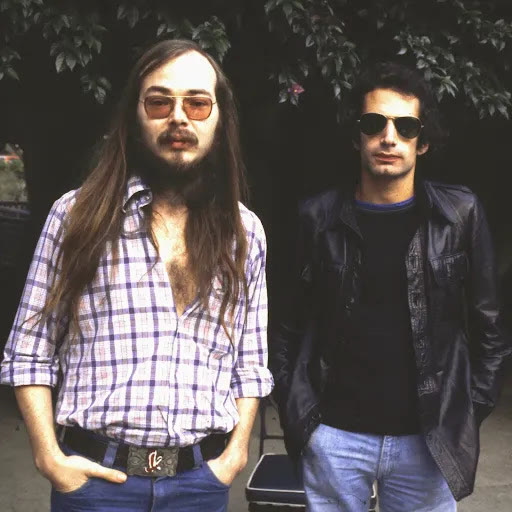
The influence also ran the other way: pop musicians started using jazz. Steely Dan, the duo of Walter Becker and Donald Fagen, wrote pop songs with jazz chords and had them played by the best studio musicians of Los Angeles and New York. The title track of Aja (1977) lasts eight minutes. Halfway through, Wayne Shorter plays a saxophone solo, and drummer Steve Gadd plays a solo while the band carries on around him. That was jazz on a pop record that was in the charts.
Track 02 · from 1975 · United States
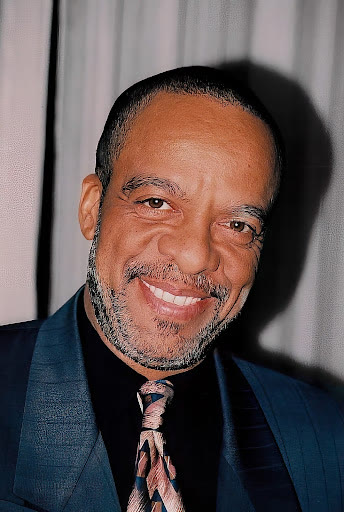
Fusion brought jazz back to the radio, but a lot of fusion was still long, loud and complicated. In the mid-1970s a softer variant arose that became enormously popular in the 1980s: smooth jazz. The music borrows a lot from soul and funk: a relaxed groove, warm chords, a melody played on saxophone, guitar or electric piano. Synthesizers and electronic drums are added, and the production is smooth and clean.
Guitarist George Benson had success in 1976 with Breezin', and saxophonist Grover Washington Jr. became one of the best-known names of the style. His album Winelight (1980) contains Just the Two of Us, sung by Bill Withers. The song became a big hit.
The chord sequence of Just the Two of Us took on a life of its own. Step by step: IVmaj7, III7, vi7, then v7 to I7, and back to the start. That sequence sounds warm and a little wistful, and is used in many later pop songs, R&B tracks and videos on the internet. Among musicians it is now simply called 'the Just the Two of Us progression'. That is how a smooth jazz hit from 1980 lives on in music that otherwise has little to do with jazz.
Singer Al Jarreau sat between jazz, soul and pop. On Roof Garden (1981), from the album Breakin' Away, he uses his voice as an instrument. He scats, like the bebop singers in track 1 of side A, and makes percussive sounds with his mouth that sound like a conga or a bass guitar.
Smooth jazz was commercial, radio-friendly and easy to listen to. In the United States radio stations appeared that played only this music. Saxophonist Kenny G sold millions of albums in the 1980s and 1990s. Jazz critics struggled with it. After forty years in which jazz had grown ever more complex, this sounded like background music. The question that kept coming back: is this still jazz? There is little improvisation in it, little risk, and the music is made not to disturb. At the same time, smooth jazz did exactly what the central question of this chapter asks for: jazz came back to a large audience.
Track 03 · from 1990 · London, Paris
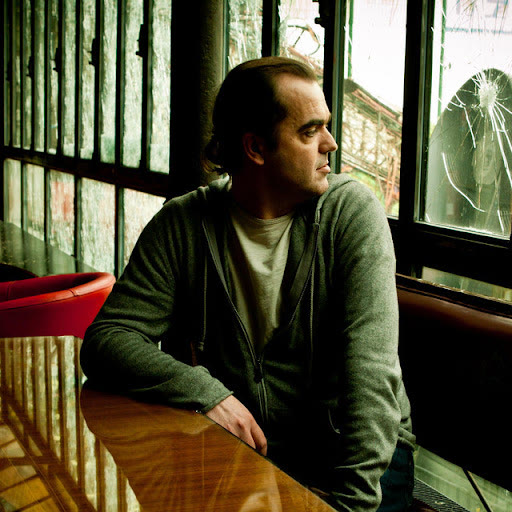
In the 1980s and 1990s a new generation discovered jazz through records instead of through clubs. Hip hop producers searched old jazz, soul and funk records for breaks and loops to sample. Groups like A Tribe Called Quest built their tracks on jazz samples. The British Us3 made Cantaloop (Flip Fantasia) in 1993 on a sample of Herbie Hancock's Cantaloupe Island, and for that received permission from Blue Note to search the archive. How sampling shaped hip hop is covered in Mixtape 6 (Fear of a Black Planet).
From that meeting of jazz and club culture came nu jazz. It is above all an electronic form of jazz, combined with house, downtempo and breakbeat. Producers set samples of old jazz records next to live-played instruments. There is little or no singing, sometimes with a guest vocalist. There is plenty of room for experiment: a track can work just as well in a club as on headphones.
St. Germain is the project of the French producer Ludovic Navarre. His album Tourist (2000) appeared on Blue Note, the same label as the hard bop of side B. In So Flute you hear a deep house beat of around 120 beats per minute, with the bass drum on every beat as in the house of Mixtape 8 (Electronic music). Above it a live flute and a Fender Rhodes play, and they improvise. Nu jazz is therefore not always slow: the often-cited limit of under 100 beats per minute applies to downtempo, not to the house side of nu jazz.
The Cinematic Orchestra, the group around the British producer Jason Swinscoe, started in the late 1990s on the London label Ninja Tune with tracks that combined samples, electronics and live jazz musicians. For Porto, European Capital of Culture in 2001, the group wrote new music for Man with a Movie Camera, the silent film by the Soviet director Dziga Vertov from 1929. The band played the music live during the screening of the film and recorded it afterwards. In the title track Man with the Movie Camera (2003) the group builds up layer by layer, like a film scene that is cut faster and faster. That it counts as nu jazz shows how broad the term is: it is more a way of working than a fixed sound.
Track 04 · from 1991 · Bristol
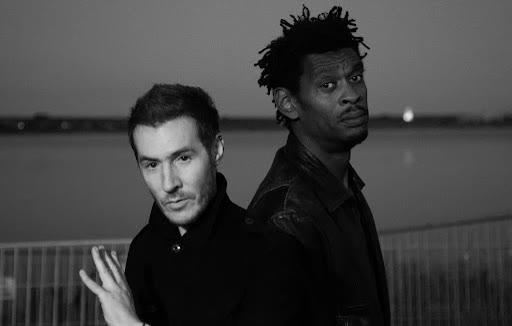
Related to nu jazz is trip hop, a form of downtempo: slow, atmospheric music with a beat. Trip hop arose in the producer scene of Bristol, a port city in the west of England. In the 1980s sound systems played at parties there, with reggae, hip hop, soul and punk all mixed together. Massive Attack emerged from one of those collectives, The Wild Bunch.
Trip hop borrows from dance, hip hop, jazz, soul, reggae and rock. The beats are slow and heavy, often with the breakbeats of hip hop. Above them sound samples from films and old records, a deep bass from reggae, and vocals that are more atmosphere than story. The music is dark and cinematic, and it is better to listen to than to dance to.
Unfinished Sympathy (1991) is on Massive Attack's debut album Blue Lines. Underneath the track lies a hip hop beat, but the melody comes from a real string orchestra. Above it Shara Nelson sings, with a voice from soul. That a group from the hip hop scene hired a string orchestra was unusual in 1991.
After Massive Attack, Bristol produced Portishead, with the album Dummy (1994), and Tricky, who had earlier worked with Massive Attack. Portishead used samples of old film music and jazz records and had singer Beth Gibbons sing over them. In the 1990s and 2000s trip hop became popular far beyond Bristol, and the softer variants ended up in cafés, hotels and on compilation albums with names like lounge or chill-out. That brought the story back to background music, just as with Kind of Blue and smooth jazz.
A later generation took that mood into pop. The British band London Grammar released Strong in 2013, from the debut album If You Wait. The song has the slowness, the space and the melancholy of trip hop, but is made as a pop song by a band with a female singer.
So this chapter ends far from Minton's Playhouse. Jazz became difficult after 1945 because musicians wanted to set themselves apart: from the big bands, from each other and from rules they had not made themselves. The way back to the audience did not run through a single current, but through the building blocks of jazz that ended up in other music: a chord sequence in an R&B hit, a sample in a hip hop track, an improvisation over a house beat. Anyone who listens to pop music today often hears jazz without knowing it.
All the tracks in this chapter, in the order of the text. Scan the code with your phone.
open.spotify.com/playlist/6i8hz752n3VPzLssp7qSMH