 School of RockSchool of Rock
School of Rock · Mixtape 3
From a skiffle group in Liverpool to the band that invented the pop studio (1957-1970).
On 6 July 1957, a group of schoolboys played skiffle at a church fête in Woolton, a suburb of Liverpool. Thirteen years later, in April 1970, the world read in the newspapers that The Beatles had split up. Between their first and their last album lie seven years. In those seven years they made thirteen albums, and changed the way pop music was made.
In February 1963 the band recorded a complete album in one day, almost as they played on stage. Four years later they worked for months on a single record, with orchestras, tape loops and sounds that could only exist on tape. In between, they stopped performing live. The studio at Abbey Road in London became their instrument, and producer George Martin and the EMI engineers devised techniques there that are still used today. The story of The Beatles is therefore also the story of the pop studio. The question that keeps returning: how did one band change what a pop record can be in eight years?
Side A · 1957-1963
Skiffle in Woolton, all-night sets in Hamburg and the first number 1 hits.
Track 01 · 1957-1959 · Liverpool
In the mid-1950s a craze swept through Britain: skiffle. The music had its roots in American folk and blues and became known in England through Lonnie Donegan, who had a hit in 1956 with Rock Island Line. Skiffle needed very little: a cheap guitar, a washboard for percussion and a bass made from a tea chest, a broomstick and a piece of string. Thousands of British teenagers started a band this way. Skiffle was the do-it-yourself music of the 1950s, as punk would be twenty years later.
One of those bands was The Quarrymen, founded by John Lennon and named after his secondary school, Quarry Bank. On 6 July 1957 the group played at the church fête of St Peter's Church in Woolton. Afterwards Lennon was introduced to the fifteen-year-old Paul McCartney. McCartney showed that he could both tune and play a guitar, and sang Twenty Flight Rock by Eddie Cochran. Two weeks later he was a member of the band.
In 1958 McCartney brought along his friend George Harrison. Harrison was only fourteen and Lennon thought him too young, but he played guitar well enough to stay. That same year the group paid a few pounds to record a single acetate disc in a small studio in Liverpool. An acetate is a soft test disc that wears out after a few plays. One side has That'll Be the Day by Buddy Holly, the other In Spite of All the Danger.
That second song is the only one ever released under the names of McCartney and Harrison. It is a doo-wop ballad in 12/8: every beat is divided into three, which gives a slow, rocking rhythm. Elvis Presley sang ballads like this too. You hear a group of teenagers copying their American examples as well as they can. The disc was kept for decades and was not released until 1995, on Anthology 1. Where the rock 'n' roll of Elvis and Buddy Holly itself came from is covered in Mixtape 1.
In 1960 a fourth guitarist joined. Stuart Sutcliffe, a friend of Lennon's from art college, bought a bass guitar. He could hardly play it, but he looked good and he was Lennon's best friend. At that moment the group had no regular drummer.
Track 02 · 1960-1962 · Hamburg
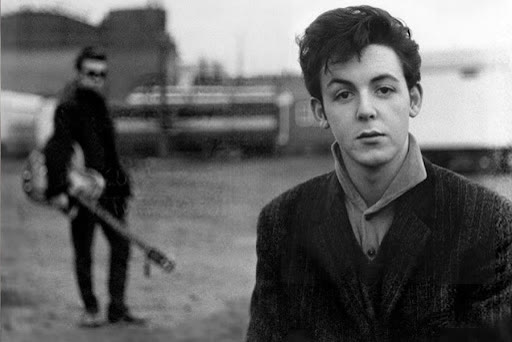
In August 1960 the band left for Hamburg. A club owner in the German port city was looking for British bands for his venues on the Reeperbahn, the entertainment street in the St. Pauli district. The group's name had changed several times in a short while, via The Beatals and The Silver Beetles to The Beatles: a pun on beetles and beat, modelled on The Crickets, Buddy Holly's band. Just before leaving they found a regular drummer: Pete Best.
Conditions were poor. The band slept in a small room behind a cinema screen and played in clubs such as the Indra and the Kaiserkeller for sailors, tourists and the nightlife crowd of the red-light district. A set could last up to eight hours a night, with short breaks. Anyone who has to play that long needs a large repertoire: rock 'n' roll, rhythm and blues, ballads, German schlagers and show tunes. And anyone who wants to hold an audience has to turn it into a show. Between 1960 and the end of 1962 The Beatles played five spells in Hamburg: some 280 evenings and well over a thousand hours on stage.
In his book Outliers (2008), the American writer Malcolm Gladwell used Hamburg as an example of what he calls the 10,000-hour rule: anyone who wants to become exceptionally good at something has to do it for a very long time and very often. You can argue about that rule, but the difference between a rehearsal room and a stage is clear. On stage you have to keep playing when you are tired, when something goes wrong and when the room is not listening. You learn to respond to each other without talking. When they came back from Hamburg, The Beatles were a tight live band.
In Hamburg, Stuart Sutcliffe met the photographer Astrid Kirchherr. Her photographs of the band are among the best-known images of this period. Sutcliffe fell in love, stayed in Hamburg and left the band to make art again. McCartney took over the bass from him. In April 1962 Sutcliffe died of a brain haemorrhage. He was 21.
In 1961 the band worked as a backing group for the English singer Tony Sheridan, who also played in Hamburg. For the German label Polydor, with producer Bert Kaempfert, they recorded My Bonnie, a Scottish folk song that they played as rock 'n' roll. On the record the band was called The Beat Brothers. The song starts slowly and solemnly, and then switches to a fast tempo. It is not the band's best recording, but the record had major consequences: it brought Brian Epstein to The Cavern.
Track 03 · 1961-1962 · Liverpool, London
Back in Liverpool the band often played at The Cavern, a cellar in Mathew Street where lunchtime concerts were held, among other things. Not far away, Brian Epstein had a record shop, NEMS. According to the well-known story, customers asked for My Bonnie, and Epstein went to see who this band was. On 9 November 1961 he saw The Beatles play for the first time at The Cavern. Shortly afterwards he became their manager.
Epstein had no experience as a manager, but he was businesslike, well groomed and knew people at the big record companies. He changed the band's image. The leather jackets from Hamburg made way for neat suits. On stage they were no longer allowed to eat, smoke or swear, and after every song they bowed to the audience. From rockers they became well-mannered boys who could be shown on television and to parents.
On 1 January 1962 the band auditioned for Decca in London. They played fifteen songs, mostly covers. Epstein deliberately chose a wide selection, so that the label could hear that they could do more than rock 'n' roll. One of those songs was Till There Was You from the Broadway musical The Music Man, with a Latin-style guitar part. Decca turned them down and signed Brian Poole and the Tremeloes instead. According to Epstein, he was told that guitar groups were going out of fashion. It became one of the best-known mistakes in the music industry.
In June 1962 they got a chance at EMI, with George Martin, the head of the small label Parlophone. Martin was no rock 'n' roller. He had studied classical music and played the oboe, and he had mainly made classical and comedy records, including with Peter Sellers. He was not very impressed by the band's own songs, but he was by their humour and their personality.
Martin was less satisfied with the drummer. He wanted to use a session drummer for the recordings. The band themselves also had doubts about Pete Best. In August 1962 Best was sacked and replaced by Ringo Starr, the drummer of Rory Storm and the Hurricanes, another Liverpool band that The Beatles knew from Hamburg. That completed the line-up: Lennon, McCartney, Harrison and Starr.
Martin's classical background later proved of great importance. When the band wanted strings, brass and tape experiments, he knew how to write them out and record them. Lennon and McCartney could not read music. They came up with ideas, and Martin made them playable. That collaboration is the common thread through the rest of this story.
Track 04 · 1962-1963 · London
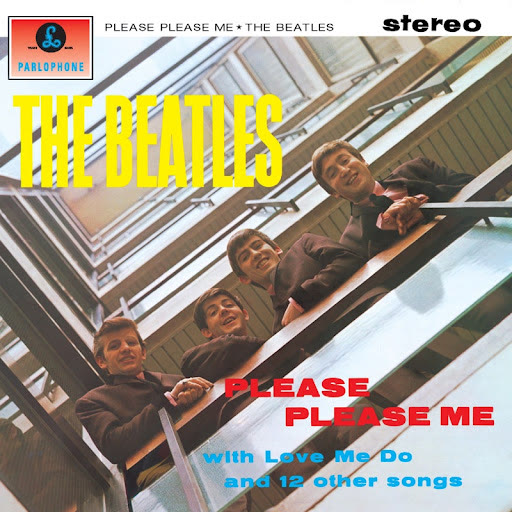
In October 1962 the first single came out, Love Me Do. The song is very simple: a riff on two chords, G and C, a harmonica from Lennon and a two-part chorus. It was a modest hit and reached number 17 in the British chart. There are two versions of the recording. On one Ringo drums, on the other the session drummer Andy White, whom Martin had hired to be safe. On that version Ringo plays only tambourine.
Lennon had written the second single, Please Please Me, as a slow song in the style of Roy Orbison. Martin had the tempo raised considerably. That turned a ballad into a bright pop song, and in early 1963 it went to number 1 in most British charts. It is an early example of the producer's role: he records what is played and also thinks about how a song should sound.
After a number 1 hit an album had to follow quickly. On 11 February 1963 the band recorded ten songs in one day at the EMI studio at Abbey Road. Together with the four sides of the two singles, that became the album Please Please Me. They played almost everything live in the studio, the repertoire of their shows. The last song of the day was Twist and Shout. Lennon had a cold and his voice was almost gone, and you can hear it: he shouts the song rather than sings it. Please Please Me became the first of eleven Beatles albums to reach number 1 in England.
In November 1963 came With the Beatles, with a black-and-white photo of four half-lit faces on the cover. By now there was a word for what was happening around the band: Beatlemania. At concerts the fans screamed so loudly that the music could hardly be heard. The band was the centre of a new youth culture, with its own hairstyles, clothes and language. That is the subject of Mixtape 2 (Youth cultures 1950-1980).
However simple the songs seem, there is craftsmanship in them. In All My Loving Lennon plays fast triplets on the rhythm guitar: three strums per beat, all the way through. McCartney plays a walking bass, a bass line that moves through the chords in even steps, like a double bass player in jazz. These are techniques from jazz and rhythm and blues, packaged in a two-minute pop song.
Side B · 1964-1966
From the Ed Sullivan Show to Revolver: the band stops touring and starts experimenting.
Track 01 · 1964 · New York, London
Until 1964, British pop artists had little success in the United States. That changed within a few weeks. In early 1964 I Want to Hold Your Hand was number 1 in the American chart. On 9 February 1964 the band appeared on The Ed Sullivan Show, the most popular entertainment programme on American television. About 73 million Americans watched.
In April of that year The Beatles held the first five places of the Billboard Hot 100 with five songs at once. Other British bands followed in their wake: The Rolling Stones, The Animals, The Kinks, The Dave Clark Five. That wave is called the British Invasion. It is a striking reversal. British bands sold American music, rock 'n' roll and rhythm and blues, back to the Americans, and introduced young Americans to Black music from their own country.
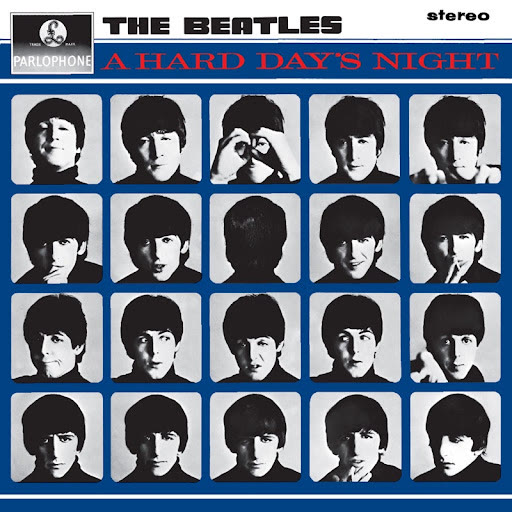
Epstein had signed a contract for three films. The first, A Hard Day's Night (1964), was directed by Richard Lester. The film is shot in black and white and looks like a staged documentary about a few busy days in the life of the band. The title came from something Ringo said after a long day's work. The accompanying album was the band's third, and the first with only their own songs, all by Lennon and McCartney.
The title song begins with a single guitar chord, struck on George Harrison's twelve-string Rickenbacker. Which notes exactly sound is still debated. Guitarists, musicologists and even a mathematician have analysed the chord, with results such as Fadd9 and G7sus4. The problem is that several instruments sound at once: two guitars, a bass and a piano. The chord works as a starting gun: one crash, and the song has begun.
Life now consisted of touring and recording, touring and recording. At the end of 1964 Beatles for Sale came out, the fourth album in two years. On the cover the four look tired, and the lyrics are more serious and more personal. That was partly due to Bob Dylan, whom they met in New York in August 1964. Dylan showed them that a pop song could be about more than falling in love.
The single I Feel Fine (late 1964) has a first. The song begins with a buzzing, swelling note: feedback, the sound that arises when the pickup of an electric guitar picks up the sound of its own amplifier and amplifies it. Until then feedback was a mistake that you got rid of as quickly as possible. Lennon deliberately put it at the start of a record. A few years later, guitarists such as Jimi Hendrix would turn feedback into a musical language of its own.
Track 02 · 1965 · London, New York
In 1965 came the second film, Help!, again by Richard Lester, now in colour and shot in the Austrian Alps and the Bahamas. The title song sounds cheerful, but the lyrics are a cry for help. Lennon later said that the song really was about himself. Musically, the way the backing vocals work stands out: they run ahead of the main melody and sing the words before Lennon sings them.
On 15 August 1965 the band played at Shea Stadium in New York for about 55,600 people. It was the first big stadium concert in pop history. The band played through the public address system of the baseball stadium, and the audience screamed so loudly that the musicians could hardly hear themselves. As publicity it was a huge success. As music it amounted to little, and the band began to notice that themselves.
The album Help! also contains Yesterday. McCartney had the melody in his head when he woke up one morning, and for a while was convinced that he must have heard it somewhere. As long as there were no words, he sang 'Scrambled eggs' over it. He recorded the song alone, with an acoustic guitar; none of the other Beatles play on it. George Martin suggested adding a string quartet. McCartney asked for strings without vibrato, so that it would not sound too sweet.
The arrangement sounds Baroque, but the form is pop: AABA, the same verse twice, a contrasting middle section and then the verse once more. That is the form of the American songwriters of the first half of the twentieth century. Yesterday became one of the most covered songs ever. For the first time a Beatles record had a track without the band, and for the first time a classical ensemble could be heard.
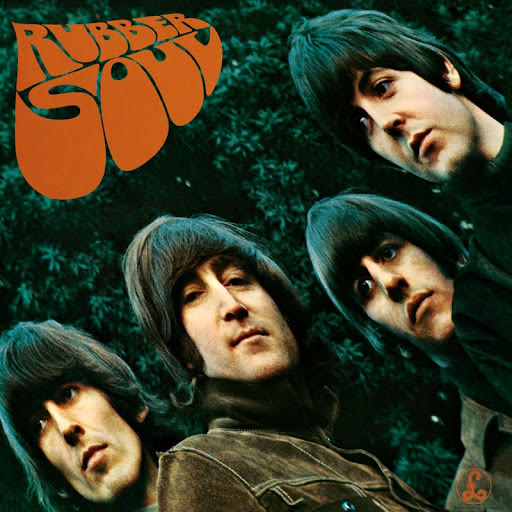
In December 1965 Rubber Soul came out. The album sounds like a whole, with more attention to tone colour, harmony and lyrics. It is a leap in songwriting. In Norwegian Wood Harrison plays sitar: the first use of the Indian string instrument on a Western pop record. Harrison had seen a sitar on the set of Help! and then bought one himself. The song is in 12/8 and uses the Mixolydian scale: a major scale with a lowered seventh. That sound, major but without the 'resolution' to the tonic, is often heard in folk.
Track 03 · 1966 · London
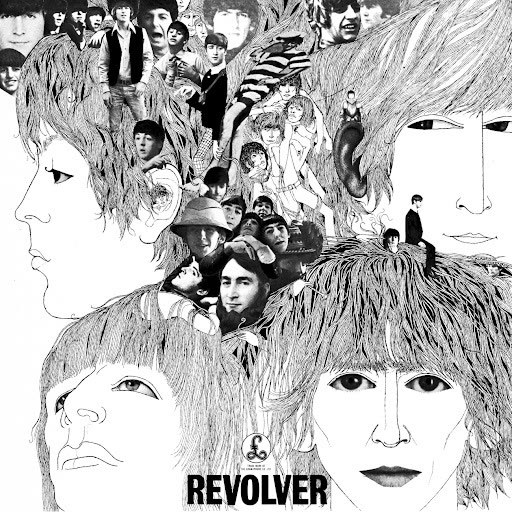
At the start of 1966 The Beatles took three months off, their first real break in years. In April the recording of Revolver began, which came out in August 1966. A new sound engineer worked on it, the young Geoff Emerick. EMI had strict rules about how you placed microphones and how loud a signal could be. Emerick was prepared to break them: he put microphones right up against the drums and stuffed a sweater into the bass drum so that it sounded dry and hard. On Revolver the studio itself becomes part of the music. Almost every track has a technique or sound that had not been heard on a pop record before. Five examples.
Rain came out in June 1966 as the B-side of the single Paperback Writer, but was recorded in the same sessions. The band played the backing faster than intended and then played the tape back more slowly. As a result everything sounds lower, heavier and a little syrupy. At the end Lennon's voice sounds backwards: he had laid a piece of his vocal in the recorder in reverse. It is the first pop record with backwards vocals.
In Eleanor Rigby not a single Beatle plays an instrument. You hear only voices and eight strings, two string quartets, in an arrangement by George Martin. The strings were recorded very close to the microphone, so that you hear the bows scraping across the strings. That makes the song sound hard and rhythmic rather than romantic. The lyrics are about lonely people: an old woman picking up rice after a wedding, a priest writing sermons that nobody hears.
For I'm Only Sleeping Harrison wrote out a guitar solo, learned to play it backwards and recorded it that way. Then the tape was turned round. The result is a solo that moves forward in the melody, but in which every note sounds backwards: first soft, then swelling, and cut off. It suits the subject of the song: half asleep, half awake.
In For No One, Alan Civil, one of the best-known horn players in England, plays a solo on the French horn. McCartney had him play above the normal range of the instrument. It is an example of how The Beatles used classical musicians: not as background, but as soloists.
The last track of the album, Tomorrow Never Knows, goes furthest. The whole song is on one chord, C, which lies under the music as a drone. Ringo plays a heavy, constantly repeated drum pattern. Over it sound tape loops: short pieces of tape that go round and repeat endlessly. The Beatles had made them at home with their own tape recorders. In the studio several recorders were played at once, and the engineers faded the loops in and out during the mix, like an instrument being played live. Lennon wanted his voice to sound as if a monk were singing from a mountaintop. That is why his vocal was sent through a Leslie speaker, the rotating speaker that goes with the Hammond organ. Lennon took the words from a book by Timothy Leary about the Tibetan Book of the Dead.
For this album the Abbey Road engineer Ken Townsend also devised ADT, automatic double tracking. Lennon hated singing the same part twice to make his voice sound fuller. ADT doubles a voice automatically with a second tape recorder that plays back a fraction later. The effect was then used in studios all over the world. Tomorrow Never Knows is often seen as a starting point of sampling and electronic pop. The tape techniques come from the experimental music of the 1950s, from the studios in Cologne and Paris. That is the subject of Mixtape 8 (Electronic music).
Track 04 · 1966 · Tokyo, Manila, San Francisco
In the summer of 1966 touring became more and more unpleasant. In Tokyo the band played at the Nippon Budokan, a martial arts hall, and nationalists saw that as an insult. In Manila the band did not show up at a reception given by Imelda Marcos, the wife of the Philippine president. That was taken as an insult, and the band had to leave the country in a hurry. In the United States there was an outcry over an interview from March of that year, in which Lennon had told a London journalist that The Beatles were 'more popular than Jesus'. In England nobody minded. When an American teen magazine picked up the remark months later, Beatles records were burned in the southern US.
On 29 August 1966 the band gave their last paid concert at Candlestick Park in San Francisco. They could not even play their new music live: Tomorrow Never Knows existed only on tape. From now on the studio was their instrument. There was no longer the deadline of a tour, and no reason to write songs that four men could play on a stage.
In November 1966 recording began for a new album. EMI wanted a new single, and so the first two songs that were ready came out in February 1967 as a double A-side: Strawberry Fields Forever and Penny Lane. Both are about Liverpool and the youth of their writer. Penny Lane is a street and bus junction in Liverpool. Strawberry Field was a Salvation Army children's home in Woolton, close to the house where Lennon grew up.
In Penny Lane McCartney describes the barber, the banker and the fireman from the neighbourhood, clear and a little strange at the same time. He had seen Bach's Second Brandenburg Concerto on television, in which a piccolo trumpet plays: a small trumpet that sounds an octave higher than the ordinary one. He wanted that sound too. The trumpeter David Mason plays the high, Baroque solo. The single did not reach number 1 in England, for the first time since 1963: Release Me by Engelbert Humperdinck kept it from first place.
Track 05 · November-December 1966 · London
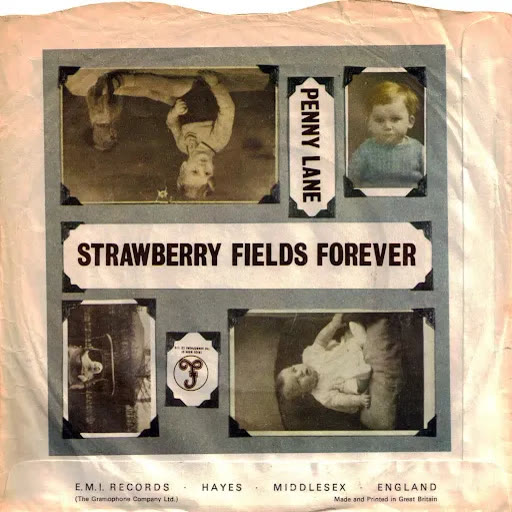
Lennon wrote Strawberry Fields Forever in the autumn of 1966 in Spain, where he had a part in Richard Lester's film How I Won the War. Many recordings of this song have been preserved, and so you can follow step by step how a song changes in the studio. It is a good example of what 'the studio as instrument' means.
It begins with a demo: Lennon alone, with an acoustic guitar. You hear the core of the song, the melody and the words about a place where nothing is real. In the studio the band first recorded take 1. In it, a mellotron with a flute sound can be heard in the intro. A mellotron is a keyboard instrument in which, under every key, there is a piece of recording tape with a recording of a real instrument. The verse is still different in this version. Take 4 is slower and dreamier: the band is still looking for the right atmosphere. In take 7 the band has found the song. This take becomes the beginning of the final record.
Lennon was not yet satisfied. He asked George Martin for a heavier arrangement, and Martin wrote a part for trumpets and cellos. With that arrangement take 26 was recorded: faster, higher and much fuller. Then Lennon knew: he wanted the beginning of take 7 and the end of take 26. The problem was that the two recordings were at a different tempo and a semitone apart.
Martin and Emerick solved it with varispeed. They played take 7 back a little faster and take 26 a little slower, until tempo and pitch were roughly equal, around B♭. Then they cut the two tapes together. If you listen closely, after about one minute you hear the join: the sound suddenly becomes fuller and the voice sounds slightly different. The ending is special too. The song seems to fade out, but then comes back with a messy coda of drums, mellotron and a muttering Lennon.
This song could never have come into being on a stage. That is not because there are many instruments on it: you can also have an orchestra play live. It is because the record is not a recording of a performance. There was never a moment when anyone played the song from beginning to end like this. The join between two takes, the speeding up and slowing down of the tapes, the overdubs of orchestra and mellotron: the record is a composition on tape.
Side C · 1967
The album as a work of art, the first worldwide TV broadcast and the end of the manager.
Track 01 · May 1967 · London
With no concerts in the diary, The Beatles could shut themselves in the studio for as long as they liked. They worked on Sgt. Pepper's Lonely Hearts Club Band for about 700 hours. By comparison, Please Please Me had been recorded in one day four years earlier. The idea came from McCartney. The Beatles would pretend to be a different band, an old-fashioned English orchestra with a name and uniforms of its own. That way they did not have to sound like The Beatles.
The album came out at the end of May 1967, at the start of the Summer of Love: the summer in which the hippie movement from San Francisco became world news. That youth culture is the subject of Mixtape 2. Sgt. Pepper became the soundtrack of that summer.
The album is often called the first concept album. That is not true. Pet Sounds by The Beach Boys and Freak Out! by Frank Zappa and The Mothers of Invention, both from 1966, came first, and McCartney himself has said that Pet Sounds was an important inspiration. Moreover, the framework of the fictional band is thin: after two songs the album largely drops the idea, until the reprise of the title song just before the end. What is true: Sgt. Pepper is the album that established the LP with the general public as a work of art, rather than as a collection of singles with some filler. No single was even released from it.
The packaging was new too. For the first time all the song lyrics were printed on the sleeve, so that you could read them as text. The front, designed by the artists Peter Blake and Jann Haworth, shows the band in colourful uniforms among dozens of life-size cardboard figures of famous people, including Bob Dylan, Marilyn Monroe and the composer Karlheinz Stockhausen.
Musically the album mixes everything together: Indian music, music hall (the British variety theatre of around 1900), circus sounds and an orchestra in free fall. For the circus atmosphere in Being for the Benefit of Mr. Kite! Martin and Emerick cut recordings of steam organs into pieces, threw them in the air and stuck them back together in random order. Chance became a compositional technique.
Track 02 · 1967 · London
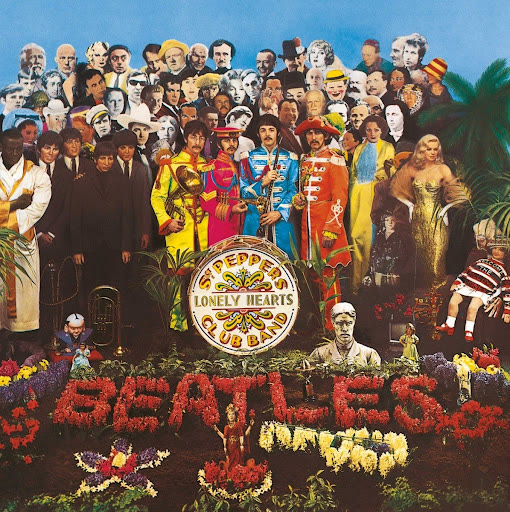
The title song opens with audience noise and an orchestra tuning up. The album pretends to be a concert. After a rocking guitar riff come horns in the style of the music hall, and the 'band' announces a singer: Billy Shears, played by Ringo. Without a pause the song flows into With a Little Help from My Friends. This running from song to song was new, and it made the record one continuous whole.
In Lucy in the Sky with Diamonds the verse is in 3/4, a waltzing rhythm, and the chorus in 4/4. The change of time signature marks the transition from dream to reality. According to Lennon the title came from a drawing by his little son Julian. Many listeners read the initial letters as LSD, but Lennon always denied that this was the intention.
Within You Without You is a song by Harrison on which the other Beatles do not play. You hear Indian classical instruments, such as sitar, tabla and dilruba, a bowed string instrument, played by Indian musicians from London. Beneath them Martin wrote a part for a Western string ensemble that follows the gliding notes of the Indian instruments. It is one of the first attempts to really blend Indian and Western music instead of using a sitar as an exotic touch of colour.
In Good Morning Good Morning the time signature changes constantly: 5/4, 3/4, 4/4. Lennon got the idea for the chorus from a cornflakes advert on television. At the end come animal sounds, in an order from large to small. According to Lennon each animal could eat the previous one. The last sound, a clucking hen, flows seamlessly into the first guitar note of the reprise of the title song.
The album ends with A Day in the Life, really two songs joined together. Lennon wrote the verses, with images from the newspaper. McCartney had a loose fragment about an ordinary morning: getting up, running a comb through your hair, catching the bus. Between the two pieces they left an empty space of 24 bars. It was filled by an orchestra of 40 musicians, each sliding freely from their lowest to their highest note, without having to pay attention to each other. The result is an orchestra in free fall. The song ends on one E major chord, struck on several pianos at the same time and left to ring out for as long as possible: about 40 seconds. The BBC refused to play the song, because the line 'I'd love to turn you on' was seen as a reference to drugs.
Track 03 · 1967 · London
On 25 June 1967 Our World was broadcast, the first worldwide live television broadcast by satellite. A number of countries each made a contribution, and Britain chose The Beatles. Lennon wrote a song for it with a message that everyone in the world could understand: All You Need Is Love. More than 400 million people watched the recording at Abbey Road, with a small orchestra and friendly musicians such as Mick Jagger and Eric Clapton sitting on the studio floor.
The song sounds simple, but it is not. Try counting the verse: the bars are mostly in 7/4. Most listeners do not notice this unusual time signature, because the melody flows so naturally. The song begins with the first bars of the Marseillaise, the French national anthem. At the end come quotations from, among others, Bach, the English folk song Greensleeves and their own She Loves You.
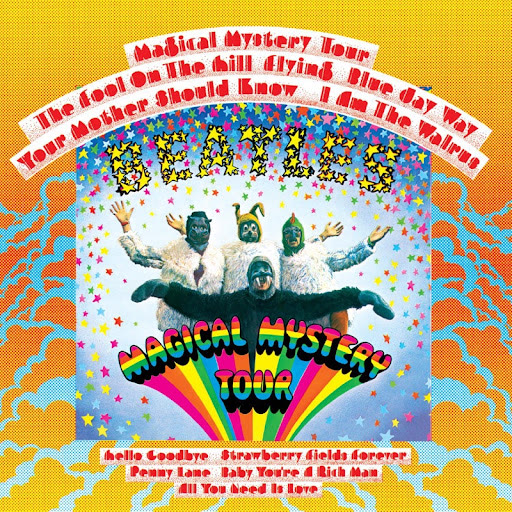
Two months later, on 27 August 1967, Brian Epstein died of an overdose of sleeping pills. The Beatles were in Wales at the time with the Indian guru Maharishi Mahesh Yogi. Epstein had looked after their affairs since 1961. Without him things went wrong on the business side. The first project after his death was Magical Mystery Tour, an idea of McCartney's: the band in a bus, travelling through England, filmed without a real script. The TV film was broadcast by the BBC on Boxing Day 1967 and slated by the critics. The music did do well.
One of the songs from the film is I Am the Walrus. The walrus comes from a poem by Lewis Carroll, the author of Alice in Wonderland. Lennon piled nonsense images on top of each other in the lyrics. Martin wrote an arrangement for strings and horns, and a choir sings 'everybody's got one' and laughing, panting sounds. The mix even contains a piece of a live radio broadcast of Shakespeare's King Lear, which happened to be on the radio at that moment. Another piece of chance that became part of the composition.
Side D · 1968-1970
India, Apple, the White Album, the rooftop of Savile Row and Abbey Road.
Track 01 · 1968 · Rishikesh, London, Esher
In February 1968 The Beatles travelled to the ashram of Maharishi Mahesh Yogi in Rishikesh, in northern India, to learn to meditate. They were not the only famous guests there: the Scottish singer Donovan, Mike Love of The Beach Boys and the actress Mia Farrow were also there. Ringo left after about ten days, McCartney after a month; Lennon and Harrison stayed longer. There was little to do except meditate and play guitar. In a few weeks the band wrote dozens of songs.
In Rishikesh Donovan taught Lennon and McCartney a fingerpicking technique, in which you pluck the strings with loose fingers instead of strumming chords with a plectrum. You hear that technique again in Dear Prudence and Julia on the next album.
Back in London they built up Apple Corps: a company of their own for their records, films and other projects, which was also meant to help young artists. There was a record label, Apple Records, a film division and even a clothes shop, which had already opened in December 1967. The first single on Apple, in August 1968, was Hey Jude. The idea was idealistic, but the band had no business instinct, and Epstein was no longer there. A lot of money disappeared.
In May 1968 the band came together at Harrison's house in Esher, south-west of London. There they recorded acoustic demos of the songs from India: the Esher demos. They sound loose and relaxed, with guitars, handclaps and group singing. For a long time they could be found only as bootlegs; they were officially released in 2018 on the anniversary edition of the White Album.
The demos show how far an arrangement can change a song. While My Guitar Gently Weeps is a small, acoustic song by Harrison here; on the album it becomes a heavy rock ballad. Other songs did not make the album. Lennon's Child of Nature, about a trip to India, he later rewrote as Jealous Guy, which came out in 1971 on his solo album Imagine. The same melody thus got completely different lyrics.
Track 02 · November 1968 · London
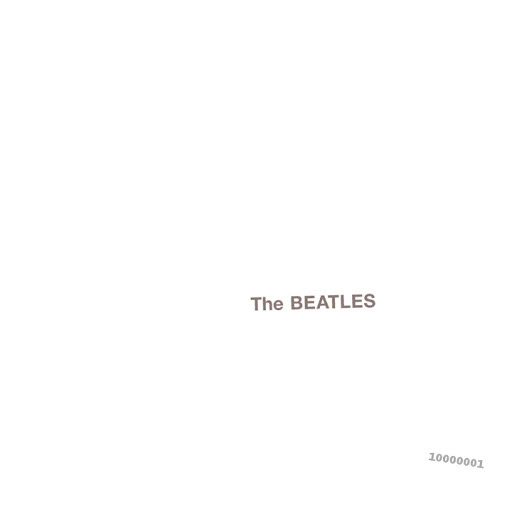
In November 1968 a double album with thirty songs and an entirely white sleeve came out, designed by the artist Richard Hamilton. It carried only the name of the band, embossed, and every copy got its own number. The album is officially called The Beatles, but everyone calls it the White Album. After the colourful collage of Sgt. Pepper, that empty white is a statement.
The sessions were difficult. Yoko Ono, Lennon's new partner, was in the studio every day, something the others were not used to. Tensions rose. In August Ringo left the band for about two weeks; in that time McCartney played drums himself on, among others, Back in the U.S.S.R. and Dear Prudence. The members often worked in different studios at the same time on their own songs. Many tracks are really solo songs played by the whole band, or sometimes not. And yet the album is one of the richest in pop history, precisely because of that enormous variety.
Dear Prudence is about Prudence Farrow, Mia Farrow's sister, who in Rishikesh no longer wanted to come out of her room because she wanted to do nothing but meditate. Lennon plays the song with the fingerpicking he learned from Donovan, in drop-D: the lowest string is tuned a tone lower, from E to D. Under the constantly repeated guitar pattern the bass line descends chromatically, in semitones.
McCartney's Ob-La-Di, Ob-La-Da is a mixture of ska, the Jamaican forerunner of reggae, and music hall. Lennon hated the song. How different the band members were, you hear in Harrison's songs. For the album version of While My Guitar Gently Weeps he invited his friend Eric Clapton to play the guitar solo. Clapton is not named on the sleeve. With a guest in the studio, the others behaved better.
McCartney recorded Blackbird alone, with an acoustic guitar. The idea came from a Bourrée by Bach, which he and Harrison played as teenagers. As in Bach, the guitar plays two voices at once, a high one and a low one, with the open G string ringing along in the middle throughout. You also hear the tapping of his foot.
The other extreme is Helter Skelter. McCartney had read that Pete Townshend of The Who had made a song that would be the loudest and roughest ever. He wanted to outdo that. The result is a chaotic, distorted rock song that is seen as a forerunner of heavy metal. At the end Ringo shouts that he has blisters on his fingers. How rock became louder and heavier after the 1960s is told in Mixtape 4 (When rock was still pop).
Track 03 · January 1969 · London
After the White Album McCartney wanted to go back to basics. The plan was called Get Back: write and rehearse new songs in a few weeks, play them live for an audience, and film the whole process. No overdubs, no studio tricks, back to the band from Hamburg. In January 1969 they began at Twickenham Film Studios, a cold film hangar where cameras were already running early in the morning. Tensions rose quickly. On 10 January Harrison walked out.
He came back on two conditions: no big live concert, and the recording had to move to the basement studio in the Apple office at Savile Row. There Harrison brought in the keyboard player Billy Preston, who knew the band from Hamburg, where he had played in Little Richard's band in 1962. Preston saved the atmosphere. With a guest in the room the four became friendlier to each other, and his playing on the Fender Rhodes and the organ gave the songs air. The single Get Back came out credited to 'The Beatles with Billy Preston'.
On 30 January 1969 the band climbed onto the roof of the Apple building and played for more than forty minutes for office workers and passers-by in the streets below, until the police came because of complaints about the noise. Lennon closed with the remark that he hoped they had passed the audition. The rooftop concert was The Beatles' last performance.
For a long time Get Back was regarded as the gloomy story of a band falling apart. The 1970 film Let It Be reinforced that picture. In 2021 the director Peter Jackson made the documentary series Get Back from the same film material, and it shows something different. There is arguing, but there is also a lot of laughing, playing and hard work. You see, for example, how McCartney finds the song Get Back out of nothing on his bass guitar in a few minutes. It is a good example of how the writing of history changes when new sources become available.
In January 1969 the soundtrack of the animated film Yellow Submarine also came out. There are only a few new Beatles songs on it; the B-side consists of film music by George Martin. One of the new songs is Hey Bulldog, recorded as early as February 1968, before the trip to India. It is built on a solid piano riff and has one of McCartney's heaviest bass parts. You hear a band that is simply playing together, with pleasure.
Track 04 · September 1969 · London
After Get Back the tapes were left on the shelf; nobody felt like finishing them. In the summer of 1969 McCartney asked George Martin to produce one more album. Martin agreed on condition that it would go as it used to, with him as producer and a band that kept to the discipline of the studio. That worked. Meanwhile things went wrong on the business side: Lennon, Harrison and Starr chose the American Allen Klein as manager, while McCartney wanted the lawyers Lee and John Eastman, the father and brother of his wife Linda. Even so, Abbey Road sounds like a band playing together.
The album opens with Lennon's Come Together: a slow, smouldering groove, a bass riff by McCartney that carries the whole song, and 'shoot me', whispered over the drums. Then comes Harrison's Something. Frank Sinatra called it the greatest love song of the past fifty years. It became the first Beatles single with a Harrison song on the A-side. Lennon and McCartney had set the tone for years; now Harrison proved to be a songwriter of the same level.
Here Comes the Sun is also by Harrison. He wrote it in Eric Clapton's garden, on a day when he had skipped a business meeting at Apple. A Moog synthesizer can be heard on the song, one of the first times that instrument was heard on a pop record. Mixtape 8 is about the Moog. In the bridge the time signatures alternate: 11/8, 4/4 and 7/8. Here too you hardly hear it, because the rhythm follows the melody.
Most of side 2 of the LP is a medley: eight song fragments that flow into each other without a pause. Many of them were loose ideas that had never grown into a complete song. By joining them together, a kind of suite arose. The medley ends with The End, in which Ringo plays his only drum solo on a Beatles record and McCartney, Harrison and Lennon take turns playing a short guitar solo. Then comes the last line.
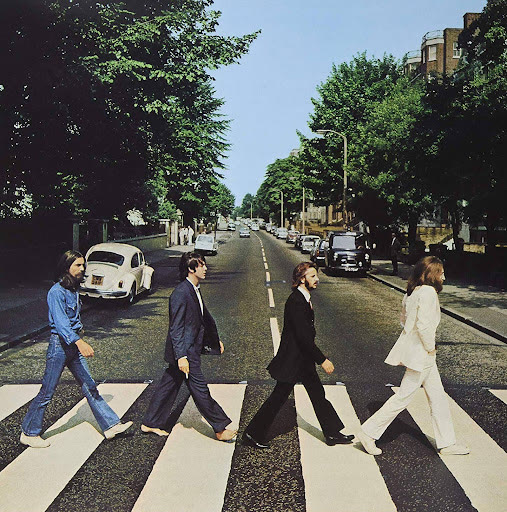
After fourteen seconds of silence something else does come: Her Majesty, a 23-second song by McCartney, originally cut from the medley. An engineer had stuck it on the end of the tape, and the band decided to leave it like that. It is not listed on the sleeve: the first hidden track on a pop album. The cover photo, the four on the zebra crossing in front of the studio, was taken in August 1969 by the photographer Iain Macmillan. The EMI studio has been called Abbey Road Studios ever since.
Track 05 · 1969-1970 · London
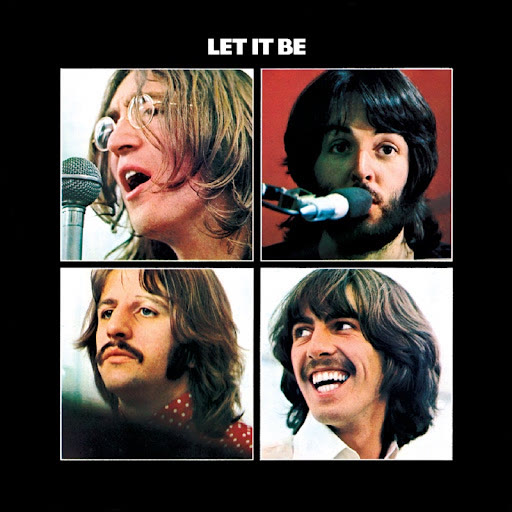
In September 1969, around the release of Abbey Road, Lennon told the others that he was leaving the band. This was kept secret, partly because business negotiations were still going on. On 3 January 1970 McCartney, Harrison and Starr came together one more time at Abbey Road to record I Me Mine, a song by Harrison that was needed for the album of the film Let It Be. Lennon was not there.
In April 1970 McCartney released his first solo album, McCartney. The press copies came with a text in question-and-answer form, in which he hinted that he was no longer working with the band. The newspapers turned it into: Paul quits The Beatles. That is how the world heard it. Formally it took years more: McCartney brought a lawsuit at the end of 1970 to dissolve the partnership, and only in December 1974 was the band also legally dissolved.
The Get Back recordings meanwhile went to Phil Spector, the American producer who had become known in the 1960s for his Wall of Sound: thick layers of instruments and reverb. Spector added choir and orchestra to a number of songs. I Me Mine, a waltz, he lengthened by copying a section of the recording and editing it in once more. McCartney was furious about what Spector had done to his songs. In 2003 Let It Be… Naked came out, a version of the album without Spector's additions.
The title song Let It Be is a gospel ballad by McCartney in C, built on the chord sequence I-V-vi-IV: C, G, Am, F. The same four chords lie under countless later pop songs. The album Let It Be came out in May 1970 as the band's last album, although most of the songs had been recorded before those of Abbey Road.
Between 1963 and 1970 The Beatles released thirteen albums in England. Two of them are a special case. Magical Mystery Tour came out in England as a double EP; the LP is the American release, which later became the official album version. The B-side of Yellow Submarine has film music by George Martin. The rest forms a series in which you can follow the band's development, from a live band that records an album in one day to a studio band that works for months on a single record.
If you listen to the albums back to back, you hear how much changed in those seven years: feedback as a sound, a sitar and a string quartet on a pop record, tapes played backwards, tape loops, ADT, varispeed, an album meant as a single whole, song lyrics on the sleeve and a hidden track at the end. In 1971 Lennon called The Beatles 'just a band that had made it very big'. That is true, but it is not the whole story. After The Beatles a pop record was no longer a recording of a performance. It was something you build in the studio.
All the songs from this chapter, in the order of the text. Scan the code with your phone.
open.spotify.com/playlist/7CGEdXegFEQV1RNap3CsLN