 Photo:
A list as a song
In 1989 Billy Joel turned forty. In a recording studio he got talking to a 21-year-old, a friend of Sean Lennon, the son of John. It was a terrible time to be young, the boy said. Joel replied that he had felt the same at that age: he had had the war in Vietnam, drugs and the struggle for civil rights. But nothing had happened in the fifties, the boy said. Joel mentioned the Korean War and the Suez crisis. And then he thought: there's a song in that.
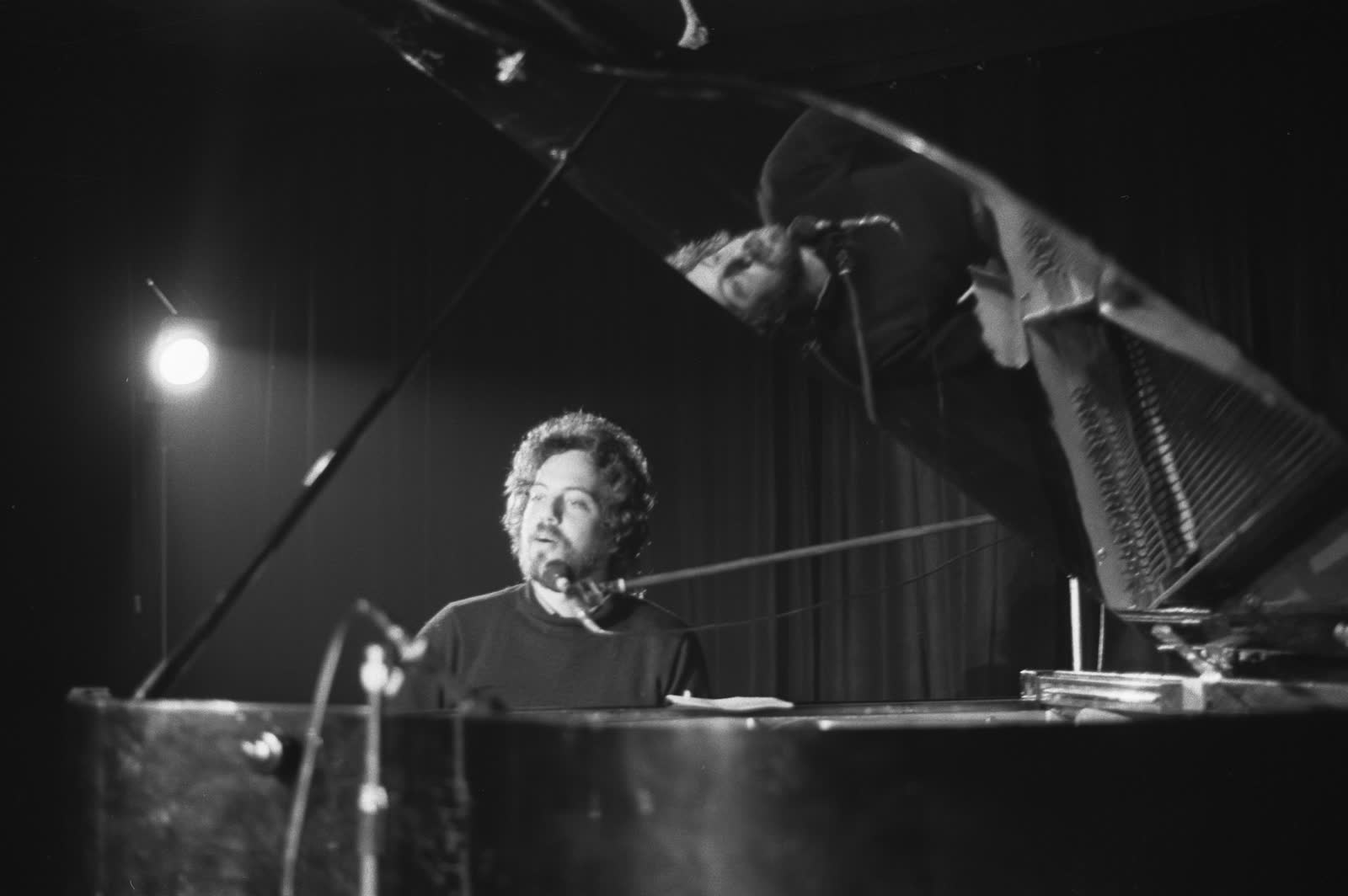 Photo: Rob Mieremet / Anefo · CC0
It became a list. Joel wrote the lyrics first and the music afterwards, the only time in his career that he did it that way. In four minutes he names about 119 people, events and things, from 1949, the year he was born, to 1989. They are more or less in order: each verse is a slice of his life. The chorus says that his generation did not start the fire. It was always burning, and it is still burning.
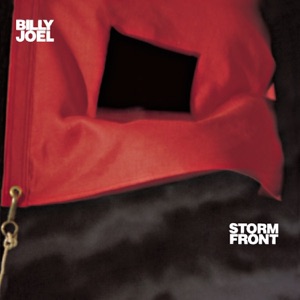
We Didn't Start the Fire was released as a single on 18 September 1989, a month before the album Storm Front. In the United States it went to number one, in the Netherlands to number eleven in the Top 40.
A terrible piece of music.Billy Joel on his own song
Joel himself was not proud of it. He found the melody as monotonous as a dentist's drill. But as a history lesson the song works surprisingly well. It is widely used in the classroom: every name is an assignment to look up.
Listen to the tempo: the names come in a flood, as if the news were impossible to keep up with. The chorus is the only place where you can catch your breath.
The Cold War in forty years
The forty years of the song are exactly the years of the Cold War. It begins in 1949, when the Soviet Union tested its first atomic bomb, and it ends in 1989, the year the Wall fell. Among the film stars, athletes and rock 'n' rollers, the big names of that struggle keep turning up. Below is a selection, with what lies behind them.
- 1949Harry Truman
The American president who said that America would stop communism everywhere. He was sworn in again in January 1949.
- 1949Red China
In October 1949 Mao Zedong proclaimed the People's Republic of China. The biggest country in Asia became communist.
- 1950Joe McCarthy
An American senator who saw communists everywhere, in the government, in the army and in Hollywood. People he accused often lost their jobs.
- 1951The Rosenbergs
Julius and Ethel Rosenberg were convicted of passing atomic bomb secrets to the Soviet Union. They were executed in 1953.
- 1951The hydrogen bomb
America was working on a bomb far more powerful than the one dropped on Hiroshima.
Read more in Living with the bomb → - 1951Panmunjom
The village on the border between North and South Korea where an end to the Korean War was negotiated. Peace never came, only an armistice.
- 1953Stalin and Malenkov
Soviet leader Joseph Stalin died in March 1953. Georgi Malenkov succeeded him, but soon had to share power, and then lost it.
- 1953The Eastern Bloc
In June 1953 workers in East Germany rose up. Soviet tanks crushed the uprising.
- 1954Dien Bien Phu
At this place in Vietnam, France lost the decisive battle against the communist Viet Minh. It was the beginning of the long war in Vietnam.
- 1956Khrushchev and Budapest
The new Soviet leader Nikita Khrushchev denounced Stalin in a secret speech. But when Hungary demanded freedom in the same year, he sent tanks to Budapest.
- 1957Little Rock
Nine Black students were not allowed into a white school. Louis Armstrong therefore refused to tour for the government.
Read more in Jazz as a secret weapon → - 1957Pasternak
Boris Pasternak was not allowed to publish his novel Доктор Живаго (Doctor Zhivago) in the Soviet Union. The book came out abroad, and in 1958 he was awarded the Nobel Prize, which he was forced to decline.
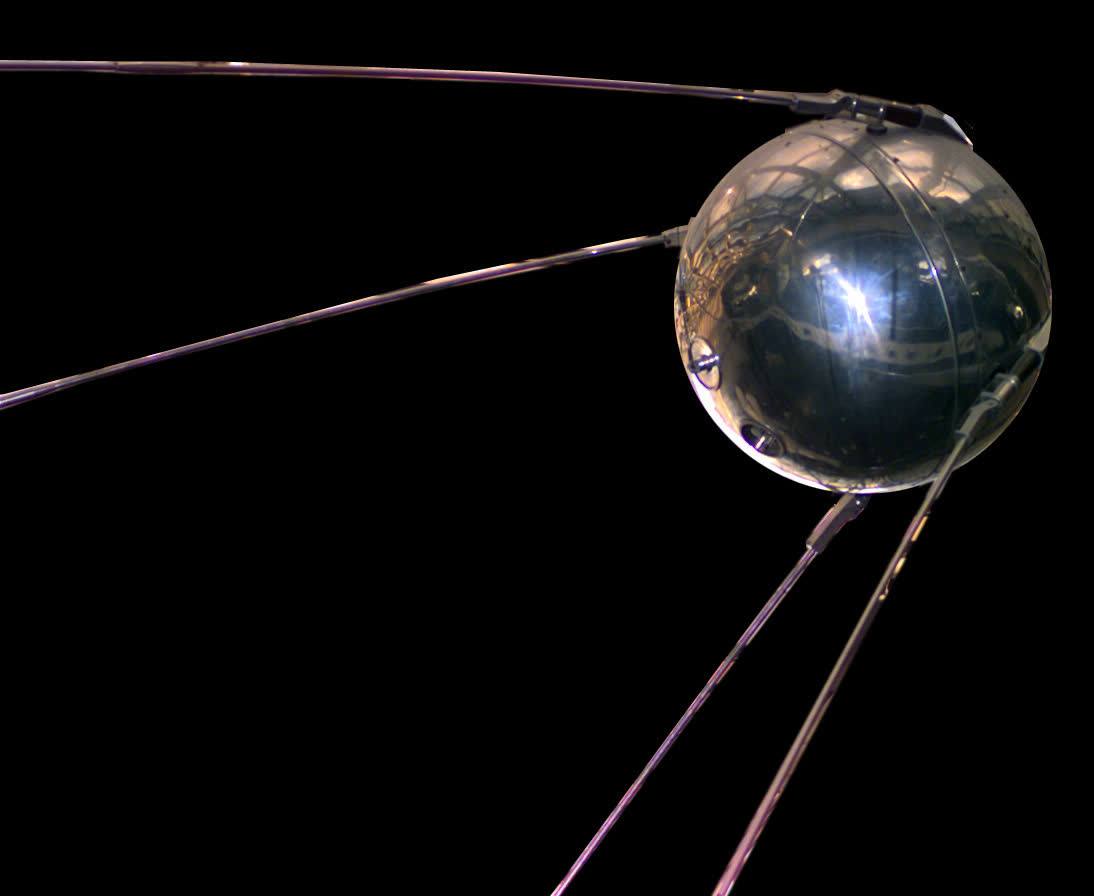
- 1957Sputnik
The first artificial satellite, launched by the Soviet Union. America was alarmed: if the Soviets could put a satellite into space, they could also send a missile to America.
- 1959Castro
Fidel Castro took power in Cuba, just off the coast of America.
- 1960U-2
An American spy plane was shot down over the Soviet Union. The pilot, Gary Powers, was taken prisoner.
- 1961Bay of Pigs and Berlin
An American-backed invasion of Cuba failed. A few months later East Germany built the Wall straight through Berlin.
Read more in Rock behind the Iron Curtain → - 1965Ho Chi Minh
The leader of communist North Vietnam. In 1965 America sent large numbers of soldiers to South Vietnam.
- 1979Russians in Afghanistan
In December 1979 the Soviet Union invaded Afghanistan. The war lasted more than nine years.
Just too early
The song came out in September 1989. Seven weeks later the Wall fell, and two years after that the Soviet Union no longer existed. So the biggest event of the Cold War is not in the song. Joel later called that bad luck, but he did not want to write a sequel. He did not think the melody was good enough for that.
Two years earlier Joel himself had stood behind the . In the summer of 1987 he gave six concerts in the Soviet Union, three in Moscow and three in Leningrad, as one of the first Western rock musicians. In Moscow he got so angry about the spotlights trained on the audience that he knocked over his electric piano. Later he called the trip the high point of his life as a musician.
Try it yourself
What would your list look like? Pick a few names from the song that you don't know and look up what happened. Or write your own verse, with the events of the years you have been alive. Joel was right: the fire is still burning.