
2 languages
Joshua Rifkin
From HitStory, the pop encyclopedia of School of Rock · Artist
Joshua Rifkin, born in 1944, is an American conductor, pianist and musicologist. He studied at the Juilliard School and at Princeton University, among other places, and is a professor of music at Boston University. In the classical world he is known above all for his research on Johann Sebastian Bach. He argued that Bach's choral works were sung in the composer's time with one singer to a part. When he proposed that idea in 1981, it was rejected by many colleagues. Later it became very influential, although there is still no consensus. He also discovered that the Matthäus-Passion (St Matthew Passion) was first heard in 1727 and not in 1729, as had been thought.
Music and breakthrough
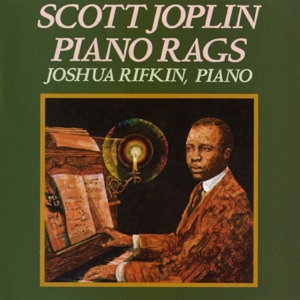
The general public knows Rifkin for something quite different. In November 1970 he released Scott Joplin: Piano Rags on the classical label Nonesuch, followed by two sequels in 1972 and 1974. Those records were a great success and are regarded as the start of the ragtime revival of the 1970s. With it, Nonesuch had its first million-seller. Joplin's music thus found an audience again, also outside the concert hall.
Influence
Rifkin also moved in the pop music of the 1960s. He wrote arrangements for Judy Collins on the albums In My Life and Wildflowers and played in the Even Dozen Jug Band. With The Baroque Beatles Book he made a witty record on which songs by Lennon and McCartney sound as if Bach or a contemporary had written them. In this way he connected early music with pop, ragtime and folk.
Listening
 Maple Leaf Rag · Joshua Rifkin, 1970
- The Entertainer · Joshua Rifkin, 1970
Discography
Studio albums
- 1970Piano Rags by Scott Joplin
- 1972Piano Rags by Scott Joplin, Volume II
- 1974Piano Rags by Scott Joplin, Volume III
- 1975The Baroque Beatles Book
- 1981Wedding Cantata, BWV 210
- 1985Digital Ragtime / Wall Street Rag
- 1986Oboe Concertos
- 1986Organ Concertos, op. 4
- 1987Cantatas BWV 106 "Gottes Zeit ist die allerbeste Zeit" (Actus tragicus), 131 "Aus den Tiefen rufe ich, Herr, zu dir"
- 1987Cantatas BWV 140 "Wachet auf, ruft uns die Stimme", 51 "Jauchzet Gott in allen Landen"
- 1987Cantatas BWV 147 "Herz und Mund und Tat und Leben", 80 "Ein feste Burg ist unser Gott"
- 1987Piano Rags
- 1989Cantata BWV 202 “Weichet nur, bertrübte Schatten” / Cantata BWV 209 “Non sa che sia dolore”
- 1991Rags & Tangos
- 1999Mass in B minor
- 2010Vivat Leo! Music for a Medici Pope
In School of Rock
The chapters, maps and magazine stories of School of Rock are currently available in Dutch only.
- After Hours: Session 1NL Reader