
2 languages
Gottfried Huppertz
From HitStory, the pop encyclopedia of School of Rock · Artist
Gottfried Huppertz was a German composer, born on 11 March 1887 and died on 7 February 1937. He is best known for his music for German Expressionist silent films, such as the science fiction film Metropolis (1927). He studied at the Cologne conservatory and worked in Coburg during the First World War, where in 1910 he made his debut as a singer and actor. In 1920 he went to Berlin as an opera singer at the Nollendorfplatz Theatre.
Music and breakthrough
He dedicated his first composition, Rankende Rosen, to the actor Rudolf Klein-Rogge, who in the early 1920s introduced him to the director Fritz Lang and to Thea von Harbou. He wrote his first film music for Lang's Die Nibelungen (1924). While working on the music for Zur Chronik von Grieshuus, in 1925, he began the score for Metropolis, which became his best-known work. He also wrote songs, but only part of his music has been recorded. He died suddenly of a heart attack in 1937.
Influence
Huppertz wrote orchestral music for silent films, which was played by a live orchestra during the screening. The piece Maschinen from Metropolis belongs to the work in which he set the sound of a factory and the menace of the machines to music. In this he is an early forerunner of the film composers who later bound image and sound so closely together that the music itself carries the story.
Listening
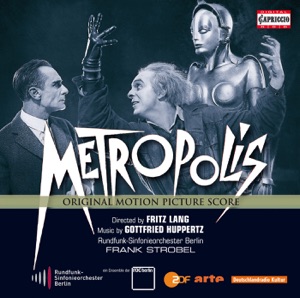 Maschinen · Gottfried Huppertz, 1927
Discography
Studio albums
- 2011Metropolis (soundtrack)
- 2015Die Nibelungen (soundtrack)
- 2016Die Nibelungen
- 2016Zur Chronik von Grieshuus (soundtrack)
In School of Rock
The chapters, maps and magazine stories of School of Rock are currently available in Dutch only.
- The Dream Factory: Film Reel 1NL Reader
Mentioned in other articles
- Symphonic silent film scores (Hollywood and Weimar) Genre
Gottfried Huppertz composed a large late-Romantic work for Metropolis (1927), with leitmotifs for the characters and the world of the machines.