
2 languages
Franz Schubert · Dietrich Fischer-Dieskau
From HitStory, the pop encyclopedia of School of Rock · Artist
Franz Schubert · Dietrich Fischer-Dieskau · This entry is about two people who come together in one recording. Franz Schubert was a Viennese composer of the early nineteenth century. He died young, in 1828, and in a short time wrote more than six hundred songs for voice and piano. His Ständchen, D. 889, from 1828, is a setting of Horch, horch, die Lerch, a poem from Shakespeare's play in German translation. It is a serenade: a song that a lover sings at a window.
Music and breakthrough
Dietrich Fischer-Dieskau was a German lyric baritone and conductor, born on 28 May 1925 in Berlin and died on 18 May 2012. After the war he became one of the most famous performers of the Lied, the German art song. He sang in public for the first time in 1947, made his debut in 1948 at the Städtische Oper in Berlin and, together with sopranos such as Elisabeth Schwarzkopf and Irmgard Seefried, recorded albums of songs by Schubert and Hugo Wolf. He is best known for his interpretation of Schubert's Winterreise.
Influence
In such a recording you hear how a singer tells a whole story with only voice and piano. The music is simple in design: a melody, an accompaniment and a text that is the heart of the song. The course uses this piece to show how far the art of song goes back before popular music existed, and how important the voice as instrument and storyteller already was.
Listening
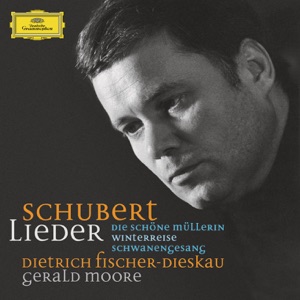 Ständchen (Horch, horch, die Lerch), D. 889 · Franz Schubert · Dietrich Fischer-Dieskau, 1828Apple Music ↗