
2 languages
Ensemble Shashmaqam
From HitStory, the pop encyclopedia of School of Rock · Artist
Ensemble Shashmaqam · Shashmaqam is a musical genre from Central Asia, characteristic of Tajikistan and Uzbekistan, which probably originated in the city of Bukhara. In Persian the word means the six maqams, the modes on which the music is based. It is a refined music with texts taken from Sufi poets on divine love. The instruments accompany the voices sparingly. Usually there are a few long-necked lutes, such as the rawap, tar, tanbur or dutar, the dayra, a frame drum with jingling discs that resembles a tambourine, and the sato, a bowed tanbur.
Music and breakthrough
In the first half of the twentieth century, Abdul Rauf Fitrat wrote a book in 1927 in which he presented the shashmaqam as the great musical tradition of the Uzbek people. In the 1930s, under Stalin, the music was regarded with suspicion, and from the mid-1950s it was ideologically rehabilitated. Tajikistan and Uzbekistan each regarded the music as their own heritage, and in Dushanbe and Tashkent a tradition of its own developed. In the 1980s that artificial separation began to change.
Influence
The Bukharan Jews brought the shashmaqam to the West, especially to the United States. Many of them were successful performers. An ensemble like this one lets us hear how old and sophisticated the classical music of Central Asia is, with a system of modes of its own that stands beside the Persian and Turkish traditions.
Listening
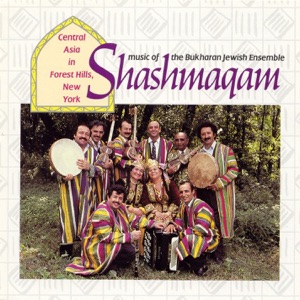 Talqin-i Bayat · Ensemble Shashmaqam, 1991