
2 languages
Ensemble Bîrûn & Kudsi Ergüner
From HitStory, the pop encyclopedia of School of Rock · Artist
Ensemble Bîrûn & Kudsi Ergüner · Kudsi Ergüner is a Turkish master of the ney, the reed flute that plays a major role in Sufi music, and Ensemble Bîrûn plays classical Ottoman music. To understand their work it helps to know the tradition. Ottoman music, also called Turkish classical music, is the classical music of the Ottoman Empire. It arose at the palace, in the great cities and in the Sufi lodges, and traditionally features a solo singer with a small to medium-sized instrumental ensemble.
Music and breakthrough
The tradition reached its peak around the beginning of the eighteenth century and goes back to the music of the Hellenistic and Persian world. Its hallmark is the modal system of makams, in which melodic scales and the shape of the melody are laid down. In Ottoman music alone, more than six hundred makams have been used. Its forms include the peşrev, the kâr and the saz semaî. A peşrev is an instrumental opening piece, such as Acem Peşrev, which is written in a particular rhythmic cycle, here Usûl Devr-i Kebîr.
Influence
In the nineteenth century, Westernisation caused Western classical music to displace the native tradition. The Ottoman elite regarded their own music as primitive and underdeveloped next to Western music, and after the fall of the empire the new republican elite tried to push it back still further. Musicians such as Ergüner and ensembles such as Bîrûn keep the old tradition alive, with the characteristic sound of the ney, string instruments and percussion.
Listening
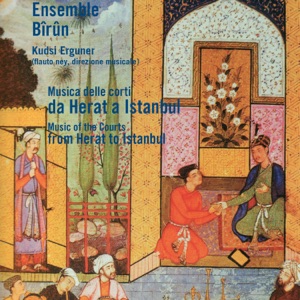 Acem Peşrev (Usûl Devr-i Kebîr) · Ensemble Bîrûn & Kudsi Ergüner, 2018