SoR Magazine #2 · Krautrock · story 1 of 5
The Year Zero
A country in ruins, parents who kept silent and students on the streets. Why young Germans went looking for their own sound in the late 1960s.
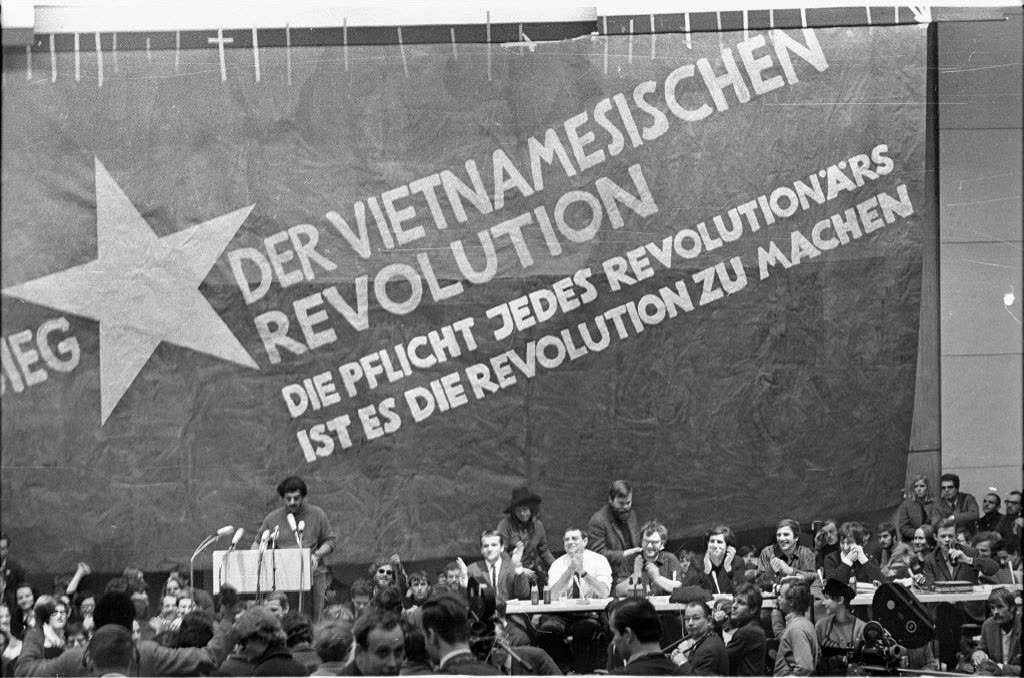 Photo: Ludwig Binder / Stiftung Haus der Geschichte · CC BY-SA 2.0
A country without songs
In May 1945 Germany lay in ruins. The cities had been bombed flat, millions of people were dead or on the run, and the country was divided among the four victors: America, Britain, France and the Soviet Union. The Germans themselves later spoke of the Stunde Null, zero hour. Everything had to start again.
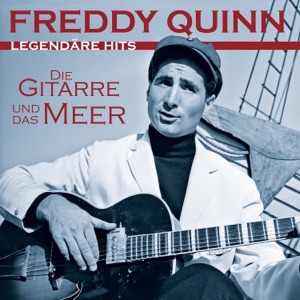
Music had to start again too. For twelve years the Nazis had decided what Germans were allowed to hear. Jazz was called degenerate, Jewish composers were banned and folk songs had been used for propaganda. After the war hardly anyone wanted to sing German songs about the fatherland any more. What was left was the Schlager: cheerful, sentimental songs about homesickness, the sea, love and the mountains. They were about everything except what had just happened.
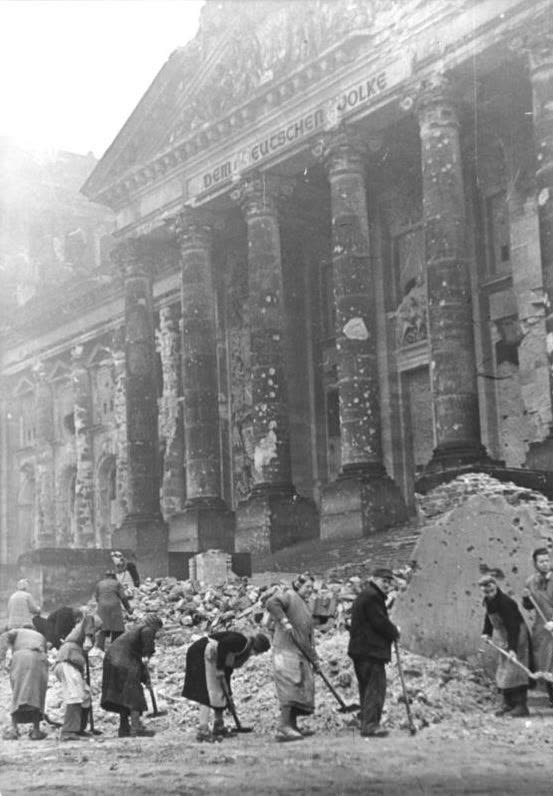 Photo: Otto Donath / Bundesarchiv · CC BY-SA 3.0 de
Alongside the Schlager came the music of the occupiers. In West Germany the American station AFN and the British BFBS broadcast jazz, swing and later rock 'n' roll around the clock for the soldiers. Young Germans listened in. Around 1960 the Beatles played for months in the clubs of Hamburg, and beat bands sprang up all over the country. They sang in English and copied as well as they could what came out of Liverpool and London. There was no German sound of their own.
What did you do in the war, Father?
In the 1960s the children of the war grew up. They had been raised in a country that quickly became rich again, with new cars, refrigerators and holidays in Italy. But at home people kept silent. Many fathers had served in the army, some in Hitler's party. Teachers, judges and politicians who had built careers under the Nazis still sat in their old jobs.
From 1963 the Auschwitz trials were held in Frankfurt. More than twenty people who had worked at the extermination camp stood trial, and the newspapers wrote about it for two years. Young people began asking their parents: what did you know, and what did you do? Often there was no answer.
On 2 June 1967 a policeman in West Berlin shot the student Benno Ohnesorg dead during a demonstration against the visit of the Shah of Iran. In April 1968 the student leader Rudi Dutschke was shot in the street. He survived the attack but never fully recovered. Thousands of students took to the streets, against the war in Vietnam, against the big newspapers and against a country that in their view had never really come to terms with the past.
Photo: Ludwig Binder / Stiftung Haus der Geschichte · CC BY-SA 2.0Not American, not English
For part of that generation, English and American pop music was suspect too. It was the music of the occupier and of the country dropping bombs in Vietnam. Why would a German copy the blues, the music of Black Americans from the southern United States? You could also think of something yourself. Your own country's past offered nothing to hold on to, so you started from zero.
In September 1968 the Internationale Essener Songtage took place in Essen, the first big pop festival in West Germany. For five days American and English artists played, but so did new German groups without hits or record contracts: Tangerine Dream from Berlin, Guru Guru, and Amon Düül from Munich. The organiser, Rolf-Ulrich Kaiser, founded the record label Ohr two years later, German for ear. He called the new music Kosmische Musik.
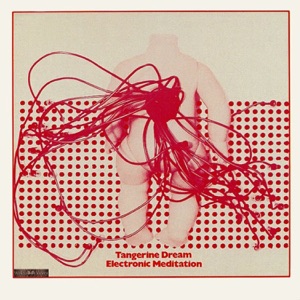
The beginning of Tangerine Dream, still without synthesizers. An organ, a guitar, drums and a cello slowly build a storm together. There is no verse and no chorus: the piece goes where it wants to go.
Living in a commune
Amon Düül was no ordinary band. It was a commune in Munich, a group of young people who lived, cooked, demonstrated and made music together. Anyone who wanted to join in played along, whether they could play an instrument or not. The group soon split. One half stayed mainly a living community, the other half became a real band: Amon Düül II. Their 1970 album Yeti sounds like a dream that keeps almost, but never quite, turning into a nightmare.
The same thing happened in West Berlin. At the Zodiak Free Arts Lab, a small club behind a theatre in Kreuzberg, anyone could play every evening, as long and as loud as they liked. Conrad Schnitzler, Hans-Joachim Roedelius and the young Tangerine Dream played there for hours, with amplifiers, organs and home-built sound machines.
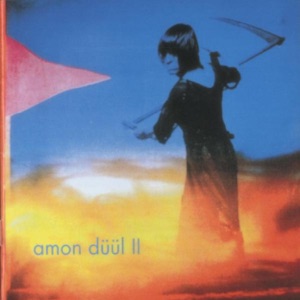
A heavy guitar riff, a violin and the shrill voice of Renate Knaup. Amon Düül II played rock, but as if nobody had ever told them how it was supposed to go.
Other groups chose the German language and a clear message instead. Ton Steine Scherben from Berlin played at meetings of squatters and left-wing young people. Their song Macht kaputt, was euch kaputt macht became a battle cry in 1970. In this way even ordinary rock suddenly became German.
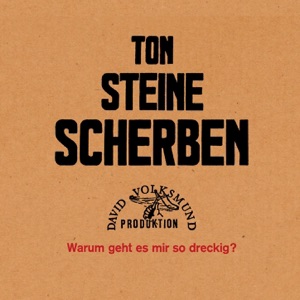
Raw rock in German, with words you can shout along to. Singer Rio Reiser later became one of the best-known German pop singers.
An insult as a name
In England the strange records from Germany stood out. Around 1972 the English music papers came up with a name for them: krautrock. Kraut, sauerkraut, had been the insult English and American soldiers used for Germans in both world wars. The name was therefore half a joke and half a jab. The German musicians hated it. They were not making rock, they said, and they were not a movement either. Can, Kraftwerk, Faust and Tangerine Dream all sounded completely different.
The group Faust turned the joke around. Faust lived and worked for three years in an old village school in Wümme, a village between Hamburg and Bremen. In 1973 the English label Virgin released The Faust Tapes for the price of a single: less than half a pound. More than a hundred thousand copies were sold. Their next album, Faust IV, included a twelve-minute piece called Krautrock. If the English wanted to call their music that, they could have it.
For twelve minutes a wall of guitar sound keeps getting closer, and only after a few minutes does the drummer come in. It is not a song, it is a state.
What the groups did have in common was an attitude. They did not want to go back to German music from before 1945, and they did not want to copy English and American music either. They were looking for something that did not exist yet. In the next two stories you will hear what that produced: a rhythm that never stops, and machines that began to sing.