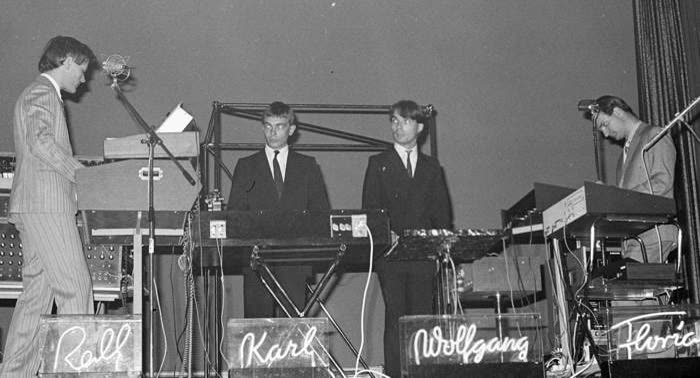
 Photo:
Children of Fritz Lang
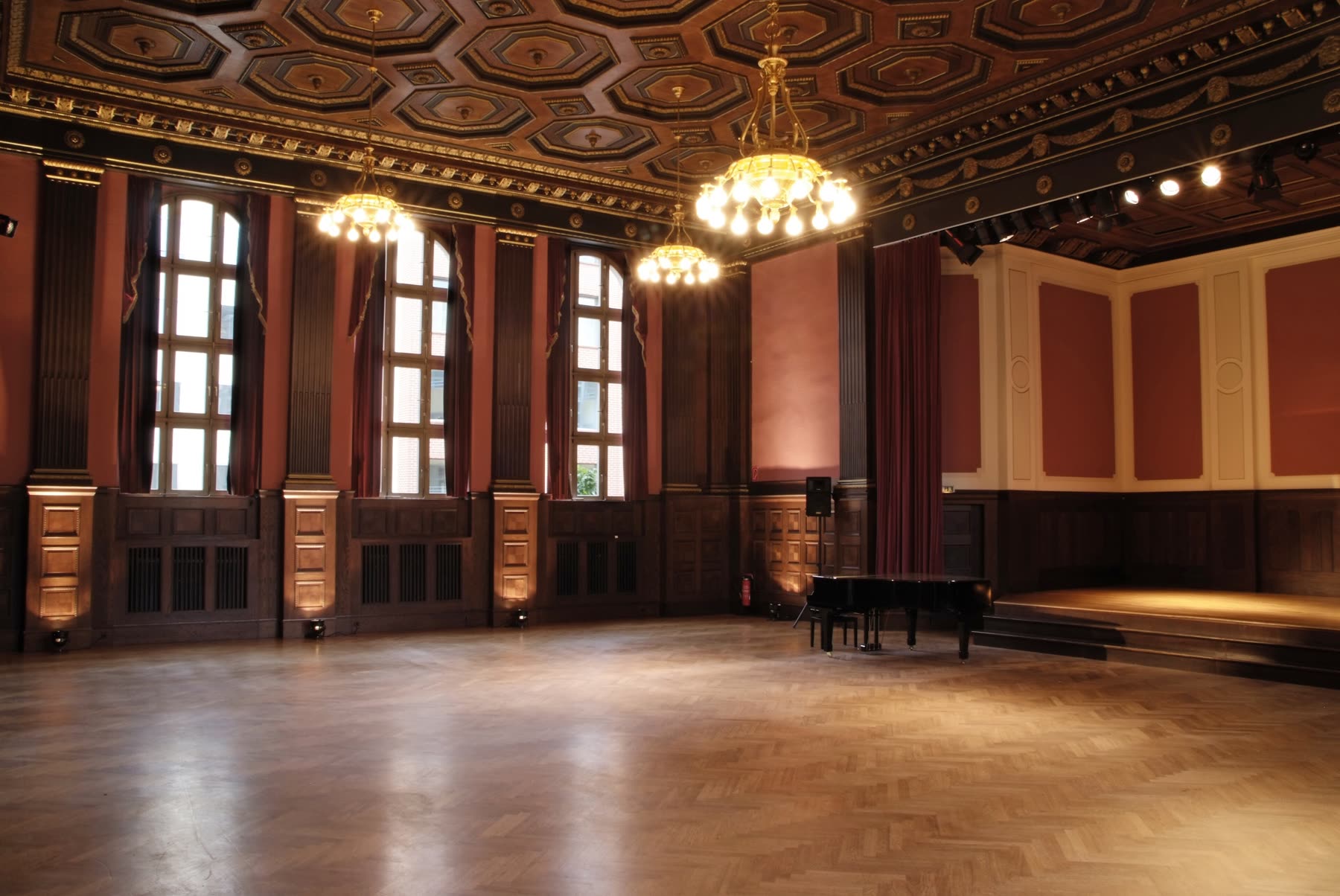
Ralf Hütter and Florian Schneider met in the late 1960s as music students in Düsseldorf. Hütter played organ, Schneider flute and violin. Both came from well-off families. In 1970 they rented a space in an old factory building close to Düsseldorf station and built a studio there, which they called Kling Klang. Their band was named Kraftwerk: power station.
The first albums still sounded like the other new German music: long pieces with flute, organ and drums. But Hütter and Schneider wanted to go further. They were looking for a modern German culture from before the Nazis, and found it in the 1920s: in the Bauhaus, the school of art and design, and in Fritz Lang's film Metropolis, about a city of machines and a robot that becomes a human being.
We are the children of Fritz Lang and Wernher von Braun.Ralf Hütter of Kraftwerk
Wernher von Braun was the rocket engineer who had designed the V2 for Hitler and afterwards built the moon rocket for America. Hütter meant it as a provocation: Germany had a history of technology and progress, and you could take it back. Not to forget the war, but to set a different future against it.
A twenty-two-minute drive
In 1973 Kraftwerk acquired a Minimoog, a small synthesizer from America. A synthesizer makes sound with electricity: no string, no drum skin, but a current that vibrates and that you can shape into a flute tone, a hum or a hissing sound. Until then synthesizers had been big, expensive cabinets for laboratories and studios. The Minimoog fitted on a table.
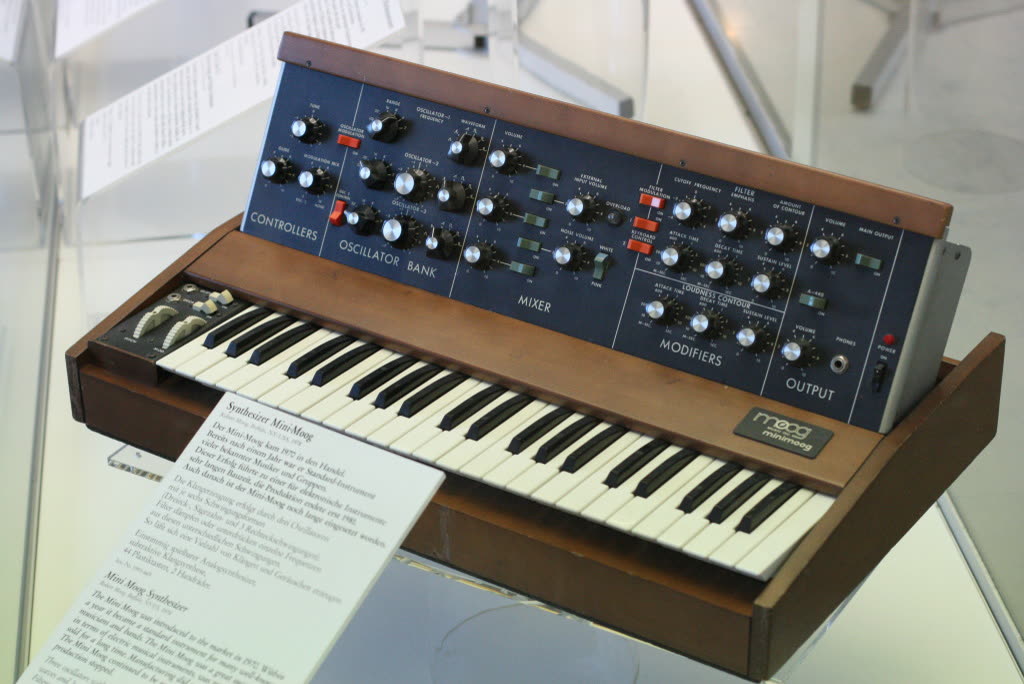 Photo: Wolfgang Stief from München, Germany · CC BY 2.0
With that synthesizer Kraftwerk made Autobahn, a twenty-two-minute piece about a drive along the motorway. You hear a car door slam, an engine start, a horn. Then you drive. Wolfgang Flür played electronic drums: metal pads that made a sound when he touched them with a stick. The lyrics are short and simple, in German. We are driving on the autobahn, and that is about all that happens.
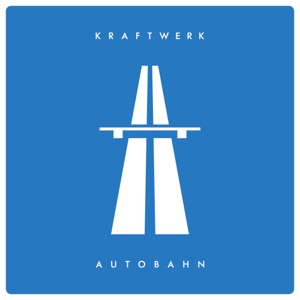
Listen to the sounds: the hum of the tyres, cars passing, the radio. Kraftwerk sang about something everyday that was perfectly normal in Germany and yet sounded modern.
In America the record company turned it into a three-minute single. It reached number 25 on the American chart in 1975, and the album even number five. For the first time a German band without English lyrics had a hit in America. Kraftwerk went on tour, and American journalists asked the four neat gentlemen in suits whether they were robots.
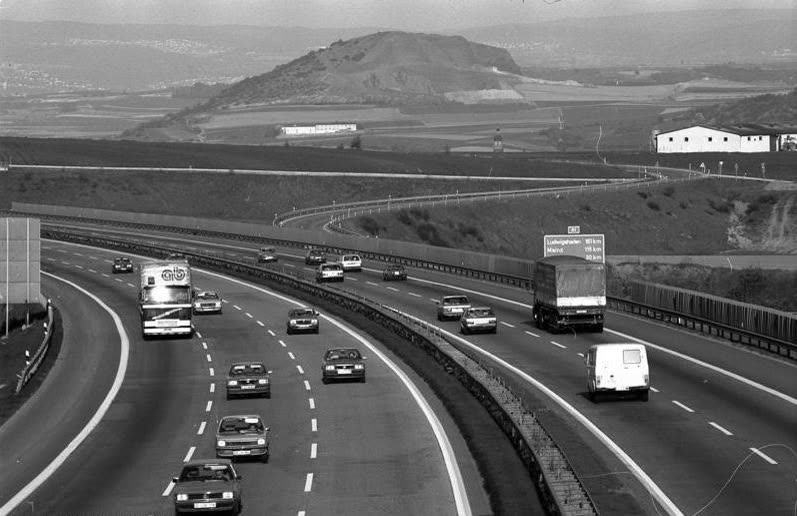 Photo: Harald Hoffmann / Bundesarchiv · CC BY-SA 3.0 de
The cosmos of Tangerine Dream
In West Berlin Tangerine Dream went in a different direction. Edgar Froese, the leader of the band, bought synthesizers too, but he did not make songs with them. He used a sequencer: a device that remembers a series of notes and repeats them endlessly. Over that, the three members of the band played long, floating sounds, like a journey through space.
In 1974 Phaedra came out, on the English label Virgin. The album reached the top twenty in England without a single word of lyrics. Tangerine Dream later played in cathedrals and made the music for dozens of films. The sound of the sequencer, bubbling and constantly in motion, became the sound of the future in films and computer games.
After a few minutes the sequencer starts to bubble, and the pitch slowly shifts. Froese said that much of it came about by accident: the Moog was still warming up and drifted out of tune.
Man and machine
Kraftwerk became ever tighter. Radio-Aktivität, from 1975, is about radio waves and nuclear energy, with ticking Geiger counters. On Trans Europa Express, from 1977, an express train rides through Europe. And on Die Mensch-Maschine, from 1978, the four band members stand on the sleeve in red shirts, with black ties and painted lips. In the song Die Roboter they sing that they are robots.
The ticking at the start is a Geiger counter, a device that measures radiation. Kraftwerk later played a new version with the names Chernobyl, Harrisburg, Sellafield and Hiroshima in it.
It was a joke, but also an idea. Kraftwerk asked what happens to people when machines take over more and more of our work. For Die Roboter they later put robots of themselves on stage. It did not matter who was playing: the music was more important than the musician.
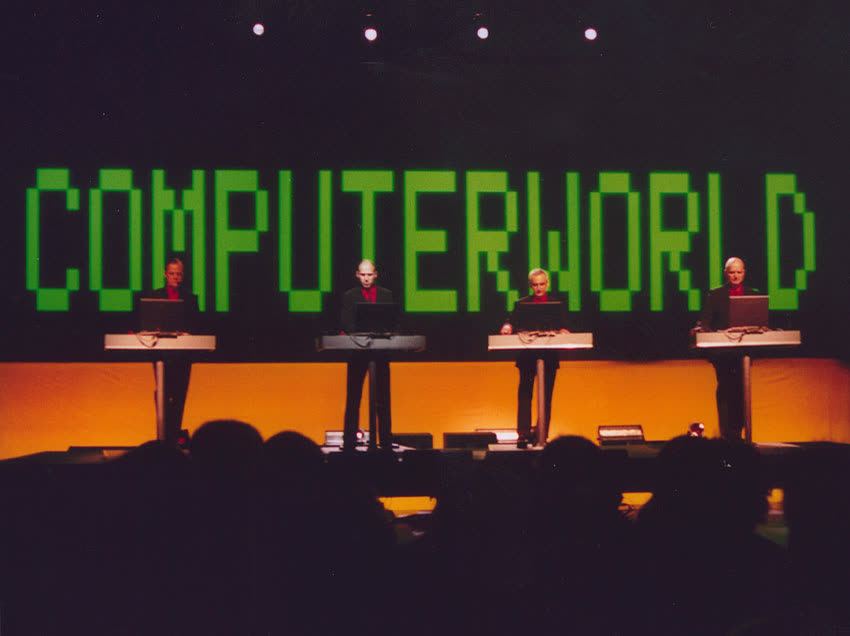 Photo: Andréas Hagström · Public domain
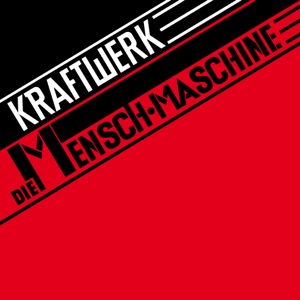
The sentence in Russian at the start means: I am your servant, I am your worker. Listen for the distorted voice that goes through a vocoder, a device that makes a voice sound like a machine.
In 1981 Computerwelt came out. Home computers barely existed yet, but Kraftwerk already sang about calculators, data and falling in love via a computer. Almost everything predicted in that song has come true. The four men from Düsseldorf had not only imagined the future. They had also given it a sound.
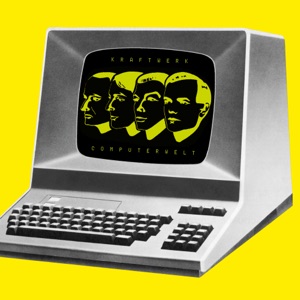
A lonely evening, a computer and a melody you will not forget. Coldplay borrowed that melody in 2005 for their song Talk, with Kraftwerk's permission.