Duck and Cover
In 1952, American schoolchildren were shown a short film about a cheerful turtle named Bert. Whenever danger threatened, Bert pulled his head into his shell. The children were supposed to do the same if they saw a bright flash of light: crawl under their desks and cover their heads with their arms. The film was called Duck and Cover, and it was meant to protect them against an atom bomb.
After 1949 both America and the Soviet Union had the bomb, and soon the too, which was far more powerful. A war between the two could mean the end of the world. For forty years people lived with that thought. Pop musicians sang about it, sometimes with fear, sometimes with anger and sometimes with a joke.
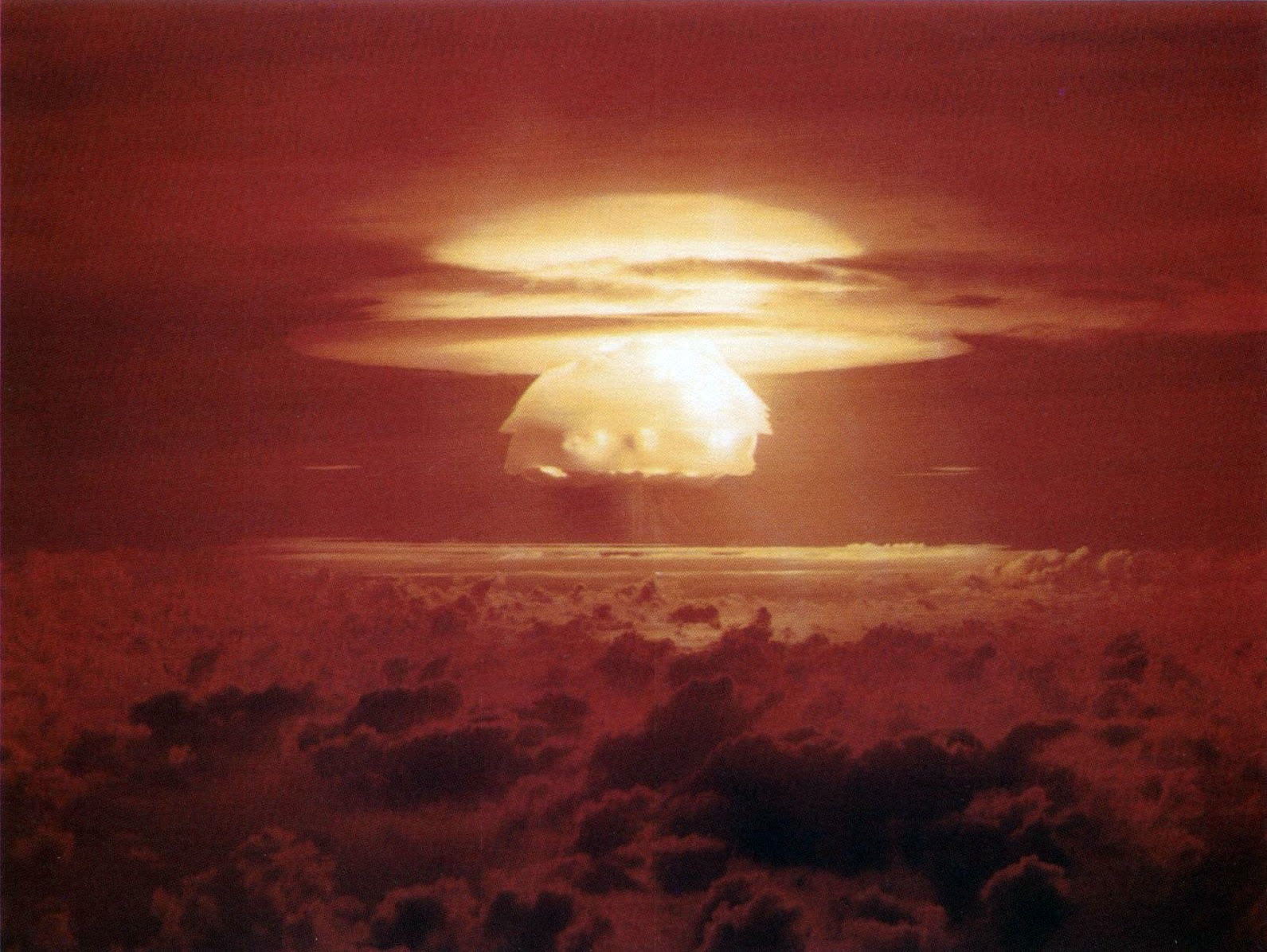 Photo: United States Department of Energy · Public domain
A cheerful song about the end
The American Tom Lehrer was a mathematician at Harvard who wrote songs with vicious jokes in his spare time. In 1959 he sang We Will All Go Together When We Go, to a jaunty tune. His consolation in a nuclear war: at least we all go at the same time. Nobody has to mourn anyone else.

Hear how cheerfully Lehrer plays along, as if in a pub. The joke works precisely because the music sounds so innocent.
Thirteen days
In October 1962, American reconnaissance planes discovered Soviet missile bases on Cuba, right off the American coast. For thirteen days the world stood on the brink of nuclear war. Then the Soviets backed down and the missiles were removed.
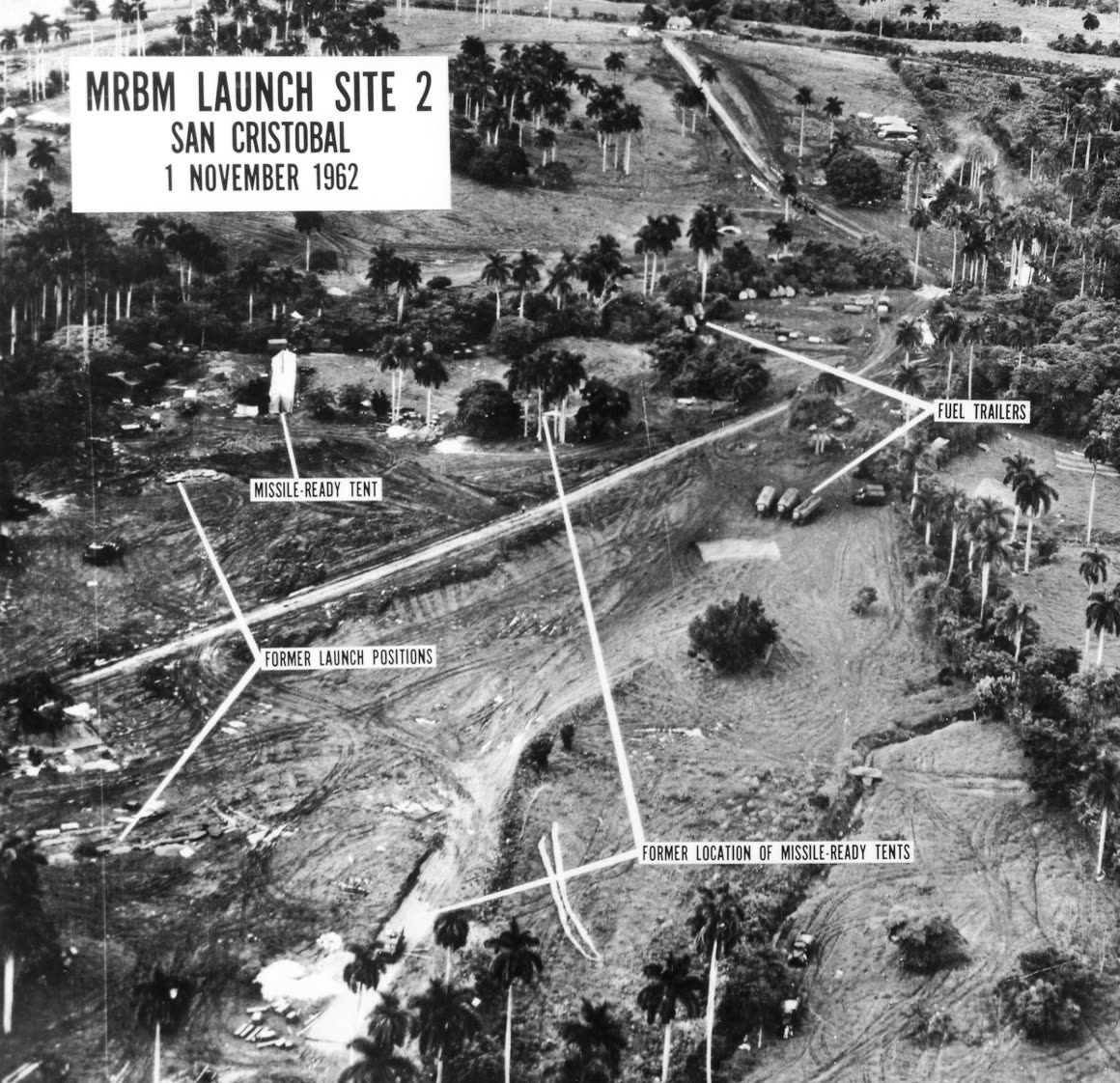 Photo: Amerikaanse overheid (luchtverkenning) · Public domain
Bob Dylan had first sung A Hard Rain's a-Gonna Fall a month earlier, in September, at Carnegie Hall in New York. When the song appeared on an album in 1963, many listeners read it as a song about the missile crisis and the radioactive rain after a nuclear war. Dylan himself later said it was simply about hard rain. But the song had become bigger than its writer.
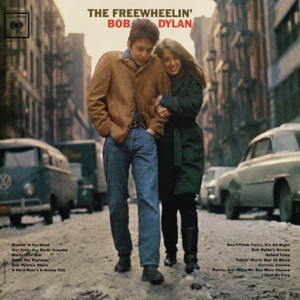
A boy tells, in question and answer, what he has seen, line after line, like an old ballad. Hear how Dylan makes every verse longer, as if he cannot stop listing things.
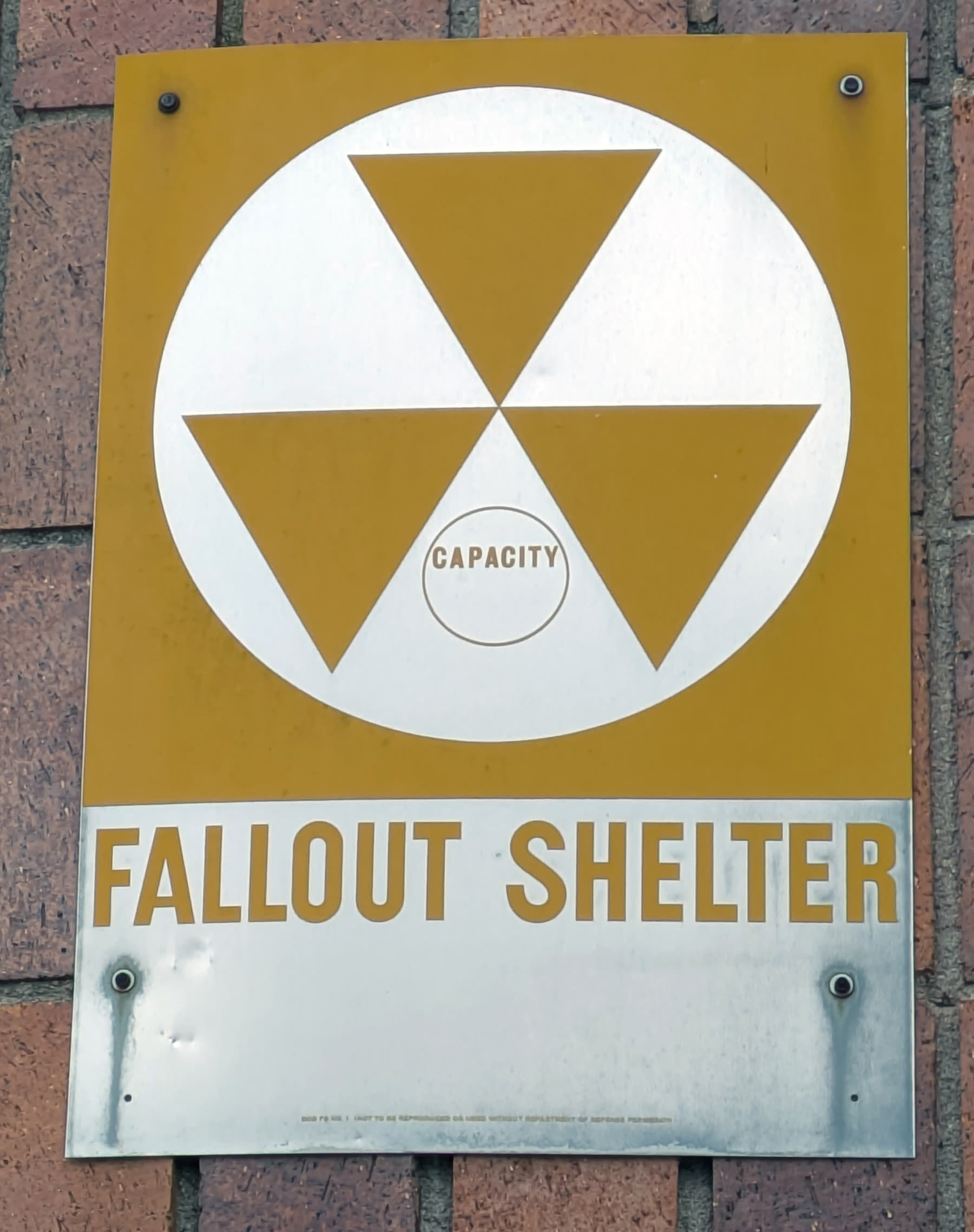 Photo: Myotus · CC0
Two years later Barry McGuire reached number one in America with Eve of Destruction, an angry list of everything that was wrong with the world. On the eve of destruction, he sang, and you still don't believe it.
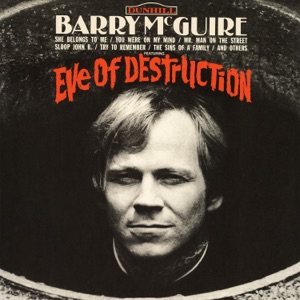
A raw voice, a harmonica and lyrics like a newspaper headline. This is protest that does not want to sound pretty.
The 1980s: afraid once more
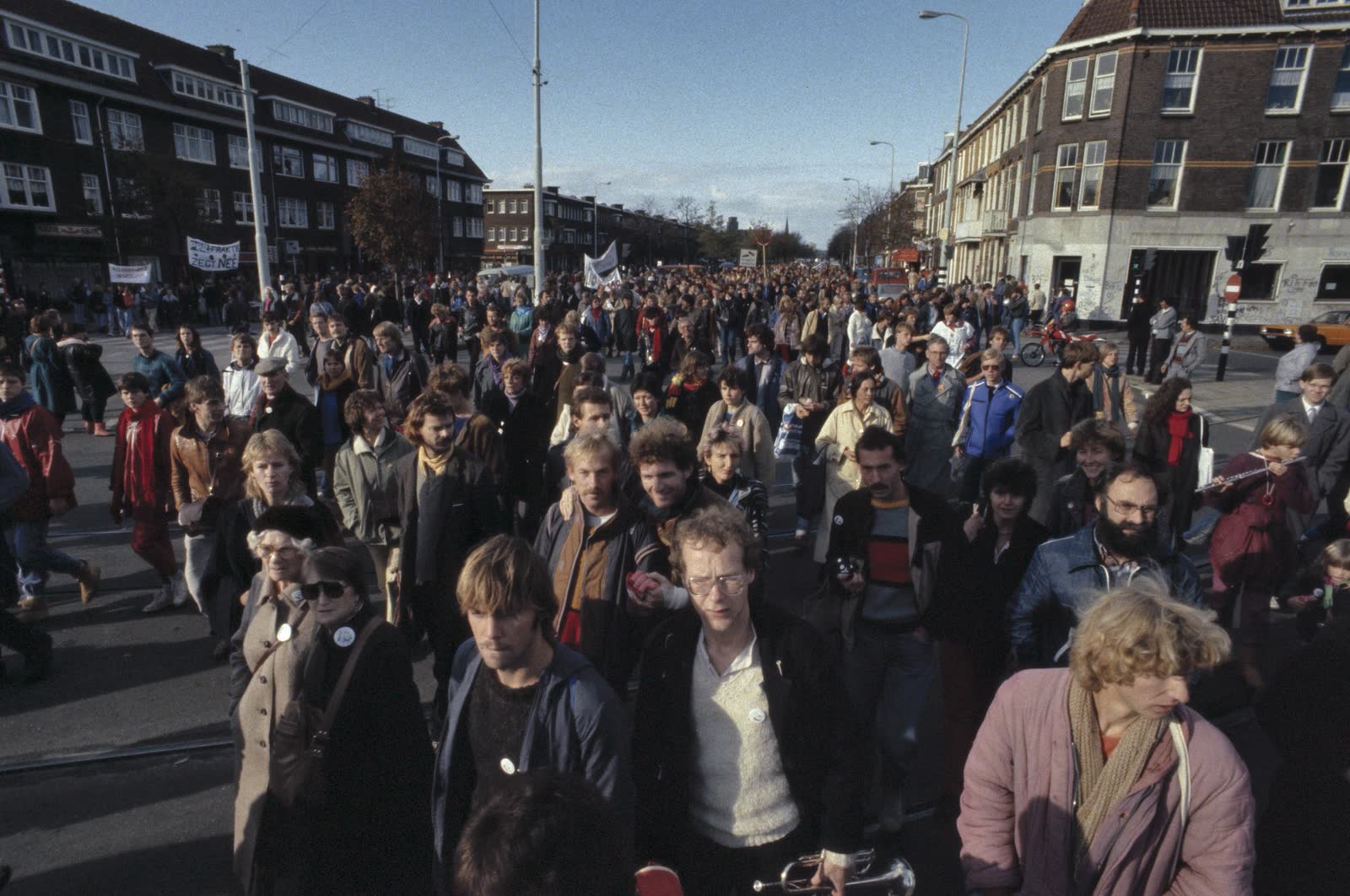
In the 1970s the tension seemed to ease. But around 1980 it rose again. America and the Soviet Union placed new missiles in Europe, and in cities such as Bonn and Amsterdam hundreds of thousands of people took to the streets. The fear of the bomb was back, and so was pop music.
In June 1982, Carlo Karges, guitarist of the West German band Nena, watched balloons being released at a Rolling Stones concert in West Berlin. What would happen, he wondered, if they drifted over the Wall to the East? He wrote a song about it: ninety-nine balloons are mistaken for an attack on a radar screen, and a war breaks out with no winner. 99 Luftballons became a number one in West Germany in 1983 and even reached number two in America, in German.
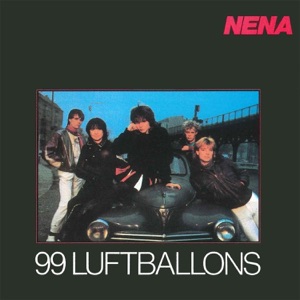
A sunny pop song with an ending that sends a chill through you. At the close, the singer stands in the ruins and lets go of one balloon.
In 1983 another song about the bomb appeared, a more cheerful and stranger one. The Italian duo Righeira sang in Spanish about a beach everyone has to go to: Vamos a la playa (Let's Go to the Beach). It sounds like a summer hit, but the lyrics are about a nuclear explosion. The song reached number two in the Netherlands and Belgium, and number one in Italy and Switzerland.

A synthesizer tune to dance to, with lyrics you only hear if you listen closely. That contrast is exactly the point.
A year later, Two Tribes by Frankie Goes to Hollywood spent nine weeks at number one in England. Among the danceable beats you hear the voice of the actor Patrick Allen, who had narrated public information films for the British government about what to do in an atomic attack. In the video, lookalikes of Ronald Reagan and the Soviet leader Konstantin Chernenko fight it out in a wrestling ring.

A driving bass line as if an army is approaching. Listen for the matter-of-fact voice explaining how to prepare for the worst.
I hope the Russians love their children too.Sting, Russians, 1985
In those years Sting secretly watched children's programmes on Soviet television, via a satellite receiver belonging to a friend who was a student in New York. He saw that Russian children were just like all other children. His song Russians is about that thought. He borrowed the melody from the Russian composer Sergei .
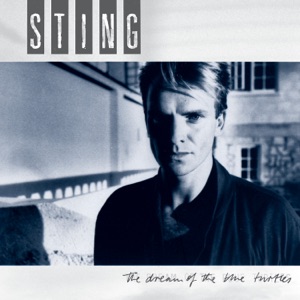
The sad melody comes from the Romance in Lieutenant Kijé by Prokofiev. At the start you hear a snippet of a Soviet news broadcast.
The wind turns
In October 1986, the American president Ronald Reagan and the Soviet leader Mikhail Gorbachev talked in Reykjavik, Iceland, about abolishing their nuclear weapons. They did not reach agreement, but it was the beginning of a new era. Gorbachev spoke of openness and reform.
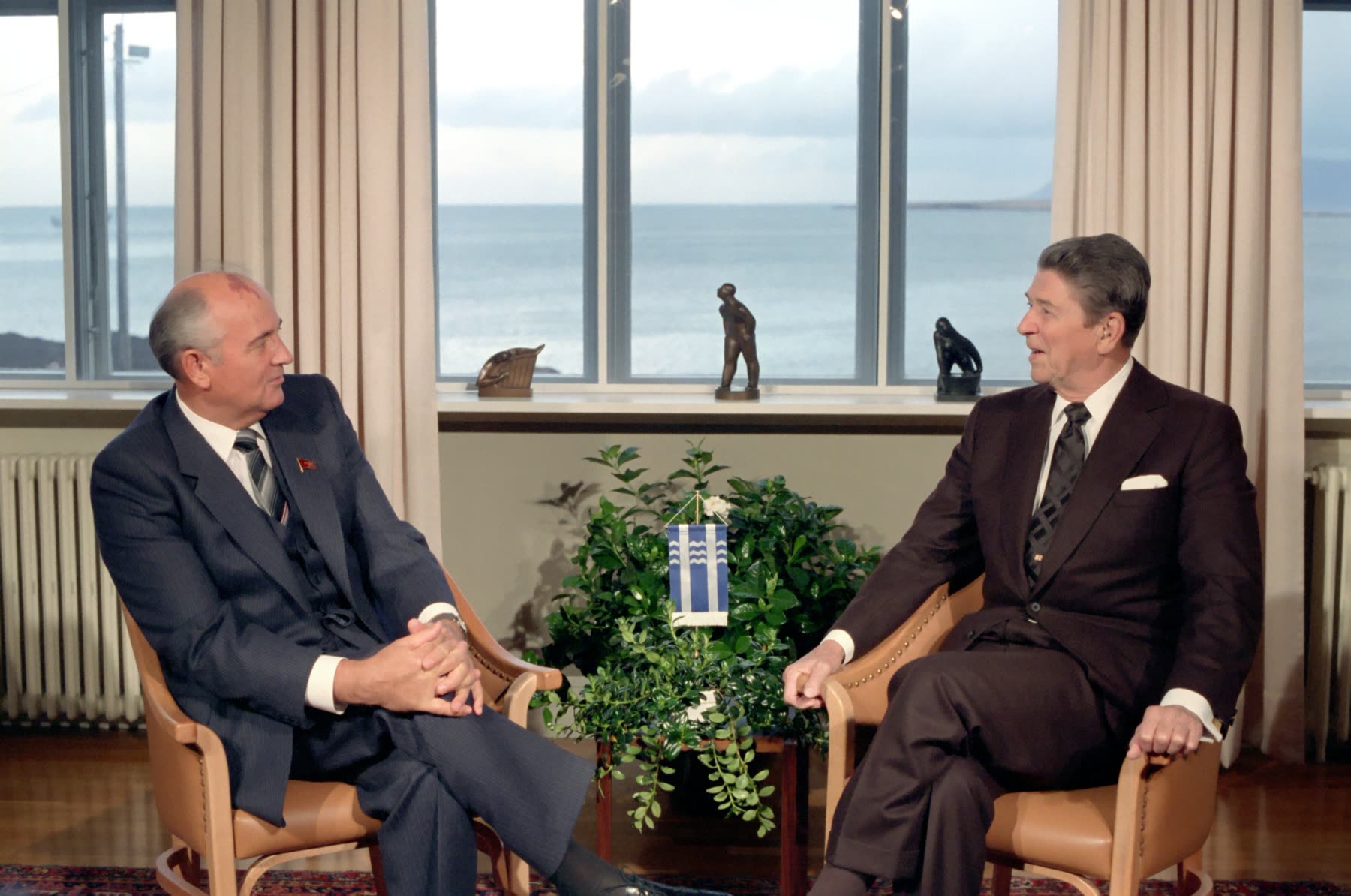 Photo: Fotograaf van het Witte Huis · Public domain
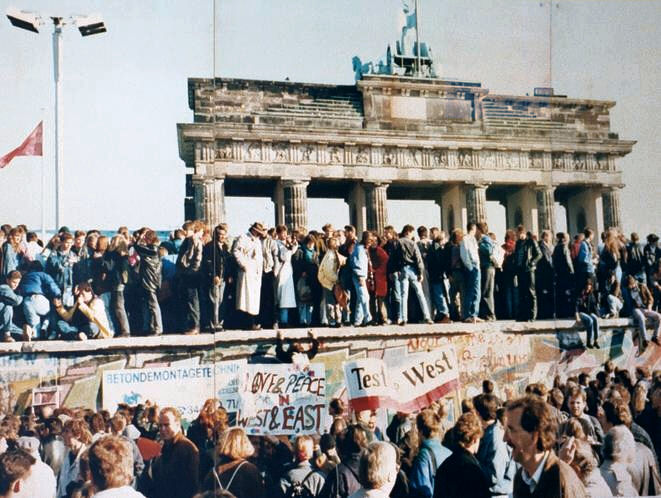 Photo: Onbekend; reproductie door Lear 21 · CC BY-SA 3.0
In August 1989 the West German band Scorpions played at a large rock festival in Moscow. Singer Klaus Meine was so struck by the atmosphere that he wrote a song about a wind of change. Three months later the Wall fell. Wind of Change was released in 1991 and became a number one in Germany and in six other European countries. The whistle at the start became the sound of the end of the Cold War.
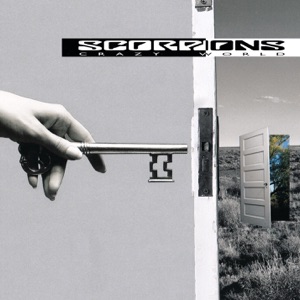
Meine whistles the melody himself. He sings about a walk along the Moskva river, towards Gorky Park. In 2022, after the Russian invasion of Ukraine, he changed the lyrics: it was not the time to romanticise Russia.
In December 1991 the Soviet Union ceased to exist. The bombs were still there, but the fear that had sounded in pop music for forty years seemed to be over.