
2 languages
Ars nova
From HitStory, the pop encyclopedia of School of Rock · Genre
Around 1320 the Parisian scholar Philippe de Vitry wrote a treatise entitled Ars nova, new art. The novelty lay in the rhythm: notes could now be divided into two as well as into three, and smaller note values gave the music more movement. Guillaume de Machaut, a canon in Reims, built motets on recurring rhythmic patterns, called isorhythm. His Messe de Nostre Dame is the oldest complete Mass written by a single composer.
Listening
Listening tip. In the Kyrie of Machaut's Mass, hear how four voices rub close against one another, with sharp harmonies that resolve again and again into an open final chord.
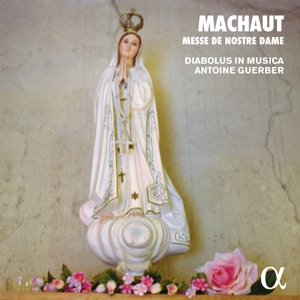 Messe de Nostre Dame: Kyrie (Machaut) · Diabolus in Musica & Antoine Guerber, 1360
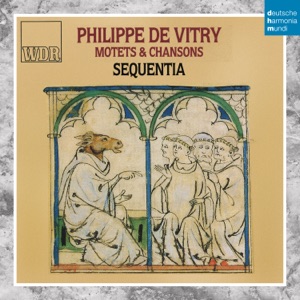 Garrit gallus / In nova fert (Philippe de Vitry) · Sequentia, 1317
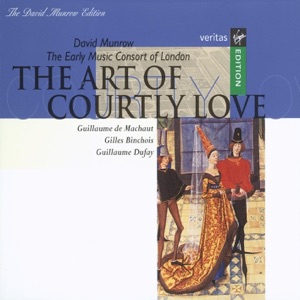 Ma fin est mon commencement (Machaut) · David Munrow & The Early Music Consort of London, 1360
See also
- Diabolus in Musica & Antoine Guerber
- Sequentia
- David Munrow & The Early Music Consort of London
- Organum and the Notre-Dame school
- Troubadours and trouvères
- Franco-Flemish polyphony
Categories: Genres