
2 languages
Carmen Miranda
From HitStory, the pop encyclopedia of School of Rock · Artist
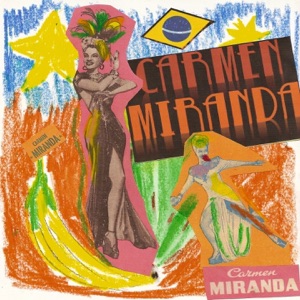
Carmen Miranda, whose real name was Maria do Carmo Miranda da Cunha, was born in 1909 in a village in the north of Portugal and grew up in Brazil. As a young woman she designed clothes and hats in a boutique, before making her debut as a singer in 1929 with the composer Josué de Barros. Her 1930 recording of Taí (Pra Você Gostar de Mim), written by Joubert de Carvalho, made her famous in Brazil as the foremost interpreter of the samba.
Music and breakthrough
In the 1930s she sang on Brazilian radio and appeared in five chanchadas, films about Brazilian music, dance and carnival. The 1939 film Banana da Terra gave her the image of the Baiana, inspired by Afro-Brazilians from Bahia. In 1939 the Broadway producer Lee Shubert offered her a contract, and in 1940 her first Hollywood film followed, Down Argentine Way. Her exuberant clothing, with the fruit hats, and her Brazilian-Portuguese accent became her trademark. In 1941 she was the first Latin American star to leave her handprints at Grauman's Chinese Theatre. Between 1940 and 1953 she made fourteen Hollywood films.
Influence
After the war her popularity declined. She was irritated by the stereotypical image of the Brazilian bombshell and tried to break free from it. Even so, she made Brazilian music known and increased American attention to Latin American culture. She is regarded as a forerunner of the Brazilian tropicália of the 1960s and died in 1955.
Listening
 Taí (Pra Você Gostar de Mim) · Carmen Miranda, 1930Apple Music ↗
Discography
Studio albums
- 2004Bombshell From Brazil