
2 languages
American Quartet
From HitStory, the pop encyclopedia of School of Rock · Artist
The American Quartet was a vocal quartet that recorded for various companies in the United States between 1899 and 1925. The line-up changed over the years. The name was first used around 1899 for the group that later became better known as the Haydn Quartet, with John Bieling, Jere Mahoney, S. H. Dudley and William F. Hooley.
Music and breakthrough
The best-known line-up arose in 1909, when Victor Records was looking for an ensemble for its new star, the tenor Billy Murray. Around him were Bieling and Hooley, who also continued to sing in the Haydn Quartet, and Steve Porter, who came from the Peerless Quartet. In 1910 they recorded Casey Jones, perhaps the first record in American music history to sell a million copies. Bieling left the group in 1913 because his voice suffered from the yodelling and cowboy yells that some records demanded. Robert Armour took his place and John Young later followed. Hooley died of Spanish flu in 1918 and Donald Chalmers became the bass. Later Murray sang with a new group, with Albert Campbell, John Meyer and Frank Croxton, under the same name for Victor.
Influence
The American Quartet shows what popular music sounded like early in the twentieth century, before radio and electrical recording: four male voices in tight harmony, with a piano or small orchestra behind them and a clear diction that could be understood even through the acoustic horn. Their songs, including some about the First World War, formed the foundation of the record industry.
Listening
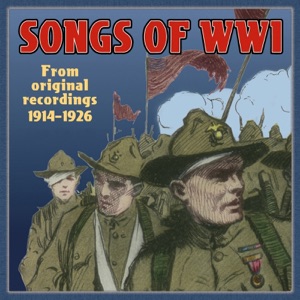 It's a Long Way to Tipperary · American Quartet, 1914Apple Music ↗