
2 languages
Mahmoud Ahmed
From HitStory, the pop encyclopedia of School of Rock · Artist
Mahmoud Ahmed was born in 1941 in the Mercato district of Addis Ababa. He shined shoes and worked as a handyman at the Arizona Club, the nightspot of the Imperial Bodyguard Band of Emperor Haile Selassie. In 1962 he stepped in when the band's singer failed to show up. After that he remained the regular singer until 1974. In 1971 he recorded his first single and in the 1970s many records and cassettes followed for the labels Amha and Kaifa, with bands such as Dahlak and Ibex.
Music and breakthrough
After the fall of the emperor and under the censorship of the military regime, nightlife disappeared, and from 1978 his work appeared mainly on cassette. He sometimes accompanied himself on the krar, guitar or mandolin. He was one of the first modern Ethiopian musicians to perform in the United States. In 1986 the Belgian label Crammed Discs released the collection Ere Mela Mela, compiled from two Kaifa LPs that he had recorded ten years earlier with the Ibex Band. The world music scene was enthusiastic about it.
Influence
His name became internationally greater when the label Buda Musique began the Éthiopiques series in the 1990s. He then toured Europe and America, including with Boston's Either/Orchestra. He is known for tizita, a genre that looks back on the past, slow and grooving, and similar in mood to Portuguese saudade.
Listening
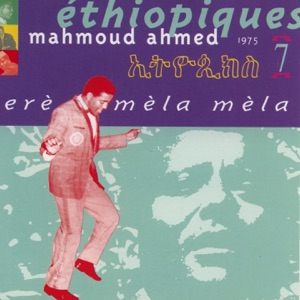 Ere Mela Mela · Mahmoud Ahmed, 1975
Discography
Studio albums
- 1975Erè mèla mèla
- 1978Jeguol Naw Betwa
- 1997Soul of Addis
- 1998Slow Collections
- ?ይትባረክ