
2 languages
Huun-Huur-Tu
From HitStory, the pop encyclopedia of School of Rock · Artist
Huun-Huur-Tu is a music group from Tuva, a republic in Russia on the border with Mongolia. The group is known for throat singing, in which a singer produces a fundamental note and overtones at the same time, so that two or three notes sound at once. The overtone can sound like a flute, a whistle or a bird, but comes entirely from the voice.
Music and breakthrough
The ensemble began in 1992 as the khöömei quartet Kunggurtug, founded by Kaigal-ool Khovalyg, the brothers Alexander and Sayan Bapa, and Albert Kuvezin. Soon afterwards the name changed to Huun-Huur-Tu, which means sunbeams. The first album, 60 Horses In My Herd, appeared in 1993, followed by The Orphan's Lament (1994), If I'd Been Born An Eagle (1997) and Where Young Grass Grows (1999). Kuvezin left to start the rock group Yat-Kha.
Influence
The group plays traditional Tuvan songs, often about the steppe and horses, on instruments such as the igil, the khomus, the doshpuluur and the shaman drum dünggür. Later it carefully added Western instruments and electronics. Huun-Huur-Tu collaborated with Frank Zappa, the Kodo drummers, the Kronos Quartet, The Chieftains and Carmen Rizzo, among others. In this way the group brought throat singing to a worldwide audience and showed that pop music can also contain a different vocal technique.
Listening
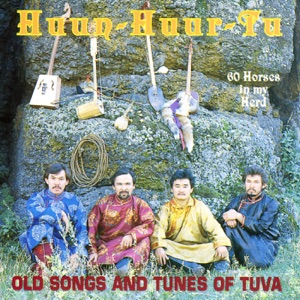 Kongurei · Huun-Huur-Tu, 1993
Discography
Studio albums
- 199360 Horses in My Herd: Old Songs and Tunes of Tuva
- 1994The Orphan's Lament
- 1996Fly, Fly My Sadness
- 1997If I'd Been Born an Eagle
- 1998Mountain Tale
- 1999Where Young Grass Grows
- 2003Malerija
- 2004Altai Sayan Tandy‐Uula
- 2008Mother Earth! Father Sky!
- 2009Children of the Otter
- 2009Eternal
- 2010Ancestors Call
- 2024Dreamers In The Field
Mentioned in other articles
- Throat singing of Tuva and Mongolia Genre
The Tuvan group Huun-Huur-Tu, founded in 1992, combines these voices with the igil, a bowed instrument with strings of horsehair, and brought throat singing to stages all over the world.