
2 languages
Arcangelo Corelli
From HitStory, the pop encyclopedia of School of Rock · Artist
Arcangelo Corelli was born in 1653 in Fusignano, in Romagna, then part of the Papal States. His father died five weeks before he was born. He was trained in Bologna and Rome and spent most of his career in Rome, under the protection of wealthy patrons. In 1675 he was already playing there as a violinist in the oratorios of the Florentine church. Later he led festive performances for Queen Christina of Sweden and lived in the palace of Cardinal Pietro Ottoboni, where for a long time he directed the famous Monday concerts.
Music and breakthrough
His entire oeuvre consists of only six published collections, five of sonatas and one of concerti grossi. Opus 5 contains twelve sonatas for violin and basso continuo, the last of which is La Follia, a series of variations on a well-known theme. Opus 6, twelve concerti grossi, appeared in 1714, a year after his death in Rome. He was buried in the Pantheon. His work was key to the development of the sonata and the concerto, established the violin as the leading instrument and for the first time brought together modern tonality and functional harmony.
Influence
Corelli's way of playing lived on in pupils such as Francesco Geminiani and Pietro Locatelli, and his music influenced a whole generation of composers, including Vivaldi, Handel and Bach. It sounds clear, balanced and songlike, without exuberant violin fireworks. The concerto grosso sets a small group of soloists against the whole orchestra. His La Follia was later used again by composers such as Rachmaninoff, who wrote piano variations on it.
Listening
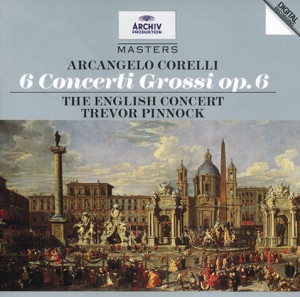 Concerto grosso op. 6 nr. 8: Allegro (The English Concert) · Arcangelo Corelli, 1714
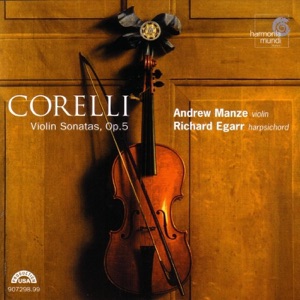 Sonate op. 5 nr. 12 'La Follia' (Andrew Manze, Richard Egarr) · Arcangelo Corelli, 1700
Discography
Studio albums
- 1959Tartini / Vivaldi / Corelli
- 1963Pachelbel Kanon And Other Baroque Favorites
- 1971The World Of Baroque
- 197512 Sonatas for Violin and Harpsichord
- 1979The Chester Recorders
- 198212 Concerti Grossi op. 6
- 1982George Frideric Handel: 6 Violin Sonatas / Arcangelo Corelli: La Folia
- 1983Christmas Concertos
- 1983Concerto Grosso pour La Nuit de Noël Op. 6 No. 8 & Op. 6 No. 7, No. 5, No. 6
- 1983Music of Castle Fraser
- 1985Italian Recorder Sonatas
- 1985Vivaldi: Le Quattro Stagioni / Albinoni: Adagio / Corelli: Weihnachtskonzert
- 1987‘La Folia’ and other sonatas
- 1987Trio Sonatas
- 198812 Concerti grossi, op. 6
- 1988Het Kerstconcert van Corelli
- 1989Concerti Grossi op. 6 no 7-12
- 1989Concerti Grossi, op. 6
- 1989Concerti Grossi, op. 6 1-6
- 1989Sonate a Violino e Violone o Cimbalo op. V
- 1989Sonate Italiane per Flauto.
- 1989The Twelve Trio Sonatas of Opus 3
- 1989Vivaldi: The Four Seasons / Bach: Concerto for Violin, Oboe and Strings, BWV 1060 / Corelli: Christmas Concerto, op. 6 no. 8
- 199012 Concerti grosso, op. 6
- 1990Complete Concerti Grossi, op. 6
- 1990Concerti Grossi Op. 6
- 1990Concerti Grossi Op. 6 7-12
- 1990Concerti Grossi, op. 6 nos. 1-6
- 1990Concerti Grossi, op. 6 nos. 7-12
- 1990Concertos
- 1990Concertos Grossos
- 1990Italian Concert
- 1990Opera Omnia
- 1990Sonate a Tre (Vol. II)
- 1990Violin Sonatas, op. 5
- 1990Violin Sonatas, op. 5
- 19916 Concerti grossi, op. 6
- 1991Italian Baroque Concertos
- 1991Italian Flute Sonatas
- 1991Sonatas For Strings Vol. 1 From Opp. 1 & 2
- 1991Sonatas for Strings, vol. 2: From opp. 1 & 2
- 1991Sonate da camera Op. 2 & 4
- 1991Sonate da chiesa op. 1 & 3
- 1991Vivaldi: The Four Seasons, 4 Concerti / Pachelbel: Canon & Gigue / Albinoni: Adagio / Corelli: Christmas Concerto
- 1992Concerti Grossi, Op. 6
- 1992Concerti Grossi, Op. 6
- 1992Concerti Grossi, op. 6 no. 5, no. 6, no. 7, no. 10, no. 11
- 1992Sonatas for Strings, vol. 4: From opp. 3 & 4
- 1992Sonatas for Strings, Volume 3 (from opp. 3 & 4)
- 1993Cinque Profeti - Weihnachtskantate / Christmas Cantata
- 1993Concerti Grossi, op. 6
- 1993Concerti Grossi, op. 6
- 1993Gloria
- 1993Italian Baroque Favourites
- 1994Christmas Concertos
- 1994Concerti Grossi
- 1994Concerti Grossi op. 6 nos. 1-4, 8 & 9
- 1994Concerti Grossi, Op. 6
- 1994Corelli: Concerti Grossi
- 1994Pachelbel: Canon / Bach / Handel / Vivaldi / Corelli / Marcello
- 1994Vivaldi Concerti and Baroque Trumpet Music
- 199512 Concerti Grossi, op. 6
- 19956 Concerti Grossi, op. 6, Nos. 1 to 6
- 1995Baroque Concertos
- 1995BBC Music: The Concerto
- 1995De la música antigua al barroco: Albinoni, Corelli y Scarlattii
- 199612 sonate a violino e violone o cimbale, op. 5
- 1996Cantata per la Notte di Natale - Corelli Concerto Grosso no. 8 in sol minore
- 1996Christmas Concerts
- 1996Concerti grossi
- 1996Concerti Grossi Op. 6 , Volume I
- 1996Concerti Grossi Op. 6 , Volume II , Christmas Concerto Included
- 1996Italian Oboe Concertos
- 1997Adagio / Concerto Grosso Op. 6 No. 8 / Canon
- 1998Concerti Grossi, op. VI
- 1998La Folia 1490–1701
- 1998Sonate Da Chiesa, Opera Terza / Sonate Postume
- 1999Op. 5, nos. 7-11 / No. 12, “La Follia”
- 1999Opera VI - Concerti Grossi, concerti 1/6
- 1999Opera VI - Concerti Grossi, concerti 7/12
- 1999Sonate per Viola da Gamba & basso continuo, op. V
- 2000Concerti Grossi, op. 6
- 2000Opera V: Sonate per flauto dolce
- 2000Sonate Op. 5 (Banchini, Christensen, Contini, Gohl)
- 2001World of Baroque, Volume 3 (Transcriptions for Trumpet and Organ)
- 2002Violin Sonatas, op. 5
- 2003Sonate Per Violino E Basso Continuo Op. V
- 2003The 12 Concerti Grossi, op. 6
- 2004Concerti grossi
- 2004Concerti Grossi
- 2004Noble Bass Viol
- 2004Sonate a Violino e Violone o Cimbalo – Opera Quinta
- 2004Violin Sonatas op. 5, Nos. 1-6
- 2005La Follia (Sonates Opus V - 7 À 12)
- 2005Violin Sonatas, op. 5
- 2006Bach, Biber, Corelli, Locke, Monteverdi, Rossi, Vivaldi
- 2007Corellisante
- 2007Violin Sonatas, op. 5 nos. 7-12
- 2008Concerti Grossi
- 2008Italian Master Pieces
- 2008Les Caractères de la Danse
- 2009Corelli à la Mode
- 2010Le concert spirituel - Au temps de Louis XV
- 2010Mr. Corelli in London
- 2010Sonatas
- 2010Travelogues of Italy
- 2011Folia
- 2012Opus 6: Concerti Grossi
- 2012Sonate a tre da chiesa e da camera
- 2013Arcangelo Corelli
- 2013Corellimania: Concerti grossi
- 2013Opus 2 & 4: Chamber Sonatas
- 2013Opus 5: Violin Sonatas
- 2013The Complete Concerti Grossi
- 2013Violin Sonatas
- 2013Violin Sonatas, op. V, Vol. I
- 2014Assisi Sonatas
- 2014Opus 1 & 3: Church Sonatas
- 2015La Follia
- 2016Corelli: La Folia
- 2016Jubilo
- 2016Telemann / Corelli / Bach
- 2016Violin Sonatas, op. V, Vol. 2
- 2017La gioia: Violin Sonatas, op. V
- 2017The Italian Job
- 2018Concerti Grossi / Sinfonia Santa Beatrice d’Este
- 2018Les Défis de Mr. Forqueray
- 2018Trumpet Concertos
- 2019Carnival
- 2019Opus 1
- 2019Solos and Concertos Fitted for the Flutes
- 20206 Concerti grossi, op. VI
- 2020Concerti Grossi, op. 6
- 2020Concerti Grossi, Opus 6
- 2020Corelli’s Band: Violin Sonatas
- 2020Italian Flute Music of Early 18th Century
- 2022Sonatas for Viola da Gamba & Continuo
- 2022Trionfo romano – Fête romaine en l’honneur de Louis XIV
- 20231723: Bach, Bertali, Biber, Corelli, Pisendel
- 2023Concerti Grossi op. 6
- 2024Italian Baroque Trumpet Concertos
- 2024Violin Sonatas, op. 5
- 2025Baroque Concertos
- 2025Concerti grossi op. 6, 1–6
- 2025Sonatas
- ?12 Violinsonaten
- ?Bach, Handel, Purcell, etc.
- ?Blockflötensonaten des Barock
- ?Christmas Concertos
- ?Concerti Grossi op. 6
- ?Concerti Grossi Op. 6
- ?Concerti Grossi Op.6, Nos. 7 - 12
- ?Concerti Grossi, op. 6
- ?Digital Classic- Italieniches konzert
- ?Große Meister des Italienischen Barock / Great Masters of the Italian Baroque Vol. 2
- ?Konzerte des Barock
- ?Six Sonatas, op. 5 nos. 1-6
- ?Sonaas Op. 5, Nos. 70-12
- ?Vivaldi: Trois concertos / Sinfonia / Corelli: Sarabande
Mentioned in other articles
- Concerto and sonata Genre
From 1681 Arcangelo Corelli published sonatas and wrote concerti grossi, in which a small group of soloists alternates with the whole string orchestra.